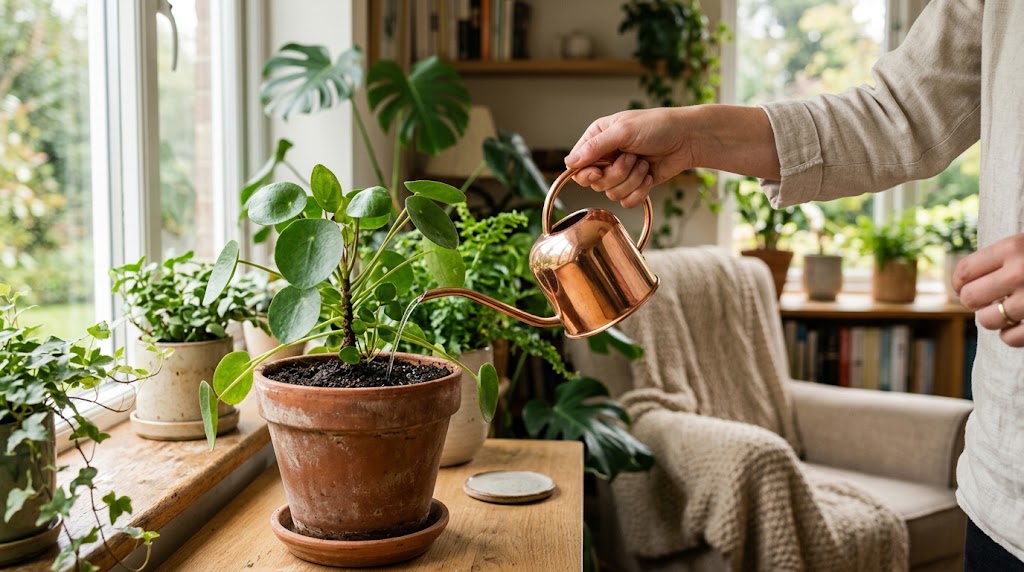
Finding the best watering cans for indoor plants comes down to one simple detail most people overlook: the spout. A wide-mouth outdoor watering can might work fine on garden beds, but indoors it’s nearly impossible to control, splashing soil and water everywhere and soaking foliage it shouldn’t touch. A proper indoor watering can — with a long, narrow spout — makes watering faster, cleaner, and genuinely better for your plants.
Here are the best watering cans for indoor plants, what to look for, and how to use one correctly. Some of the links below are affiliate links — if you buy through them, we may earn a small commission at no extra cost to you.
Quick Answer
For most indoor plant owners, a watering can with a long, narrow spout and a capacity of 32 to 48 ounces is the sweet spot — big enough to water several plants without refilling constantly, but precise enough to target the soil without splashing leaves or stems. Look for rust-resistant materials and a comfortable handle, especially if you’re watering more than a handful of plants at once.
Why the Spout Design Matters So Much
A long, narrow spout lets you get close to the soil surface and pour with real control, aiming water exactly at the base of the plant instead of over the leaves. As the University of Maryland Extension notes, using a watering can with a small spout and keeping water off the foliage is one of the basics of proper indoor watering technique.
Splashing water onto leaves regularly can encourage fungal issues on sensitive plants, and a wide, uncontrolled pour makes it much harder to water evenly without flooding one side of the pot.
What to Look for Before Buying
- Long, narrow spout. Lets you reach under dense foliage and target the soil precisely, especially useful for plants with a lot of leaf cover.
- Capacity. 32-48 ounces suits most indoor collections. Smaller cans are fine for just a few plants; larger collections benefit from bigger capacity so you’re not constantly refilling.
- Material. Metal cans are durable but heavier when full; plastic is lightweight and affordable; ceramic looks great but is more fragile. Pick based on how many plants you’re watering and how much weight you want to manage.
- Comfortable handle. A full can gets heavy fast — an ergonomic handle makes a real difference if you’re watering a large collection in one session.
Our Picks
Best Overall: Haws Indoor Watering Can
A long-established, well-reviewed indoor watering can known for its precise, narrow spout and comfortable balance even when full — a reliable choice for anyone serious about their plant collection.
Best Value: Bloem Aqua Rite Watering Can
Lightweight, affordable, and still offers solid spout control — a great starting option if you’re not ready to invest in a premium can yet.
Best for Small Spaces & Hanging Plants: Mkono Long Spout Watering Can
A smaller capacity with an extra-long spout, ideal for reaching hanging baskets or plants tucked into tight shelf spaces without knocking anything over.
How to Water Correctly, Once You Have the Right Can
- Fill the can the night before if possible — this lets chlorine dissipate and brings the water to room temperature, since cold water can shock tropical plant roots.
- Aim the spout at the soil near the pot’s edge and work inward, rather than pouring straight down the center.
- Water until it drains from the bottom of the pot, confirming the whole root ball got moisture, not just the top layer.
- Check saucers about 30 minutes later and empty any standing water — roots sitting in water are a common cause of root rot.
If you’re not sure whether a plant actually needs water yet, pairing your watering can with a soil moisture meter takes the guesswork out of the timing completely.
Common Watering Mistakes a Good Can Helps You Avoid
- Splashing foliage. A wide-mouth container makes this almost unavoidable; a narrow spout solves it directly.
- Watering on a fixed schedule. Even with the best can, always check the soil first — our guide on what to check before watering indoor plants covers this in detail.
- Missing the root zone. A precise spout ensures water actually reaches where the roots are, instead of pooling on the surface or running off the side of the pot.
If you’re traveling and need a plan for keeping plants watered while you’re away, our guide on watering houseplants while away covers a few reliable options.
Final Thoughts on the Best Watering Cans for Indoor Plants
A good watering can seems like a small thing, but it genuinely changes how easy and mess-free watering day becomes — and it protects your plants from the splashing and uneven watering that a generic container can’t avoid. Pick one with the right spout and capacity for your collection, and watering stops being a chore and starts being the relaxing part of plant care it’s supposed to be.
Read Next
- Best Soil Moisture Meters for Indoor Plants
- How to Water Houseplants While You’re Away
- How to Build a Terrarium: Step-by-Step Guide

Cosmin Stefanoiu is the founder and editor of The Leafy Room, a practical guide focused on indoor plants, plant care, pots and planters, small-space gardening, and thoughtful plant styling.
He creates clear, beginner-friendly editorial guides designed to help readers choose plants, understand everyday care, and make practical decisions for real homes.