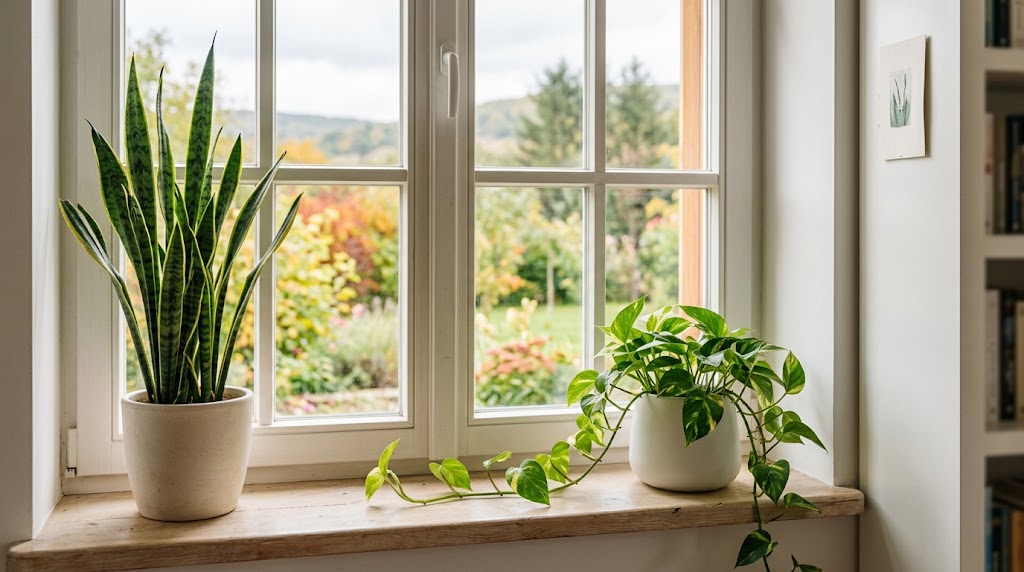
The idea of the best air-purifying indoor plants gets thrown around a lot, usually alongside a list of the same handful of houseplants said to scrub toxins from your air. It’s a nice idea, and it’s not entirely made up — but the real story is more nuanced than most lists let on, and it’s worth understanding before you buy a dozen plants expecting cleaner air.
Here’s what the science actually says, and which plants are genuinely worth having anyway.
Quick Answer
The plants commonly called the best air-purifying indoor plants — snake plant, pothos, spider plant, and peace lily among them — were shown in a 1989 NASA study to remove certain toxins from sealed, airtight chambers. In a real home with normal airflow, the effect is far smaller; a 2019 review found you’d need dozens to hundreds of plants per room to meaningfully clean the air, far more than most people could realistically keep. That doesn’t mean these plants aren’t worth having — they’re still beautiful, low-maintenance, and genuinely linked to better mood and reduced stress. Just don’t expect them to replace an air purifier or an open window.
What the NASA Study Actually Found
The often-cited 1989 NASA Clean Air Study tested how well certain houseplants removed volatile organic compounds (VOCs) like formaldehyde and benzene from sealed chambers, originally researching how to keep air breathable in future space stations. Within those tightly sealed conditions, plants did measurably reduce some pollutants.
The problem is that a home isn’t a sealed chamber. Air constantly moves in and out through doors, windows, and HVAC systems, which dilutes any effect a plant might have far faster than a lab setting ever would. A 2019 review out of Drexel University re-analyzed the data and found that in a real room, you’d need an unrealistic number of plants — sometimes hundreds — to match what a plant achieved in a small sealed box.
So Is There Any Point to “Air-Purifying” Plants?
Yes, just not the point most people assume. While these plants likely won’t meaningfully scrub VOCs from your living room air, houseplants in general are genuinely linked to real benefits:
- Improved mood and reduced stress — well documented across multiple studies, independent of any air-cleaning effect
- Added humidity — plants release moisture through their leaves, which can modestly help dry indoor air, especially in winter
- A genuinely nicer-looking space — not a scientific benefit, but a real one
If you want plants for the atmosphere, mood boost, and greenery they add to a room, the plants below are excellent choices. Just go in with realistic expectations about air quality specifically.
The Plants Most Often Called “Air-Purifying”
Snake Plant
One of the most commonly recommended low-maintenance houseplants, tolerant of low light and infrequent watering. If you want ideas for where it looks best in a room, our guide on snake plant placement covers the best spots for it.
Pothos
An extremely easy, fast-growing trailing plant that tolerates a wide range of light conditions and is very forgiving of inconsistent watering — a great pick for beginners.
Spider Plant
Adaptable and easy to grow, spider plants tolerate a variety of indoor conditions and produce small “spiderette” offshoots you can propagate into new plants.
Peace Lily
Known for its glossy leaves and white blooms, peace lily tolerates lower light better than many flowering houseplants, though it likes consistently moist (not soggy) soil.
A Pet Safety Note
Several plants on typical “air-purifying” lists — including pothos and peace lily — are toxic to cats and dogs if chewed or eaten. Before adding any new plant to a home with pets, check its safety first. Our guide to houseplants that are safe for pets covers pet-friendly alternatives if toxicity is a concern in your home.
Choosing Based on Care Level, Not Air-Cleaning Claims
Since the air-purifying effect is modest at best, a better way to choose among these plants is by matching care level and light conditions to your space and experience, rather than picking based on which one supposedly cleans the most VOCs.
- Very low light, infrequent care: snake plant
- Fast growth, very forgiving: pothos
- Easy propagation, fun to share: spider plant
- Wants a bit more attention, rewards with blooms: peace lily
Final Thoughts on the Best Air-Purifying Indoor Plants
The best air-purifying indoor plants aren’t going to replace an air purifier or an open window, and it’s worth being honest about that rather than repeating the marketing version of the NASA study. What they will do is make a room feel more alive, add a bit of humidity, and give you something genuinely enjoyable to care for. That’s a good enough reason on its own to bring a few home.
Read Next
- Snake Plant Placement: Best Spots for This Low-Maintenance Plant
- 7 Beautiful Houseplants That Are 100% Safe for Your Pets
- How to Choose the Best Spot for Indoor Plants

Cosmin Stefanoiu is the founder and editor of The Leafy Room, a practical guide focused on indoor plants, plant care, pots and planters, small-space gardening, and thoughtful plant styling.
He creates clear, beginner-friendly editorial guides designed to help readers choose plants, understand everyday care, and make practical decisions for real homes.