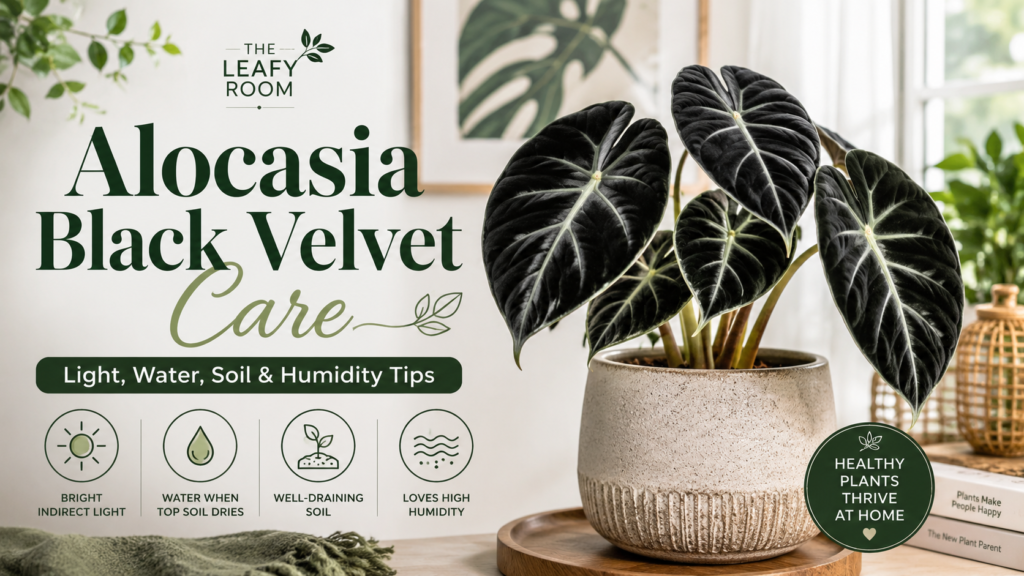
Alocasia Black Velvet is one of the most striking indoor plants you can grow.
Its dark, velvety leaves and bright white veins make it look almost unreal — like a plant designed for a luxury interior.
But while it looks dramatic, it does need the right care.
If the light, soil, humidity, or watering routine is wrong, this plant can quickly develop yellow leaves, crispy edges, or slow growth.
Here’s how to care for Alocasia Black Velvet and keep it looking healthy indoors.
Some of the links below may be affiliate links. This means I may earn a small commission if you buy through them, at no extra cost to you.
Quick Checklist Before You Choose Alocasia Black Velvet
Before bringing Alocasia Black Velvet indoors, check if your home matches what this plant needs.
| Question | Best Answer |
|---|---|
| Do you want dramatic dark foliage? | Yes, this plant is loved for its velvety black-green leaves |
| Do you have bright indirect light? | Yes, it looks best in a bright but protected spot |
| Do you want a large floor plant? | No, this is usually a compact statement plant |
| Do you like decorative shelf plants? | Yes, it works beautifully on shelves, stands, and side tables |
| Do you have pets that chew plants? | Be careful, keep it out of reach |
| Do you want a plant you can ignore completely? | No, choose something tougher instead |
Alocasia Black Velvet is best for plant lovers who want a compact plant with a dramatic, high-contrast look. It is not the best choice for a dark corner, a very dry room, or someone who wants the easiest possible houseplant.
What Is Alocasia Black Velvet?
Alocasia Black Velvet is a compact tropical houseplant known for its dark, almost black leaves.
The leaves feel soft and velvety, with strong silver-white veins that create a dramatic contrast.
It stays smaller than many other Alocasia varieties, which makes it perfect for:
- plant shelves
- desks
- side tables
- small apartments
- bright indoor corners
- modern plant decor
It is not the easiest beginner plant, but it is manageable if you understand what it needs.
1. Give It Bright, Indirect Light
Alocasia Black Velvet likes bright, indirect light.
It does not want harsh direct sun, especially through a hot window.
Too much direct sun can burn the leaves.
Too little light can cause:
- slow growth
- pale leaves
- weak stems
- smaller new leaves
- leaf drop
A good spot is near a bright window with filtered light.
Avoid dark corners if you want this plant to stay strong.
Best For / Avoid If
Alocasia Black Velvet is beautiful, but it works best in the right kind of indoor setup.
| Best for | Avoid if |
|---|---|
| Bright shelves with indirect light | Very dark rooms |
| Side tables and plant stands | Harsh direct afternoon sun |
| People who love dramatic foliage | People who prefer very easy plants |
| Small apartments that need one statement plant | Homes where pets chew leaves |
| Cozy rooms with warm decor | Cold drafty windows |
| Plant collectors who like unusual leaves | People who want fast-growing vines |
Bright Indirect Light Reality Check
Alocasia Black Velvet is often photographed in beautiful indoor corners, but it still needs enough light to keep its strong look.
A spot can look nice in a room and still be too dim for this plant.
Before placing it, check:
- whether the room feels bright during the day
- whether the plant is close enough to a window
- whether curtains block too much light
- whether nearby furniture shades the plant
- whether the plant is placed only for decor and not for light needs
If your room is very dim, a tougher plant like Cast Iron Plant may be a better option. If your room is bright but protected from harsh direct sun, Alocasia Black Velvet can look beautiful.
Choose Alocasia Black Velvet if you want a small plant that feels dramatic and special. Skip it if your room is dim, cold, or you want a plant that needs very little attention.
Grow Light
Small Grow Light for Indoor Plants
A grow light can help Alocasia Black Velvet stay healthier in rooms with limited natural light.
Check on Amazon
2. Water Carefully
This plant does not like sitting in soggy soil.
Alocasia Black Velvet prefers soil that stays lightly moist, but not wet.
Before watering, check the top part of the soil.
If it still feels wet, wait.
Overwatering can cause:
- yellow leaves
- mushy stems
- root rot
- drooping
- bad soil smell
Underwatering can cause:
- crispy edges
- curled leaves
- dry soil
- wilting
The goal is balance: moist, not soaked.
3. Use Well-Draining Soil
Soil is very important for Alocasia Black Velvet.
Heavy soil holds too much water and can damage the roots.
A good soil mix should be:
- light
- airy
- well-draining
- moisture-balanced
A mix with indoor potting soil, perlite, and orchid bark can work well because it allows airflow around the roots.
Avoid dense garden soil indoors.
Well-Draining Soil Mix
Well-Draining Indoor Plant Soil
A light soil mix helps reduce the risk of root rot and keeps Alocasia roots healthier.
Check on Amazon
4. Keep Humidity Higher
Alocasia Black Velvet is a tropical plant, so it appreciates higher humidity.
Dry indoor air can lead to:
- crispy leaf edges
- browning tips
- curled leaves
- slower growth
You can improve humidity by:
- grouping plants together
- using a humidity tray
- placing it away from heaters
- using a small humidifier
- keeping it in a naturally more humid room
Avoid placing it near heating vents, air conditioners, or very dry spots.
Small Humidifier
Small Humidifier for Indoor Plants
A small humidifier can help tropical plants like Alocasia Black Velvet handle dry indoor air better.
Check on Amazon
5. Choose the Right Pot
A good pot makes care much easier.
Alocasia Black Velvet should be in a pot with drainage holes.
Without drainage, water can collect at the bottom and damage the roots.
Choose a pot that is:
- not too large
- stable
- easy to drain
- suitable for indoor use
- only slightly bigger than the root ball
A pot that is too big can hold too much wet soil.
This can increase the risk of root rot.
6. Common Problems
Yellow Leaves
Yellow leaves usually mean something is off with water, light, or roots.
The most common causes are:
- overwatering
- poor drainage
- low light
- old leaves naturally aging
Check the soil first before watering again.
Crispy Edges
Crispy edges often happen when the air is too dry.
This plant prefers more humidity than many beginner houseplants.
Move it away from heaters and dry air.
Drooping Leaves
Drooping can happen after watering stress, low humidity, or sudden changes.
Check:
- soil moisture
- light
- temperature
- drainage
Don’t panic immediately. First, find the cause.
No New Growth
If your Alocasia Black Velvet is not growing, it may need:
- more light
- warmer conditions
- better soil
- higher humidity
- time to adjust
Some Alocasias grow more slowly indoors, especially during colder months.
Small-Space Tip
Alocasia Black Velvet is a good plant for small spaces because it can make a strong visual impact without becoming huge.
In a small apartment, place it on a side table, dresser, shelf, or narrow plant stand where the leaves can be seen up close. One Alocasia Black Velvet can add more drama than several plain green plants.
Avoid placing it in a crowded plant group where the dark leaves disappear. It usually looks better with space around it and simple decor nearby.
If you like dramatic foliage but want more color, Rex Begonia is another beautiful indoor plant with painted-looking leaves.
If you want a glossy indoor flower instead of dark foliage, Anthurium can add bold red or pink color to a bright room.
For a trailing plant with softer silver markings, Silver Satin Pothos may work better on shelves or in hanging planters.
If your room is lower light and you want something tougher, Cast Iron Plant is usually a more forgiving choice.
Real-Life Styling Ideas for Alocasia Black Velvet
Alocasia Black Velvet looks best when the leaves are easy to see. This is not a plant to hide behind larger greenery.
| Space | Styling idea |
|---|---|
| Living room | Place it on a side table in a simple cream or stone pot |
| Bedroom | Use it on a dresser as a dark foliage accent |
| Home office | Style it on a shelf to make the workspace feel more botanical |
| Reading corner | Pair it with books, warm light, and neutral textiles |
| Small apartment | Use one Alocasia Black Velvet as a compact statement plant |
For the cleanest look, keep the pot simple. The dark velvety leaves already have enough visual drama, so the surrounding decor should stay calm.
Is Alocasia Black Velvet Good for Beginners?
Alocasia Black Velvet is not the easiest beginner plant.
If you are brand new to houseplants, you may want to start with easier plants like pothos, snake plant, or ZZ plant.
But if you already understand watering, light, and drainage, Alocasia Black Velvet can be a beautiful next step.
It rewards good care with dramatic leaves that stand out in any room.
Quick Care Summary
Alocasia Black Velvet prefers:
- bright, indirect light
- lightly moist soil
- high humidity
- well-draining mix
- pot with drainage
- warm indoor conditions
- no harsh direct sun
- no soggy soil
If you get light, water, and humidity right, this plant becomes much easier to grow.
Final Thoughts
Alocasia Black Velvet is a beautiful choice if you want a compact indoor plant with dark, velvety leaves and a dramatic look.
It works best in bright indirect light, simple pots, and visible spots where the leaf texture and pale veins can be appreciated up close. It is especially useful for shelves, side tables, bedroom dressers, home offices, and cozy plant corners that need one bold plant accent.
This is not the easiest plant for very dark rooms, dry corners, or homes where pets chew leaves. But if you have the right light and want something more striking than a basic green plant, Alocasia Black Velvet can be a stunning choice.
Use calm decor, choose a simple pot, and let the dark foliage become the main feature.
🌿 Love calm spaces and natural living?
Discover more guides on indoor plants, cozy decor, and creating a home that feels better.

Cosmin Stefanoiu is the founder and editor of The Leafy Room, a practical guide focused on indoor plants, plant care, pots and planters, small-space gardening, and thoughtful plant styling.
He creates clear, beginner-friendly editorial guides designed to help readers choose plants, understand everyday care, and make practical decisions for real homes.
Pingback: String of Pearls: The Trailing Plant That Looks Like Living Beads
Pingback: Bird of Paradise: The Indoor Plant That Makes a Room Feel Tropical
Pingback: Calathea Orbifolia: The Indoor Plant With Giant Striped Leaves
Pingback: Rubber Plant: The Easy Indoor Tree That Makes a Room Feel Finished
Pingback: Best Indoor Plants for a North-Facing Window