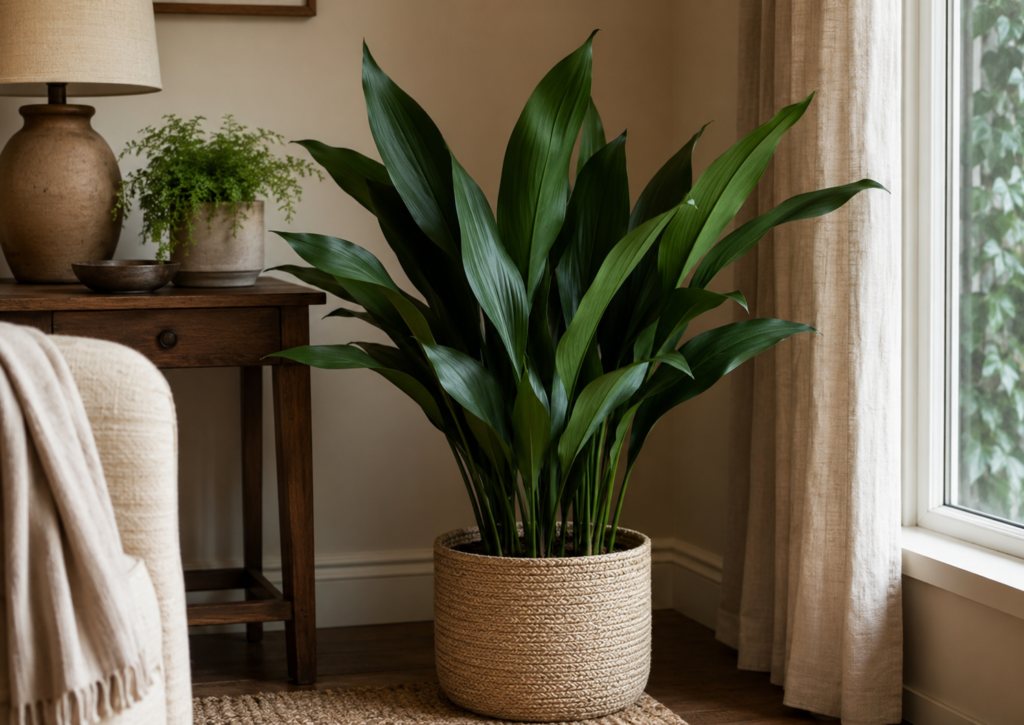
Some indoor plants need attention all the time.
The Cast Iron Plant is different.
It is calm, strong, slow-growing, and almost impossible to make look dramatic in the wrong way. Its long, dark green leaves have a classic look, and the plant can handle spots where many other houseplants struggle.
If you have a darker corner, hallway, bedroom, office, or quiet room that needs greenery, the Cast Iron Plant may be one of the best indoor plants to consider.
Quick Answer: Why Is the Cast Iron Plant So Popular?
The Cast Iron Plant is popular because it is tough, low-maintenance, and able to handle lower light better than many common houseplants.
It does not need to be the brightest plant in the room. It works best when you want reliable greenery, clean leaves, and a calm natural look without constant attention.
This plant is especially good for beginners, busy homes, apartments, hallways, bedrooms, and darker corners.
What Is a Cast Iron Plant?
The Cast Iron Plant, also known as Aspidistra elatior, is a classic indoor plant with long, upright, deep green leaves.
It gets its common name because it has a reputation for being extremely tough. While no plant is truly indestructible, this one is known for tolerating conditions that many other houseplants dislike.
It grows slowly, stays elegant, and does not demand a perfect plant setup.
That makes it a beautiful choice if you want a plant that looks polished but does not need to be constantly moved, trimmed, or fussed over.
Why It Is Called the “Cast Iron” Plant
The name comes from its durability.
The Cast Iron Plant can tolerate lower light, inconsistent care, and ordinary indoor conditions better than many more dramatic houseplants.
It is not flashy like a tropical statement plant, and it does not grow fast like a trailing vine. Instead, it has a steady, reliable look.
That is part of its charm.
It is the kind of plant that quietly makes a room feel more grounded.
Cast Iron Plant: Main Features
| Feature | Cast Iron Plant |
|---|---|
| Botanical name | Aspidistra elatior |
| Common use | Low-maintenance indoor plant |
| Main look | Long, dark green leaves |
| Growth habit | Upright, clumping |
| Best light | Low to bright indirect light |
| Best rooms | Hallways, bedrooms, offices, corners |
| Decor style | Classic, calm, natural, timeless |
| Beginner-friendly | Yes |
| Visual impact | Quiet, elegant, steady |
Quick Checklist Before You Choose a Cast Iron Plant
Before adding a Cast Iron Plant to your home, check if it fits the space and the kind of plant you actually want.
| Question | Best Answer |
|---|---|
| Do you have a lower-light room? | Yes, Cast Iron Plant can handle softer indoor light |
| Do you want a low-maintenance plant? | Yes, this is one of its biggest strengths |
| Do you want fast growth? | No, Cast Iron Plant is slow and steady |
| Do you want a bold colorful plant? | No, it is more classic and calm |
| Do you need greenery for a hallway or corner? | Yes, this plant can work beautifully there |
| Do you want a trailing plant? | No, choose a vine instead |
Cast Iron Plant is best for people who want reliable greenery without a dramatic care routine. It is not the best choice if you want fast vines, bright flowers, or colorful patterned leaves.
Why the Cast Iron Plant Works Indoors
The Cast Iron Plant works indoors because it does not need a dramatic setup to look good.
It has a simple shape, strong leaves, and a quiet presence. This makes it easy to place in rooms where you want greenery but not clutter.
It can soften empty corners, warm up dark furniture, and make a hallway or bedroom feel more finished.
Unlike plants with delicate leaves, the Cast Iron Plant has a sturdy, grounded look. It feels more timeless than trendy.
Best Places to Put a Cast Iron Plant Indoors
The Cast Iron Plant is useful because it can work in places that are not perfect for many other indoor plants.
Good places include:
- dark corners
- hallways
- bedrooms
- home offices
- entryways
- reading nooks
- shaded living room corners
- apartments with limited natural light
- rooms with soft indirect light
Best For / Avoid If
Cast Iron Plant is tough and useful, but it still works best in the right kind of home.
| Best for | Avoid if |
|---|---|
| Hallways with soft natural light | Rooms with no natural light at all |
| Bedrooms and quiet corners | People who want fast-growing plants |
| Low-maintenance homes | Bright tropical plant displays |
| Beginners who want something forgiving | Tiny shelves or narrow tabletops |
| Classic or natural decor | People who want colorful leaves |
| Apartments with limited light | Homes where pets dig in plant pots |
Choose Cast Iron Plant if you want a calm, reliable indoor plant for a lower-light room. Skip it if you want something fast, colorful, or dramatic.
It looks especially good in a simple pot or woven basket where the long leaves can stand out.
Best Light for a Cast Iron Plant
The Cast Iron Plant is known for handling low light.
That does not mean it wants complete darkness, but it can tolerate softer indoor light better than many common houseplants.
A good spot is a room with indirect light, a shaded window area, or a corner that still gets some natural brightness during the day.
If you place it in brighter indirect light, it may look fuller and healthier. If you place it in lower light, it may grow more slowly, but it can still keep its classic look.
Avoid harsh direct sun, especially strong afternoon sun, because it can make the leaves look stressed or faded.
How to Style a Cast Iron Plant
The Cast Iron Plant is easy to style because it has a simple, elegant shape.
It does not need bright colors or complicated decor around it. In fact, it often looks best when the styling is quiet and natural.
Good styling ideas include:
- place it in a neutral ceramic planter
- use a woven basket for a warmer look
- set it beside a wooden side table
- place it near a reading chair
- use it in a hallway corner
- pair it with warm wood, soft textiles, and simple wall art
- keep the area around it uncluttered
Real-Life Styling Ideas for Cast Iron Plant
Cast Iron Plant looks best when it is styled simply. Its strength is not drama, but calm structure and deep green leaves.
| Space | Styling idea |
|---|---|
| Hallway | Place it in a woven basket to soften a plain wall |
| Bedroom | Use it beside a dresser or reading chair for calm greenery |
| Living room | Place it in a darker corner where a tropical plant may struggle |
| Entryway | Use a stable ceramic pot for a simple first impression |
| Home office | Put it near a shelf or cabinet to make the room feel less plain |
For the best look, avoid overdecorating around it. A Cast Iron Plant usually looks more elegant with warm wood, neutral walls, a textured rug, and one simple planter.
Because the leaves are long and dark green, the Cast Iron Plant pairs beautifully with cream, beige, brown, black, terracotta, stone, and warm wood tones.
Helpful Plant Decor Items to Consider
When styling a Cast Iron Plant indoors, useful items may include:
- a neutral ceramic planter
- a woven basket planter
- a sturdy plant stand
- a soft leaf cleaning cloth
- a narrow watering can
- a moisture meter
- a simple plant saucer
- a rolling plant caddy
- a natural fiber rug
- a small side table
Choose simple pieces that let the plant look strong and timeless. The Cast Iron Plant does not need loud decor around it. It looks best when the room feels calm and balanced.
Best Rooms for a Cast Iron Plant
The Cast Iron Plant is flexible and can work in many rooms.
Living Room
In a living room, it can fill a darker corner without needing a dramatic statement.
It looks good beside a sofa, sideboard, cabinet, or reading chair. It adds greenery without making the room feel crowded.
Bedroom
In a bedroom, the Cast Iron Plant creates a calm, grounded feeling.
Its dark green leaves work well with soft bedding, neutral walls, wood furniture, and warm lamps.
Hallway
Hallways often have less natural light, which makes them difficult for many plants.
A Cast Iron Plant can be a strong option for a hallway because it adds life and texture without needing a sunny window.
Home Office
In a home office, this plant brings a quiet green presence.
It works well if you want a low-maintenance plant near a desk, shelf, or reading corner without adding visual clutter.
Entryway
In an entryway, a Cast Iron Plant can create a simple, elegant first impression.
Use a stable pot and place it where the leaves have room to stand naturally.
Which Room Is Best?
If you are not sure where to place a Cast Iron Plant first, start with the room that needs calm greenery the most.
| Room | Why it works |
|---|---|
| Hallway | Adds life to a space that often feels plain or empty |
| Bedroom | Creates a calm, grounded feeling without too much visual noise |
| Living room corner | Fills a quiet corner without needing strong sunlight |
| Home office | Adds simple greenery without distracting from the workspace |
| Entryway | Makes the first impression feel warmer and more natural |
The best room is usually the one where other plants feel too fussy or where the space needs quiet greenery instead of a dramatic statement plant.
Why People Love the Cast Iron Plant
People love the Cast Iron Plant because it is not demanding.
It is the opposite of a fussy houseplant.
It is good for people who want greenery but do not want to constantly worry about perfect light, fast growth, or complicated styling.
The Cast Iron Plant is loved because it is:
- tough
- elegant
- slow-growing
- low-maintenance
- good for beginners
- useful in darker rooms
- easy to style
- calm and timeless
- less dramatic than many trendy plants
It is not the plant you choose for fast vines or huge tropical leaves.
It is the plant you choose when you want something steady and reliable.
Cast Iron Plant vs Snake Plant
Both Cast Iron Plant and Snake Plant are popular low-maintenance options, but they look different.
Snake Plant has upright, sword-like leaves and a more modern, architectural shape.
Cast Iron Plant has softer, wider, arching leaves and a more classic, natural look.
Choose Snake Plant if you want a sharp, modern style.
Choose Cast Iron Plant if you want a softer, calmer, more timeless plant for darker corners.
If you like tough indoor plants but want something more glossy and tree-like, Rubber Plant may be a better fit.
If your home has a soft-light window and you want more plant options, see our guide to the best indoor plants for a north-facing window.
If you prefer a trailing plant for shelves or hanging planters, Silver Satin Pothos is a more decorative option.
Cast Iron Plant vs ZZ Plant
ZZ Plant is glossy, structured, and modern.
Cast Iron Plant is softer, leafier, and more traditional.
Both can work in lower light, but the visual style is different.
A ZZ Plant feels polished and clean. A Cast Iron Plant feels calm, classic, and grounded.
Cast Iron Plant vs Snake Plant vs ZZ Plant
If you want a tough indoor plant, Cast Iron Plant is not the only option. Here is how it compares with other popular low-maintenance houseplants.
| Plant | Best look | Best for | Main difference |
|---|---|---|---|
| Cast Iron Plant | Classic, leafy, calm | Hallways, bedrooms, shaded corners | Softer and more traditional-looking |
| Snake Plant | Upright, sharp, modern | Narrow spaces, modern rooms, corners | More architectural and vertical |
| ZZ Plant | Glossy, structured, polished | Offices, shelves, modern interiors | Shinier and more compact-looking |
| Pothos | Trailing, relaxed, leafy | Shelves, hanging planters, beginner spaces | Better if you want vines |
Choose Cast Iron Plant if you want a softer, timeless plant for a quiet corner. Choose Snake Plant if you want a sharper modern shape. Choose ZZ Plant if you want a glossier, more polished look.
Is the Cast Iron Plant Good for Beginners?
Yes, the Cast Iron Plant is a good indoor plant for beginners.
It is forgiving, slow-growing, and does not need constant attention. It is a smart choice if you are new to houseplants and want something that does not feel stressful.
It is also good for people who travel, work long hours, or simply do not want a plant that needs daily care.
Simple Care Routine for Busy Owners
Cast Iron Plant is a good choice for people who want a plant that does not need constant attention.
A simple routine can look like this:
| Task | Simple habit |
|---|---|
| Light check | Keep it in low to bright indirect light, not harsh direct sun |
| Water check | Check the soil before watering instead of using a fixed schedule |
| Leaf care | Wipe dusty leaves with a soft cloth when they look dull |
| Placement | Keep it away from cold drafts and busy walkways |
| Pot check | Use a stable pot that balances the long leaves |
This plant does not need a complicated routine. It usually looks best when care stays simple and consistent.
Is the Cast Iron Plant Good for Apartments?
The Cast Iron Plant can be a great apartment plant.
Apartments often have limited light, awkward corners, or rooms that do not get strong sun. This plant can work well in those spaces.
It does not grow too fast, does not need a huge setup, and can fit into many decor styles.
For smaller apartments, choose a medium pot and place it in a corner, beside a chair, or near an entryway.
Common Cast Iron Plant Mistakes
Even though the Cast Iron Plant is tough, a few mistakes can still make it look less attractive.
Placing It in Harsh Direct Sun
This plant is not made for strong direct sun.
Too much harsh sunlight can make the leaves look stressed. A softer indoor spot is usually better.
Overwatering
The Cast Iron Plant does not like sitting in soggy soil.
Check the soil before watering and let the top layer dry before adding more water.
Using a Pot That Looks Too Small
Because the leaves are long and strong, the plant usually looks better in a stable pot.
A tiny pot can make the plant look unbalanced.
Ignoring Dusty Leaves
Dust can make the leaves look dull.
Wipe them gently with a soft cloth when needed so the plant keeps its clean, polished look.
Crowding the Plant
The Cast Iron Plant looks better when it has room.
Do not surround it with too many objects, tiny pots, or busy decor pieces.
Small-Space Tip
Cast Iron Plant can work well in small spaces if you choose the right pot size.
In a small apartment, use it as one calm floor plant instead of filling the room with several smaller pots. Its long green leaves can soften a corner without making the space feel busy.
For narrow rooms, avoid placing it where people brush past the leaves every day. A bedroom corner, hallway end, reading nook, or entryway side spot usually works better than a tight walkway.
Is the Cast Iron Plant Pet-Friendly?
The Cast Iron Plant is often considered one of the safer decorative houseplants for homes with pets compared with many common indoor plants.
Still, it is smart to keep all houseplants out of reach if your pet likes chewing leaves or digging in pots. Even non-toxic plants can still cause an upset stomach if a pet eats too much plant material.
For any pet safety concern, always check with a qualified veterinarian or a reliable pet poison resource.
Who Should Choose a Cast Iron Plant?
A Cast Iron Plant may be a good choice if:
- you want a low-maintenance indoor plant
- your room has lower light
- you have a dark corner that needs greenery
- you like classic plant decor
- you want a plant that grows slowly
- you prefer calm, simple styling
- you are a beginner
- you want a plant that does not need constant attention
It may not be the best choice if:
- you want fast growth
- you want a trailing plant
- you want colorful leaves
- you want a tiny shelf plant
- you want a dramatic tropical look
Final Thoughts
Cast Iron Plant is a strong choice if you want calm, reliable greenery for a room that does not have perfect light.
It works especially well in hallways, bedrooms, home offices, entryways, shaded living room corners, and apartments where other plants may feel too demanding. Its long dark green leaves create a classic look without needing dramatic styling or constant attention.
This is not the plant to choose if you want fast growth, colorful foliage, or trailing vines. But if you want a tough, timeless indoor plant that makes a quiet corner feel more alive, Cast Iron Plant is one of the best options.
Use a simple pot, give it space, avoid harsh direct sun, and let it bring steady greenery into your home.
Read Next
- Best Indoor Plants for a North-Facing Window
- Rubber Plant: The Easy Indoor Tree That Makes a Room Feel Finished
- Best Indoor Plants for a Home Office Desk
- String of Pearls: The Trailing Plant That Looks Like Living Beads
- Alocasia Black Velvet Care: How to Grow This Stunning Indoor Plant

Cosmin Stefanoiu is the founder and editor of The Leafy Room, a practical guide focused on indoor plants, plant care, pots and planters, small-space gardening, and thoughtful plant styling.
He creates clear, beginner-friendly editorial guides designed to help readers choose plants, understand everyday care, and make practical decisions for real homes.
Pingback: Staghorn Fern: The Plant That Looks Like Living Wall Art
Pingback: Rex Begonia: The Indoor Plant With Leaves That Look Painted
Pingback: Silver Satin Pothos: The Trailing Plant With Silver-Splashed Leaves
Pingback: Bird of Paradise: The Indoor Plant That Makes a Room Feel Tropical
Pingback: Kalanchoe: The Easy Flowering Plant for Sunny Windowsills
Pingback: Orchid Care for Beginners: The Elegant Indoor Flower That Looks Expensive
Pingback: Peace Lily: The Elegant White Indoor Flower for Calm Rooms
Pingback: Bromeliad: The Tropical Indoor Flower That Looks Like Living Decor
Pingback: Hoya Carnosa: The Wax Plant That Trails and Blooms Indoors