Some indoor flowers feel cheerful.
Some feel cozy.
Orchids feel elegant.
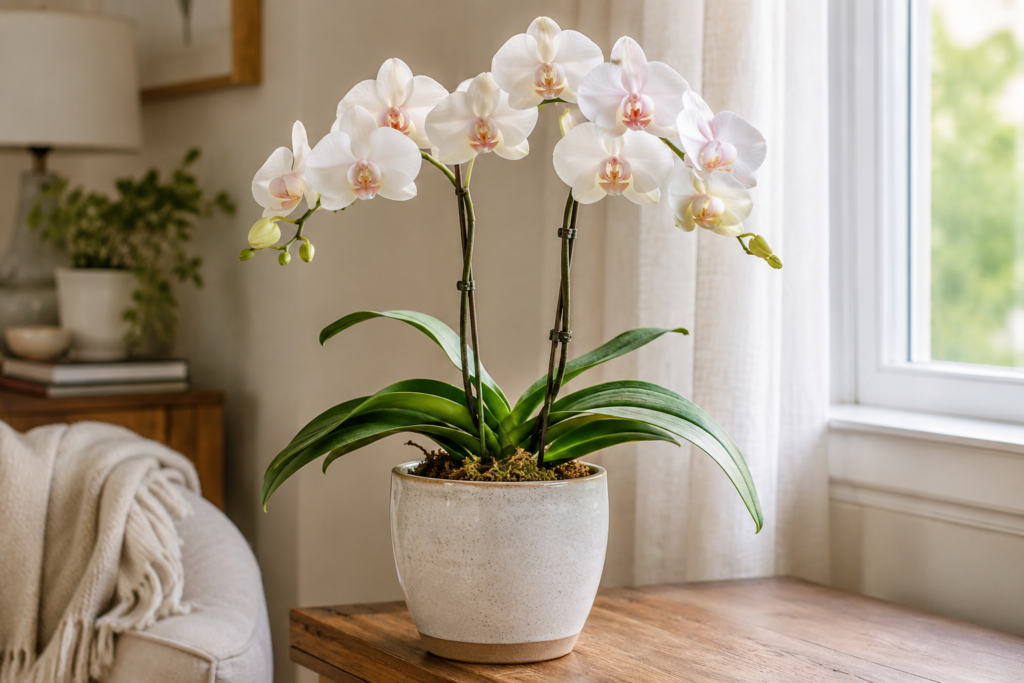
With tall flower stems, sculptural blooms, and glossy green leaves, an orchid can make a room look more polished almost instantly. It is one of those indoor flowers that looks expensive even in a simple pot on a side table, dresser, shelf, or bright windowsill.
The good news is that orchids are not as impossible as many beginners think. If you understand the basics — light, watering, potting mix, and placement — an orchid can become one of the most beautiful indoor flowers in your home.
Quick Answer: Are Orchids Good for Beginners?
Yes, orchids can be good for beginners if you start with the right type and give them the right setup.
The easiest orchid for many beginners is usually a Phalaenopsis orchid, often called a moth orchid. It is commonly sold in stores, stays compact, produces elegant flowers, and can grow well indoors with bright indirect light and proper watering.
The biggest beginner mistakes are usually overwatering, using regular potting soil, placing the orchid in a dark corner, or throwing it away after the blooms fade.
An orchid can bloom again, but it needs patience and the right care.
Quick Checklist Before You Choose an Orchid
Before bringing an orchid home, check if your space matches what this plant needs.
| Question | Best Answer |
|---|---|
| Do you have bright indirect light? | Yes, orchids usually need a bright but protected spot |
| Do you want elegant flowers? | Yes, orchids are loved for their refined blooms |
| Do you want a plant for a dark corner? | No, choose a lower-light plant instead |
| Can you avoid overwatering? | Yes, orchids dislike soggy roots |
| Do you have space for a small pot and flower stem? | Yes, they stay compact but need vertical room |
| Do you want a plant that looks expensive in simple decor? | Yes, orchids are perfect for this |
Orchids are best for people who want an elegant indoor flower and are willing to learn a few simple care habits. They are not the best choice for very dark rooms or for people who water plants automatically without checking first.
What Is an Orchid?
An orchid is a flowering plant known for its long-lasting blooms and elegant shape.
There are many kinds of orchids, but the most common indoor beginner orchid is the Phalaenopsis orchid. This type usually has broad green leaves, arching flower stems, and blooms that can last for weeks.
Indoor orchids are often sold in simple nursery pots, clear plastic orchid pots, or decorative ceramic covers. They usually grow in orchid bark mix rather than regular potting soil.
This is one of the most important things beginners should know: orchids are not regular soil houseplants.
Why Orchids Look Expensive Indoors
Orchids look elegant because they have a clean, sculptural shape.
They do not need many flowers to make an impact. One orchid in bloom can make a bedroom dresser, living room table, home office shelf, or entryway console feel more polished.
Orchids are loved because they are:
- elegant
- compact
- long-blooming
- beautiful in simple pots
- perfect for bright rooms
- great for dressers and side tables
- refined without needing much decor
- excellent for soft, neutral interiors
- one of the most classic indoor flowers
A white orchid in a cream pot can look calm and expensive without making the room feel busy.
Orchid: Main Features
| Feature | Orchid |
|---|---|
| Plant type | Indoor flowering plant |
| Beginner-friendly type | Phalaenopsis orchid |
| Main attraction | Elegant long-lasting blooms |
| Best use | Dressers, side tables, shelves, bright rooms |
| Decor style | Elegant, minimal, cozy, polished |
| Best light | Bright indirect light |
| Potting mix | Orchid bark mix, not regular soil |
| Space needs | Small pot with vertical bloom space |
| Best for | Indoor flower lovers and simple decor |
Best Places to Put an Orchid Indoors
Orchids look best where the flowers can be seen and the plant gets bright indirect light.
Good indoor spots include:
- bedroom dressers
- living room side tables
- bright home office shelves
- kitchen corners away from heat and steam
- entryway tables with natural light
- bright bathroom shelves
- dining room sideboards
- sunny-looking rooms with filtered light
- shelves near a window
- windowsills with gentle morning light
The best spot is bright, calm, and protected.
Avoid dark corners, cold drafty windows, strong harsh afternoon sun, and places near heaters.
Best For / Avoid If
Orchids are beautiful, but they are not ideal for every home.
| Best for | Avoid if |
|---|---|
| Bright rooms with indirect light | Very dark rooms |
| Dressers, side tables, and shelves | Cold drafty windows |
| Elegant home decor | People who overwater often |
| Simple ceramic pots | Regular heavy potting soil |
| People who want long-lasting flowers | Homes where pets chew plants |
| Calm bedrooms and living rooms | Spots beside heaters or harsh sun |
Choose an orchid if you want a refined indoor flower and have a bright protected spot. Skip it if your only available place is dim, cold, or hard to reach.
Best Light for Orchids
Most beginner indoor orchids do best in bright indirect light.
They like a bright room, but harsh direct sun can be too intense. A good spot may be near an east-facing window, a bright filtered window, or a room with soft curtains.
If the orchid gets too little light, it may stay alive but struggle to bloom again.
If the sun is too harsh, the leaves may look stressed.
The goal is bright, gentle, consistent light.
Bright Light Reality Check
Orchids often look beautiful in styled rooms, but they still need enough usable light.
Before placing an orchid, check:
- whether the room feels bright during the day
- whether the orchid is close enough to a window
- whether curtains block too much light
- whether nearby furniture shades the plant
- whether the plant is placed only for decor and not for light needs
- whether the window is cold or drafty in winter
If your room has only soft low light, an orchid may not be the easiest choice. A plant like Cast Iron Plant may be more forgiving.
How to Water an Orchid
The most common orchid mistake is watering too much.
Many beginner orchids grow in bark mix, which drains differently from regular potting soil. The bark should not stay constantly soggy.
A simple beginner habit is to water when the bark mix is nearly dry, then let extra water drain fully.
Do not let the orchid sit in standing water.
Also avoid watering only because the calendar says so. It is better to check the potting mix and roots first.
If you want a deeper beginner watering guide, read Don’t Water Yet: How to Check Indoor Plants Before Watering.
Orchid Potting Mix: Why Regular Soil Is a Mistake
Orchids usually should not be planted in regular heavy potting soil.
Many beginner orchids, especially Phalaenopsis orchids, are grown in orchid bark mix. This helps air reach the roots and allows water to drain more freely.
Regular soil can hold too much moisture around the roots.
Good orchid potting materials may include:
- orchid bark mix
- clear or ventilated orchid pot
- decorative outer pot
- plant saucer or tray
- orchid clips or stakes
- simple watering can
A decorative pot can look beautiful, but the inner pot and drainage setup matter more than the outer style.
How to Style Orchids Indoors
Orchids already look elegant, so the styling should stay simple.
The flowers should be the main focus.
Good styling ideas include:
- use a simple cream ceramic pot
- place it on a wooden dresser
- style it beside neutral books
- use a tray under the pot
- pair it with linen curtains
- place it near soft natural light
- keep nearby decor minimal
- use one orchid as the main flower accent
- pair white orchids with beige, wood, and warm neutrals
Orchids look best when the room around them feels calm and uncluttered.
Real-Life Orchid Styling Ideas
A small orchid can change the feeling of a room if it is placed well.
| Space | Styling idea |
|---|---|
| Bedroom | Place one white orchid on a dresser near soft window light |
| Living room | Use it on a side table with books and a small ceramic bowl |
| Home office | Place it on a shelf or desk-side table to soften the workspace |
| Entryway | Use one orchid on a console table for a polished first impression |
| Kitchen corner | Place it in a bright spot away from heat, steam, and grease |
| Bathroom with a window | Use it only if the room has enough bright indirect light |
For a clean look, use one orchid per surface. Too many decorative items around it can make the setup feel busy.
Best Places for Orchids by Room
| Room | Why it works |
|---|---|
| Bedroom | Adds calm, elegant flowers without needing much space |
| Living room | Looks polished on side tables and shelves |
| Home office | Makes the workspace feel softer and less plain |
| Entryway | Creates a refined first impression |
| Bathroom with a window | Can work if the light is bright enough |
| Kitchen | Works only away from heat, steam, and splash zones |
The best room is usually the one with bright filtered light and enough space for the flower stems to stand naturally.
Don’t Throw Your Orchid Away After It Blooms
Many beginners think an orchid is finished when the flowers fall.
It is not.
After blooming, an orchid may enter a rest period. The flowers fade, but the plant can still be alive and healthy. With proper light, watering, and patience, many orchids can bloom again.
After blooms fade:
- do not throw the plant away immediately
- check that the leaves are still firm and green
- keep the plant in bright indirect light
- water carefully when the bark mix is nearly dry
- avoid soggy roots
- be patient
An orchid without flowers can still be a living plant preparing for future growth.
Orchid vs Other Indoor Flowers
Orchids are not the only indoor flowers, but they have a very specific style.
Compared with African Violet, orchids feel taller, more elegant, and more sculptural.
Compared with Anthurium, orchids feel softer and less glossy.
Compared with Kalanchoe, orchids look more refined and less cheerful.
Compared with Peace Lily, orchids are more flower-focused and decorative.
If you like indoor flowers, these plants can all work, but they create very different moods.
Orchid vs African Violet vs Anthurium vs Kalanchoe
| Plant | Best look | Best for | Main difference |
|---|---|---|---|
| Orchid | Elegant, sculptural, refined | Dressers, side tables, bright rooms | Most expensive-looking flower |
| African Violet | Small, soft, cozy | Windowsills, shelves, small spaces | More cottage-style and compact |
| Anthurium | Glossy, bold, tropical | Entryways, shelves, modern rooms | Stronger color and shine |
| Kalanchoe | Bright, cheerful, compact | Sunny windowsills and kitchen counters | More casual and colorful |
Choose an orchid if you want elegance. Choose African Violet if you want soft charm. Choose Anthurium if you want glossy color. Choose Kalanchoe if you want cheerful blooms for sunny windows.
Helpful Orchid Items to Consider
When caring for and styling orchids indoors, useful items may include:
- a clear orchid pot
- a ventilated orchid pot
- orchid bark mix
- orchid clips
- orchid stakes
- a simple ceramic cachepot
- a plant saucer
- a narrow watering can
- a humidity tray
- orchid fertilizer
- a decorative tray
The best orchid products are the ones that help with drainage, airflow, support, and simple watering.
Common Orchid Mistakes
Orchids are often easier than people think, but a few mistakes can cause problems.
Using Regular Potting Soil
Many beginner orchids need orchid bark mix, not heavy soil.
Regular soil can hold too much moisture around the roots.
Overwatering
Too much water is one of the biggest orchid problems.
Water when the bark mix is nearly dry and let extra water drain fully.
Placing It in a Dark Corner
Orchids need bright indirect light if you want them to stay healthy and bloom again.
A dark room corner is usually not a good place.
Throwing It Away After Flowers Fall
The orchid may still be alive after blooming.
The flowers fading does not mean the plant is dead.
Ignoring the Roots
Orchid roots are important.
If the roots look soggy, mushy, or trapped in a wet pot, the setup may need attention.
Keeping It Near Cold Drafts
Orchids usually prefer warm, stable indoor conditions.
Avoid cold windows, heaters, and dramatic temperature changes.
Simple Orchid Care Routine
| Task | Simple habit |
|---|---|
| Light check | Keep it in bright indirect light |
| Water check | Water when bark mix is nearly dry |
| Drainage check | Let extra water drain fully |
| Pot check | Use orchid bark mix and a suitable pot |
| Bloom check | Do not throw it away when flowers fade |
| Leaf check | Watch for firm green leaves |
| Placement check | Keep away from cold drafts and harsh sun |
This routine is simple enough for beginners but still covers the most important orchid needs.
Small-Space Tip
Orchids are excellent for small spaces because they add height and flowers without needing a large pot.
In a small apartment, place one orchid on a dresser, side table, shelf, or windowsill instead of using several small decor objects. The flower stems give the room vertical beauty without taking up much surface space.
For the best small-space look, use a simple pot, a small tray, and calm decor around the plant.
Is an Orchid Pet-Friendly?
Many common Phalaenopsis orchids are generally considered a pet-friendlier indoor flower option compared with many popular houseplants.
Still, it is smart to keep all houseplants out of reach if your pet likes chewing leaves, flowers, or digging in pots. Even plants considered safer can still cause stomach upset if eaten in large amounts.
For pet safety concerns, always check with a qualified veterinarian or a reliable pet poison resource.
Who Should Choose an Orchid?
An orchid may be a good choice if:
- you want an elegant indoor flower
- you have bright indirect light
- you like simple polished decor
- you want flowers that can last for weeks
- you have space on a dresser, shelf, or side table
- you want a compact plant with vertical blooms
- you are willing to avoid overwatering
- you want a plant that can bloom again with patience
It may not be the best choice if:
- your room is very dark
- you want a plant you can ignore completely
- you water too often without checking
- you want a trailing plant
- you only have cold drafty windows
- you prefer colorful casual flowers over elegant blooms
Final Thoughts
Orchids are not as impossible as many beginners think.
A beginner-friendly orchid, especially a Phalaenopsis orchid, can be a beautiful indoor flower if you give it bright indirect light, orchid bark mix, careful watering, and a warm protected spot.
It is not the best plant for a dark corner or a soggy pot, but it can be perfect for bedrooms, living rooms, home offices, entryways, and bright shelves where you want one elegant flower accent.
Do not throw an orchid away just because the blooms fade. With the right care and patience, it may bloom again.
Use a simple pot, keep the setup calm, and let the orchid make your room feel quietly expensive.
Read Next
- Kalanchoe: The Easy Flowering Plant for Sunny Windowsills
- African Violet: The Small Indoor Flower That Blooms Again and Again
- Anthurium: The Glossy Indoor Flower That Looks Almost Fake
- Best Indoor Plants for a Bathroom With a Window
- Best Pots for Indoor Plants

Cosmin Stefanoiu is the founder and editor of The Leafy Room, a practical guide focused on indoor plants, plant care, pots and planters, small-space gardening, and thoughtful plant styling.
He creates clear, beginner-friendly editorial guides designed to help readers choose plants, understand everyday care, and make practical decisions for real homes.
Pingback: Peace Lily: The Elegant White Indoor Flower for Calm Rooms