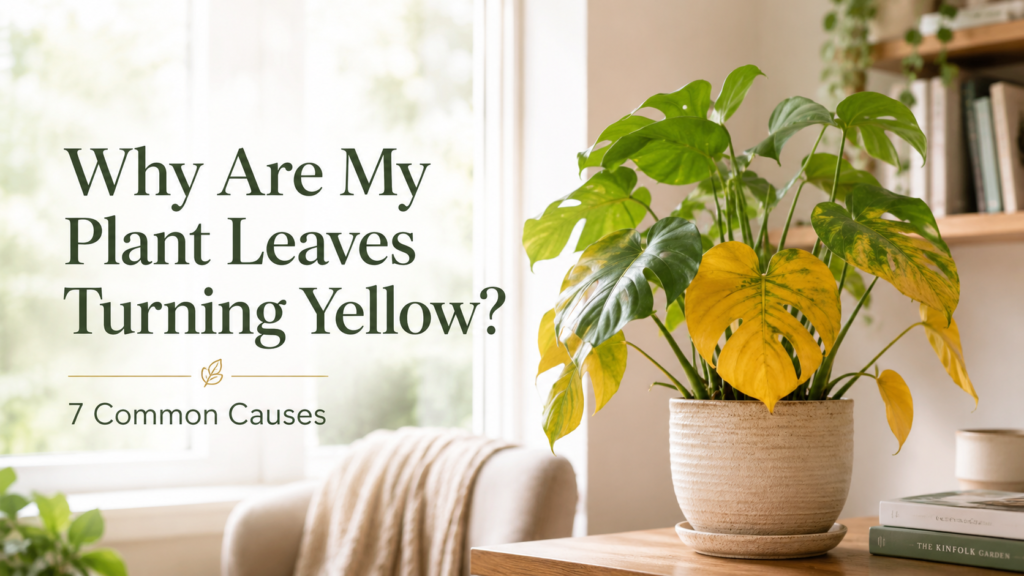
Yellow leaves are one of the most common signs that something is wrong with your plant.
But the tricky part is this:
yellow leaves can mean many different things.
It could be too much water, not enough light, poor drainage, old leaves, or even the wrong soil.
Before you panic, here are the most common reasons plant leaves turn yellow — and what you can do to fix them.
Some of the links below may be affiliate links. This means I may earn a small commission if you buy through them, at no extra cost to you.
1. Overwatering
Overwatering is one of the biggest reasons indoor plant leaves turn yellow.
When soil stays wet for too long, roots cannot breathe properly.
That can lead to weak roots, root rot, and yellow leaves.
Signs of overwatering:
- yellowing leaves
- soft or mushy stems
- wet soil for several days
- bad smell from the soil
- leaves dropping suddenly
Fix:
Let the soil dry out before watering again.
Always check the soil first instead of watering on a fixed schedule.
Moisture meter
Plant Moisture Meter
A moisture meter helps beginners check if the soil is actually dry before watering again.
Check on Amazon
2. Poor Drainage
Even if you water correctly, poor drainage can still cause yellow leaves.
If your pot has no drainage holes, water stays trapped at the bottom.
That keeps roots wet for too long.
Fix:
Use a pot with drainage holes and a saucer.
If you love a decorative pot with no holes, use it as a cover pot. Keep the plant inside a nursery pot with drainage, then place that inside the decorative pot.
Pot with drainage
Indoor Plant Pot with Drainage
A pot with drainage holes helps prevent trapped water and reduces the risk of yellow leaves from root problems.
Check on Amazon
3. Not Enough Light
Low light can also make plant leaves turn yellow.
Plants need light to produce energy. If they don’t get enough, growth slows down and leaves can lose color.
Signs of low light:
- pale or yellow leaves
- slow growth
- long, weak stems
- plant leaning toward the window
- smaller new leaves
Fix:
Move the plant closer to a bright window, but avoid harsh direct sun unless the plant can handle it.
If your room is very dark, a grow light can help.
Grow light
Small Grow Light for Indoor Plants
A grow light can help indoor plants stay healthier in darker rooms with limited natural light.
Check on Amazon
4. Too Much Direct Sun
Not all yellow leaves come from low light.
Some plants turn yellow or brown when they get too much direct sun.
Direct sunlight can burn leaves, especially on tropical houseplants.
Signs of too much sun:
- yellow patches
- crispy brown edges
- faded leaves
- dry, scorched spots
Fix:
Move the plant away from harsh afternoon sun.
Bright indirect light is usually safer for most indoor plants.
5. Wrong Soil
Heavy soil can hold too much water.
When soil stays wet too long, roots struggle and leaves can start turning yellow.
This is especially common if you use garden soil indoors.
Fix:
Use a light, well-draining potting mix for indoor plants.
Adding perlite can also improve airflow and drainage.
6. Nutrient Problems
Sometimes yellow leaves happen because the plant doesn’t get enough nutrients.
This is more common if the plant has been in the same soil for a long time.
Signs may include:
- pale new growth
- slow growth
- weak stems
- older leaves yellowing
Fix:
Use a balanced plant fertilizer during the growing season.
Don’t overdo it. Too much fertilizer can damage roots.
7. Natural Aging
Not every yellow leaf is a problem.
Older leaves naturally turn yellow and die as the plant grows.
If only one or two old lower leaves are yellow and the rest of the plant looks healthy, it may be normal.
Fix:
Remove old yellow leaves when they are ready.
Then watch the plant for new symptoms.
Quick Checklist: Why Are Your Plant Leaves Yellow?
Ask yourself:
- Is the soil still wet?
- Does the pot have drainage holes?
- Is the plant getting enough light?
- Is it sitting in direct sun?
- Is the soil too dense?
- Has the plant been fertilized recently?
- Are only the oldest leaves yellow?
This helps you find the real cause before guessing.
Final Thoughts
Yellow leaves are a warning sign, not a disaster.
The most common causes are overwatering, poor drainage, low light, and heavy soil.
Start with the basics:
check the soil, check the pot, and check the light.
Most plant problems become much easier to fix once you understand what the plant is trying to tell you.
🌿 Love calm spaces and natural living?
Discover more guides on indoor plants, cozy decor, and creating a home that feels better.

Cosmin Stefanoiu is the founder and editor of The Leafy Room, a practical guide focused on indoor plants, plant care, pots and planters, small-space gardening, and thoughtful plant styling.
He creates clear, beginner-friendly editorial guides designed to help readers choose plants, understand everyday care, and make practical decisions for real homes.
Pingback: How to Know If Your Plant Really Needs Water
Pingback: Alocasia Black Velvet How to Grow