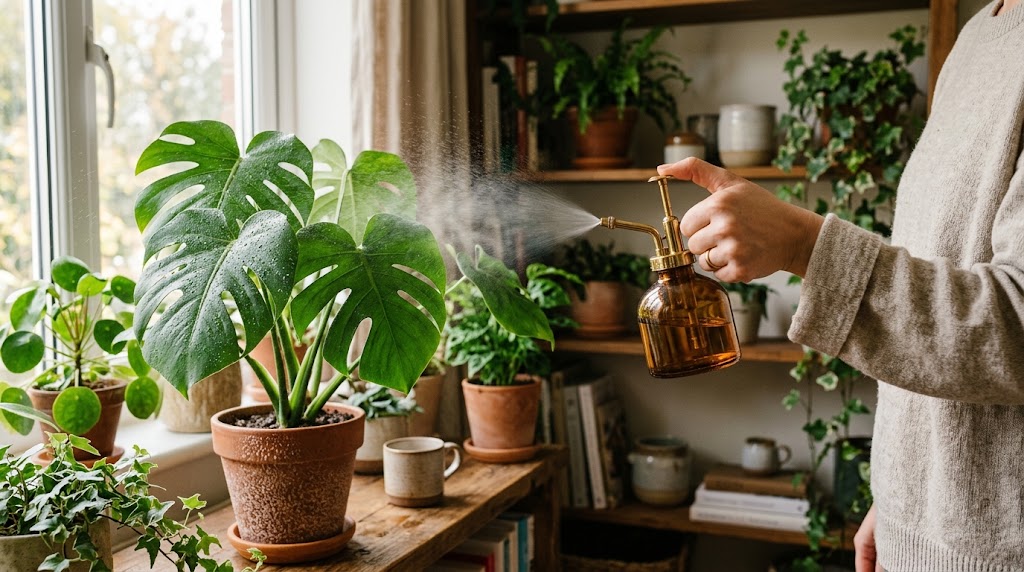
Finding the best plant misters for indoor plants is easy — they’re inexpensive, simple tools, and most work fine. The harder question is what misting actually does for your plants, since the common belief that it “raises humidity” for tropical plants isn’t quite true. That doesn’t mean a mister is useless — it just means it’s worth understanding what it’s genuinely good for before you build your plant care routine around it.
Here’s what the research actually says, plus our top picks. Some of the links below are affiliate links — if you buy through them, we may earn a small commission at no extra cost to you.
Quick Answer
A plant mister is a useful, inexpensive tool, but not for the reason most people think. Research from Penn State Extension and other university sources shows that misting raises humidity only until the water evaporates — often within minutes — so it doesn’t meaningfully change the humidity your plant experiences over the course of a day. Where a mister genuinely helps is cleaning dust off leaves, giving air plants their primary source of hydration, and providing a brief, gentle refresh for humidity-loving plants. For a real, lasting humidity boost, a humidifier or pebble tray works far better than misting alone.
What Misting Actually Does (and Doesn’t Do)
The idea that misting raises humidity around a plant makes intuitive sense — you’re adding moisture to the air, after all. The problem is timing. As Penn State Extension puts it, a rise in humidity from misting “only lasts until the water evaporates,” which typically happens within a few minutes. By the time you’ve moved on to the next plant, the humidity around the first one has already dropped back to the room’s baseline.
Most houseplants prefer 40-50% relative humidity, and many tropicals want more. A heated home in winter can easily sit below 30%. A quick spray simply can’t bridge that gap for hours at a time, no matter how often you mist.
So What Is a Plant Mister Actually Good For?
- Cleaning dust off leaves. Dust buildup blocks light and reduces photosynthesis over time. A light misting followed by wiping leaves keeps them clean and better able to absorb light.
- Hydrating air plants (Tillandsia). Unlike most houseplants, air plants absorb water directly through their leaves and genuinely rely on regular misting or soaking as a primary watering method, not just a humidity boost.
- A brief cooling effect. Misting can offer a short-term cooling sensation for a plant on a particularly hot day, similar to how sweat cools skin as it evaporates.
- Watering seedlings and delicate cuttings. A fine mist is gentler than a watering can stream for very young or fragile growth.
If your actual goal is raising humidity for plants like calathea, alocasia, or ferns, our guide on how to raise humidity for indoor plants without making your home damp covers the methods that genuinely work, like grouping plants together, pebble trays, and humidifiers.
What to Look for in a Plant Mister
- Fine, even spray pattern. A coarse or uneven spray wets leaves unevenly and can drip excessively rather than lightly coating the surface.
- Comfortable trigger. If you’re misting several plants at once, a stiff or awkward trigger gets tiring fast.
- Reasonable capacity. Small bottles need frequent refilling; larger ones are heavier but last longer per session.
- Material you like. Glass and metal misters look attractive on a shelf; plastic is lighter and more affordable.
Our Picks
Best Overall: Fine Mist Plant Spray Bottle
A reliable, continuous fine mist with a comfortable trigger — a straightforward, no-fuss option for daily leaf cleaning and light watering tasks.
Best for Display: Glass Plant Mister with Pump
An attractive glass design that looks good left out on a shelf near your plants, so misting stays a convenient, visible part of your routine instead of something buried in a cabinet.
Best for Air Plants: Stainless Steel Plant Mister
A durable, rust-resistant option that holds up well to the more frequent misting air plants actually need as their main hydration method.
How to Use a Mister Effectively
- Mist in the morning so leaves have time to dry before evening, reducing the risk of fungal issues from prolonged moisture.
- Spray both the tops and undersides of leaves when cleaning dust, since pests and dust often collect on the underside too.
- Avoid misting plants with active fungal or bacterial spots — added moisture can make the problem worse.
- For air plants specifically, mist thoroughly enough that the whole plant is visibly wet, since that’s their actual water source, not just a light spritz.
Final Thoughts on the Best Plant Misters for Indoor Plants
A plant mister is worth having, just not for the reason most plant care advice repeats. Skip the idea that daily misting will meaningfully raise humidity, and use it instead for what it’s genuinely good at: keeping leaves clean, hydrating air plants, and giving delicate seedlings a gentle watering option. For real humidity control, pair it with a humidifier or pebble tray instead of relying on misting alone.
Read Next
- How to Raise Humidity for Indoor Plants Without Making Your Home Damp
- Best Air-Purifying Indoor Plants (What the Science Really Says)
- Best Soil Moisture Meters for Indoor Plants

Cosmin Stefanoiu is the founder and editor of The Leafy Room, a practical guide focused on indoor plants, plant care, pots and planters, small-space gardening, and thoughtful plant styling.
He creates clear, beginner-friendly editorial guides designed to help readers choose plants, understand everyday care, and make practical decisions for real homes.
Pingback: Best Hygrometers for Indoor Plants