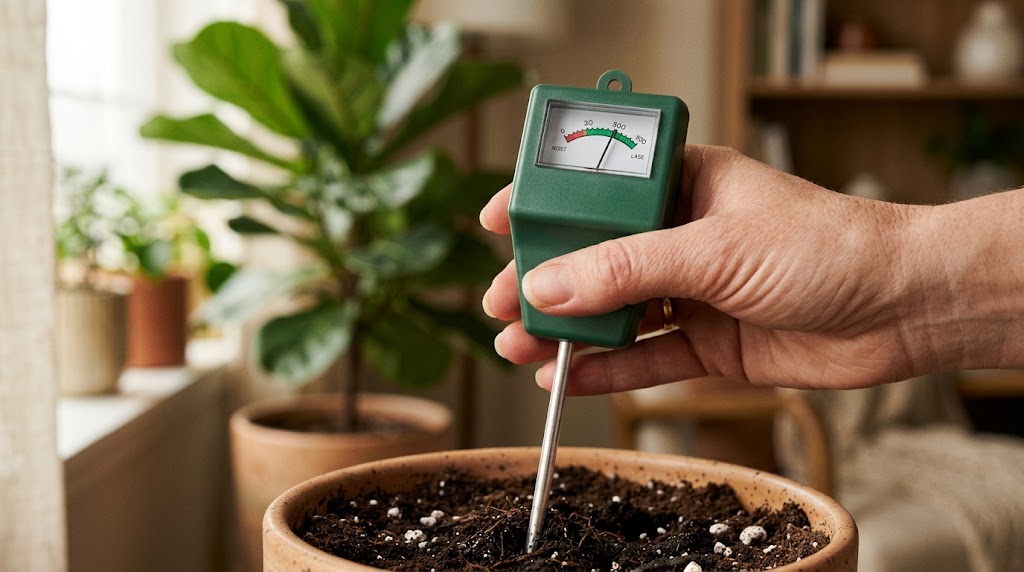
Finding the best soil moisture meters for indoor plants comes down to solving one simple problem: the “should I water this or not?” question that causes more overwatering deaths than almost anything else. Instead of guessing by finger-poking or lifting the pot to judge weight, a meter gives you a straight answer in seconds.
Here are the best soil moisture meters worth buying, and what to look for before you pick one. Some of the links below are affiliate links — if you buy through them, we may earn a small commission at no extra cost to you.
Quick Answer
For most houseplant owners, a simple analog probe meter (no batteries needed) is the best choice — it’s inexpensive, reliable for years, and easy to read at a glance. If you have several tall or deep pots where surface moisture doesn’t tell the whole story, look for a model with a longer probe so you can check moisture near the root zone, not just the top inch of soil.
Why a Moisture Meter Is Worth Having
Even experienced plant owners get watering wrong sometimes — soil can look dry on the surface while staying soggy underneath, especially in larger or deeper pots. A moisture meter takes the guesswork out of it by measuring conductivity in the soil (water conducts electricity, dry soil doesn’t), giving you a direct reading instead of a guess.
It’s especially useful if you’re new to plant care and still developing a feel for when your specific plants actually need water. If you want a refresher on what else to check besides moisture before watering, our guide on what to check before watering indoor plants covers the full picture. As the University of Missouri Extension notes, improper watering — usually overwatering — remains one of the most common reasons houseplants decline indoors.
What to Look for Before Buying
- Probe length. A short probe (a few inches) only tells you about surface moisture. For deeper or larger pots, a longer probe reaches down to where the roots actually are.
- No batteries needed. Most basic analog meters run on the soil’s own conductivity and never need batteries — one less thing to maintain or replace.
- Easy-to-read display. Look for a simple dial with clear color zones (dry / moist / wet) rather than a numeric scale that requires interpretation.
- Durable probe material. Cheaper meters can corrode or bend with frequent use — a sturdier metal probe lasts significantly longer.
Our Picks
Best Overall: XLUX Soil Moisture Meter
A simple, no-battery analog meter that reads moisture (and often light and pH) is the right starting point for most plant owners. It’s inexpensive, has no batteries to replace, and the dial is easy to read at a glance. This is the type of meter most reviewers recommend as a reliable daily-use option for typical indoor pots.
Best for Deep or Tall Pots: XLUX Long Probe Soil Moisture Meter
If you have tall potted plants or deep containers, a meter with a probe of 10+ inches lets you check moisture near the root zone instead of just the surface. This matters more than people expect — a pot can look dry on top while staying waterlogged several inches down, which is a common cause of root rot in larger containers.
Best for Multiple Plants: Soil Moisture Meter 3-Pack
If you’ve got a growing plant collection, buying a multi-pack of basic meters means you can leave one in your most finicky or expensive plants permanently, rather than moving a single meter from pot to pot and cleaning it each time.
How to Use a Moisture Meter Correctly
- Insert the probe about two-thirds of the way into the soil, avoiding direct contact with roots when possible.
- Wait a few seconds for the reading to stabilize before checking the dial.
- Check in two or three different spots in larger pots, since moisture can vary across the soil.
- Wipe the probe clean after each use, especially before moving it to a different plant, to avoid spreading any soil-borne issues.
Keep in mind a meter is a helpful tool, not a substitute for knowing your specific plants — pair it with your regular observations, like the ones covered in our weekly indoor plant care routine, for the most reliable results.
A Word of Caution
Moisture meters aren’t perfectly scientific — factors like mineral buildup in the soil, hard water, or soil compaction can all affect the reading slightly. Treat the number as a strong guide rather than an absolute truth, especially once you’ve used it long enough to get a feel for what’s normal in your own pots.
Final Thoughts on the Best Soil Moisture Meters for Indoor Plants
A moisture meter won’t replace good plant instincts, but it’s one of the cheapest tools that can genuinely prevent the most common houseplant mistake — watering on a schedule instead of watering based on what the plant actually needs. For the price, it’s an easy addition to any plant care kit.
Read Next
- What to Check Before Watering Indoor Plants
- How to Build a Simple Weekly Indoor Plant Care Routine
- How to Fertilize Indoor Plants in Fall and Winter

Cosmin Stefanoiu is the founder and editor of The Leafy Room, a practical guide focused on indoor plants, plant care, pots and planters, small-space gardening, and thoughtful plant styling.
He creates clear, beginner-friendly editorial guides designed to help readers choose plants, understand everyday care, and make practical decisions for real homes.
Pingback: Best Watering Cans for Indoor Plants