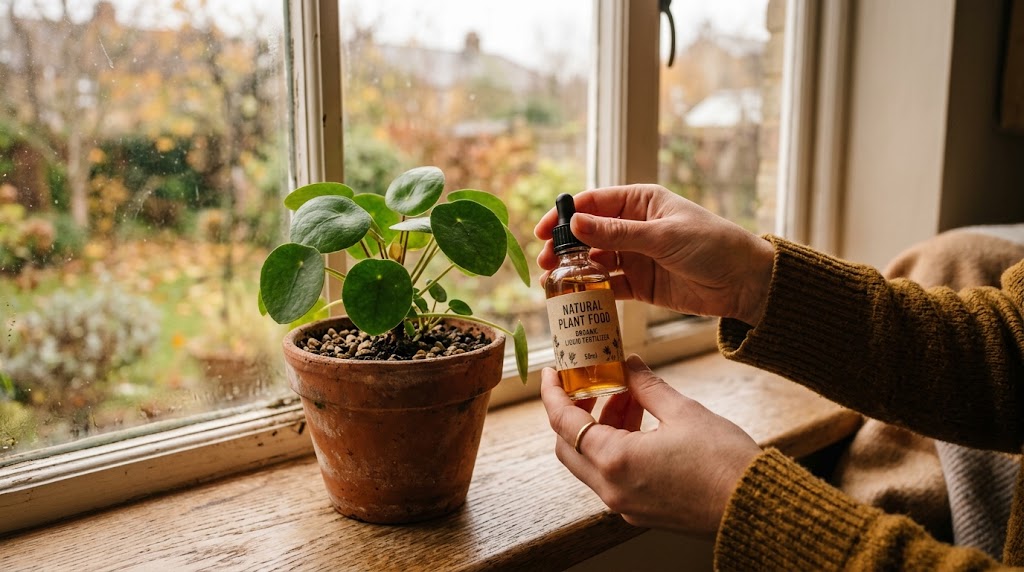
Learning how to fertilize indoor plants in fall and winter starts with knowing when to pull back. If you’ve kept up a steady fertilizing schedule all summer, fall is the point where that routine needs to change — not stop entirely, but change. Most indoor plants slow way down as daylight hours shrink, and feeding them like it’s still July is one of the most common ways well-meaning plant owners cause root damage heading into winter.
Here’s exactly how to adjust your fertilizing routine for the colder months, without starving your plants or overfeeding them into trouble.
Quick Answer
Most houseplants need little to no fertilizer from late fall through winter, since shorter days and lower light slow their growth to a near standstill. Cut back to about a quarter of your normal feeding frequency, or stop altogether for plants that are fully dormant. Resume regular fertilizing in spring once you see new growth starting again. Feeding a dormant plant doesn’t help it grow faster — it just builds up salts in the soil that can burn the roots.
Why Fertilizer Needs Change in Fall and Winter
Fertilizer isn’t magic growth fuel — it’s only useful to a plant that’s actively growing and able to use the nutrients. Growth in most houseplants is driven by light. As days get shorter and light indoors gets weaker (even for plants right at a window), plants naturally shift into a slower growth phase or full dormancy.
During this slower period, a plant simply isn’t taking up nutrients at the same rate. Fertilizer that isn’t used doesn’t just wait patiently in the soil — it builds up as mineral salts, which can damage roots and show up as crispy brown leaf tips or edges.
When to Start Cutting Back
There’s no single date that works for every plant or every home, since it depends on your specific light conditions. As a general guide, start reducing fertilizer once you notice the days getting noticeably shorter — usually from mid-to-late fall — and watch the plant itself for confirmation: slower or stalled new growth is the clearest sign it’s time to ease off.
Plants under grow lights on a consistent schedule may not slow down as much and can sometimes keep a light feeding schedule through winter — it’s really about the light the plant is actually getting, not the calendar date alone.
How Much to Cut Back
You generally have two reasonable approaches:
- Reduce frequency and strength. If you fertilize every two weeks in summer, drop to once a month, and consider diluting the fertilizer to half strength.
- Stop entirely for fully dormant plants. Some plants — many succulents, for example — essentially stop growing altogether in low light and cooler indoor temperatures, and don’t need any fertilizer until they show new growth again.
When in doubt, less is safer than more. An underfed plant in winter will simply resume normal growth once fertilized again in spring. An overfed plant can suffer real root damage that takes much longer to recover from.
Signs You’re Overfeeding a Dormant Plant
Watch for these signs, which often show up before you’d expect:
- A white or crusty buildup on the soil surface or around drainage holes — this is mineral salt residue.
- Brown, crispy tips or edges on leaves, even when watering seems adequate.
- Slowed or stunted growth despite regular feeding — a sign the roots may be struggling rather than thriving.
If any of this looks familiar and you’re not sure what’s actually going on, our guide on diagnosing common indoor plant problems can help you narrow down whether it’s a feeding issue or something else entirely.
Plants That May Still Need Light Feeding
Not every plant goes fully dormant. A few categories that may still benefit from occasional, light feeding through winter:
- Plants actively blooming through winter (like certain orchids or African violets).
- Plants kept under supplemental grow lights on a long daily cycle.
- Fast-growing plants in consistently warm, bright rooms that haven’t visibly slowed down.
For these, a very diluted feeding once a month is usually enough — the goal is to support what growth is happening, not push for more.
Adjust Watering Alongside Fertilizing
Slower growth in winter usually means less water is needed too, not just less fertilizer. Overwatering a slow-growing or dormant plant is one of the most common ways root problems start during the colder months. Before you water, always check that the soil has actually dried out — our guide on what to check before watering indoor plants covers exactly how to tell.
How to Resume Fertilizing in Spring
Once you start seeing new leaves, longer stems, or any other sign of active growth returning — usually as days lengthen again — that’s your cue to gradually return to a normal feeding schedule. Ease back in rather than jumping straight to full-strength, full-frequency feeding, especially if the plant went several months without any fertilizer at all.
This is also a good moment to fold fertilizing back into your regular care habits. A simple weekly indoor plant care routine makes it easy to track when each plant was last fed and watered, rather than trying to remember by feel.
A Note on Light and Placement
Since light drives how much a plant actually needs to be fed, a plant that’s struggling through winter may simply be in a spot that’s too dark for the season. If a plant that used to do well is now stalling out completely, it’s worth double-checking its location — our guide on choosing the best spot for indoor plants covers how light needs can shift as the seasons change.
Fall/Winter Fertilizing Checklist
- Reduce fertilizing frequency once growth visibly slows
- Cut fertilizer strength to half, or stop entirely for dormant plants
- Watch for salt buildup, crispy leaf tips, or stalled growth from overfeeding
- Keep light feeding only for actively blooming or grow-light plants
- Reduce watering alongside fertilizing — check soil before watering
- Resume normal feeding gradually once new growth appears in spring
Final Thoughts on How to Fertilize Indoor Plants in Fall and Winter
Cutting back on fertilizer in fall and winter isn’t neglect — it’s matching what you give your plants to what they can actually use. A dormant plant fed like it’s peak summer doesn’t grow faster; it just accumulates stress it has to recover from later. Ease off now, watch for new growth in spring, and ease back in when the plant tells you it’s ready.
Read Next
- How to Bring Outdoor Plants Indoors for Winter
- What to Check Before Watering Indoor Plants
- How to Build a Simple Weekly Indoor Plant Care Routine

Cosmin Stefanoiu is the founder and editor of The Leafy Room, a practical guide focused on indoor plants, plant care, pots and planters, small-space gardening, and thoughtful plant styling.
He creates clear, beginner-friendly editorial guides designed to help readers choose plants, understand everyday care, and make practical decisions for real homes.
Pingback: Best Pruning Shears for Houseplants