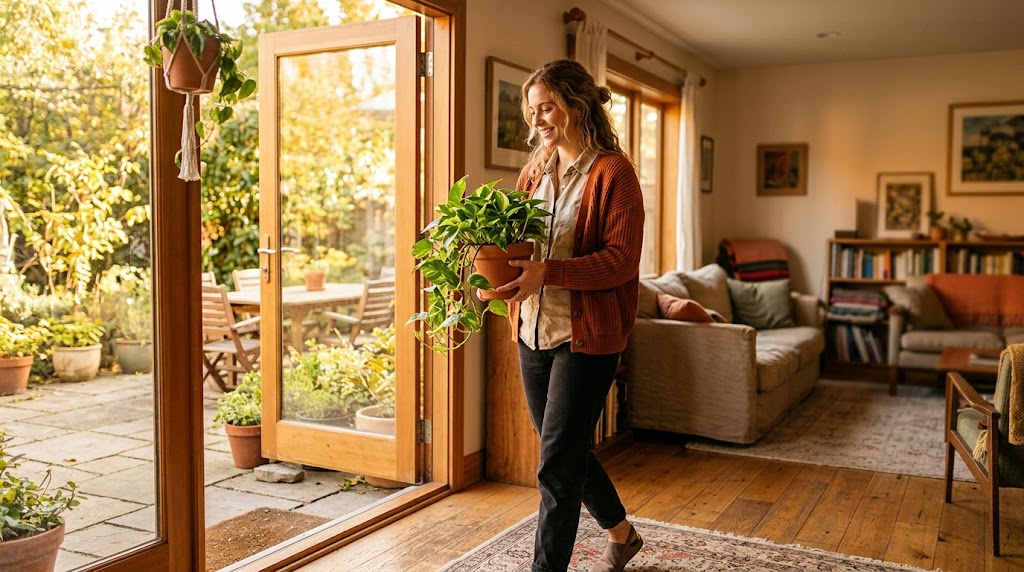
If you want to bring outdoor plants indoors before the cold hits, timing matters — any tropical or tender plants you’ve had outside all summer are running out of time as temperatures start dropping. Wait too long, and a single cold night can undo months of healthy growth. Move them in too carelessly, and you risk dragging pests, mold, or shock straight into your indoor plant collection.
This guide walks through exactly which plants need to come in, when to do it, and how to make the transition without losing plants or infesting the rest of your indoor collection.
Quick Answer
Bring tender and tropical plants indoors before nighttime temperatures drop below 50°F (10°C) — most tropicals start showing stress below that point, even without a frost. Before moving anything inside, inspect closely for pests, rinse the foliage and pot, and quarantine new arrivals away from your existing indoor plants for one to two weeks. Once inside, expect some leaf drop as the plant adjusts to lower light and humidity — that’s normal, not a sign you did something wrong.
Which Plants Actually Need to Come Inside
Not everything on your patio needs rescuing. Focus your effort on:
- Tropical houseplants that spent summer outside — pothos, monstera, philodendron, and similar plants that normally live indoors but got a “summer vacation” on the balcony or patio.
- Tender perennials and tropicals not hardy in your zone — hibiscus, mandevilla, bougainvillea, and similar plants that will die outright in freezing temperatures.
- Herbs you want to keep growing — rosemary, basil, and other tender herbs can often continue indoors on a bright windowsill through winter.
Hardy perennials, shrubs, and anything rated for your USDA zone can stay outside — they’re built to handle winter dormancy where they are. Bringing cold-hardy plants inside actually does them a disservice, since they need the seasonal cold to trigger proper dormancy.
When to Move Plants Indoors
Timing matters more than most people think. A good rule of thumb: bring tropicals in once nighttime temperatures start dipping below 50°F (10°C), even if there’s no frost yet. Many tropical plants begin showing cold stress — yellowing, dropping leaves, slowed growth — well before an actual frost hits.
Don’t wait for the weather forecast to say “frost warning.” By then, sensitive plants may already have sustained damage. Check nighttime lows for your area regularly once fall arrives, and plan the move a few days ahead rather than scrambling the night temperatures crash.
Step 1: Inspect Every Plant Closely for Pests
This is the step people skip, and it’s the one that causes the most regret. Outdoor plants pick up hitchhikers all summer — aphids, spider mites, mealybugs, and scale insects can hide in soil, on stems, and on the undersides of leaves without being obvious at a glance.
Before anything comes inside:
- Check the undersides of leaves and along stems for small insects, sticky residue, or webbing.
- Look at the soil surface for signs of ants or larvae.
- Gently knock the pot to see if anything scurries out.
If you spot something questionable but can’t identify it, our guide on diagnosing common indoor plant problems can help you figure out what you’re dealing with before it spreads to the rest of your collection.
Step 2: Rinse and Clean Before the Move
Give each plant a thorough rinse with a hose or in the shower — this knocks off dust, small pests, and eggs that a visual inspection alone might miss. Wipe down larger leaves individually with a damp cloth. While you’re at it, wipe down the outside of the pot too, since pests and eggs can hide in the rim and drainage holes.
If a plant has been in the same pot all summer, this is also a natural point to check whether it’s outgrown its container — if roots are circling tightly or poking through drainage holes, it may be time for a size up. Our guide on choosing the right pot size for indoor plants covers how to tell when a plant needs more room.
Step 3: Quarantine Before Introducing to Other Plants
Even after a careful inspection and rinse, it’s worth keeping newly-moved plants separate from your existing indoor collection for one to two weeks. Pests and eggs can be nearly invisible at first and only become obvious once they’ve had time to hatch or spread.
Keep the new arrivals in a separate room, or at minimum a few feet away from your other plants, and check on them every few days during the quarantine period. If nothing shows up by the end of two weeks, it’s safe to move them in with the rest of your collection.
Step 4: Find the Right Indoor Spot
Outdoor light and indoor light are not the same, even next to a sunny window. A spot that got hours of direct sun on the patio may only provide filtered, indirect light indoors — and the plant will need to adjust accordingly.
Take the time to find a genuinely good spot rather than just placing the plant wherever there’s room. Our guide on how to choose the best spot for indoor plants walks through matching light, airflow, and heat sources to what each plant actually needs.
Step 5: Adjust Your Watering and Humidity Routine
Indoor conditions are usually cooler and less humid than outside, especially once heating systems kick on for the season. Plants typically need less frequent watering indoors than they did outside — check soil moisture before watering rather than sticking to the same schedule you used all summer.
Indoor heating can also drop humidity levels significantly, which many tropical plants notice quickly through crispy leaf edges or slowed growth. If you see this happening, our guide on how to raise humidity for indoor plants without making your home damp covers practical fixes.
Step 6: Expect Some Leaf Drop — It’s Normal
Even with a perfect transition, many plants drop some leaves after being moved indoors. This is a normal stress response to lower light, lower humidity, and a different environment overall — not necessarily a sign that something is wrong.
Resist the urge to overcorrect by watering more or moving the plant repeatedly to “fix” it. Give it a few weeks to settle into its new spot before making any major changes. If leaf drop continues heavily past a month, or you notice other symptoms alongside it, that’s the point to dig deeper into the cause.
Step 7: Keep an Eye on It Going Forward
Once a plant has settled indoors, fold it into your regular care routine rather than treating it as a special case forever. A simple weekly indoor plant care routine makes it much easier to catch any issues — pests, watering problems, light stress — early, before they become bigger problems.
Bring-Indoors Checklist
- Move tropicals in once nights drop below 50°F (10°C)
- Inspect leaves, stems, and soil closely for pests
- Rinse foliage and wipe down the pot before bringing inside
- Quarantine new arrivals for 1–2 weeks away from other plants
- Find a genuinely appropriate indoor spot for light and airflow
- Adjust watering frequency and monitor humidity levels
- Expect some leaf drop as a normal adjustment, not a crisis
- Resume a regular care routine once the plant has settled
Final Thoughts
The plants that make it through the indoor transition well aren’t the ones moved in a panic the night before a frost — they’re the ones brought in early, inspected carefully, and given a proper spot to adjust. A little extra care during the move now means a healthier, fuller plant collection through the whole winter.
Read Next
- Fall Garden Prep: A Complete Checklist for a Healthier Garden Next Spring
- How to Choose the Best Spot for Indoor Plants
- How to Diagnose Common Indoor Plant Problems

Cosmin Stefanoiu is the founder and editor of The Leafy Room, a practical guide focused on indoor plants, plant care, pots and planters, small-space gardening, and thoughtful plant styling.
He creates clear, beginner-friendly editorial guides designed to help readers choose plants, understand everyday care, and make practical decisions for real homes.