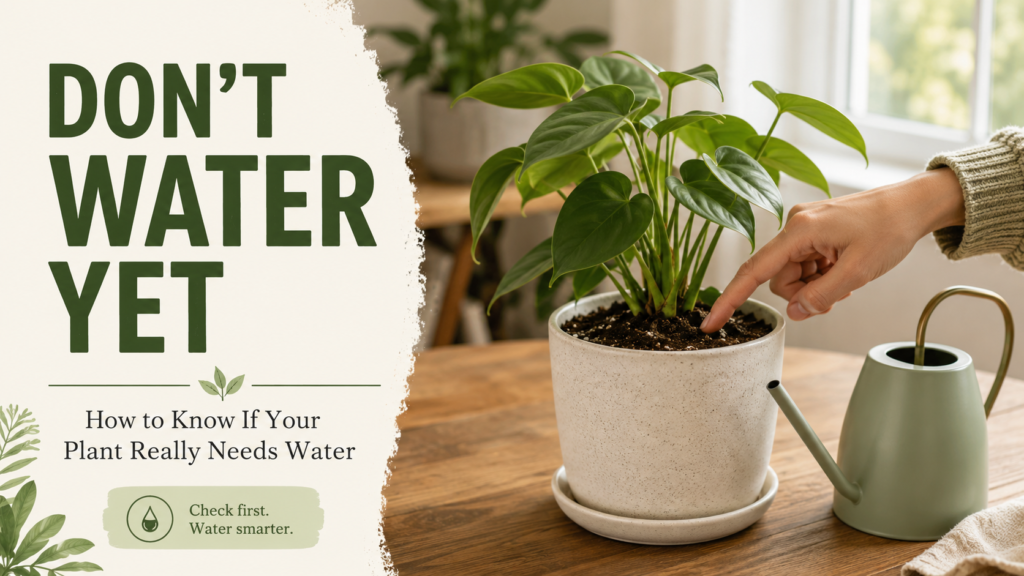
Don’t water yet.
That might sound strange, but most indoor plants are damaged by too much water, not too little.
When you water on a fixed schedule instead of checking the plant first, the soil can stay wet for too long. That can lead to yellow leaves, weak roots, root rot, and slow growth.
Before you water your plant again, here’s how to know if it actually needs water.
Some of the links below may be affiliate links. This means I may earn a small commission if you buy through them, at no extra cost to you.
Quick Watering Decision Table
Before watering an indoor plant, check the plant and the soil instead of following a fixed calendar.
| If you see… | What it may mean |
|---|---|
| Soil still feels damp | Wait before watering again |
| Top soil is dry but deeper soil is moist | Check again later |
| Pot feels unusually heavy | There may still be moisture inside |
| Leaves look soft and soil is dry | The plant may need water |
| Leaves look yellow and soil is wet | Too much water may be the problem |
| Plant is in low light | It may need water less often |
| Plant is in bright light | It may dry faster |
| Plant is in a small pot | It may dry faster than a large pot |
The safest habit is simple: check first, water second.
Why a Fixed Watering Schedule Can Be a Problem
Many beginners water plants every Saturday or every few days because it feels organized.
The problem is that plants do not use water at the same speed every week.
Watering needs can change based on:
- light
- temperature
- humidity
- pot size
- soil mix
- plant type
- season
- room airflow
- how close the plant is to a window
A plant in bright light may dry much faster than the same plant in a darker corner. A small pot may dry faster than a large pot. A plant near a warm window may need water more often than one in a cool room.
That is why checking the soil is usually better than watering by habit.
1. Check the Soil First
The easiest way to know if your plant needs water is to check the soil.
Stick your finger about 1–2 inches into the soil.
If the soil feels dry, it may be time to water.
If it still feels moist, wait.
This simple habit can prevent many common plant problems.
How to Check Before Watering
You do not need complicated tools to decide if a plant needs water.
Try these simple checks:
| Check | How to do it |
|---|---|
| Finger test | Put your finger into the soil and feel if it is still damp |
| Pot weight | Lift the pot and notice if it feels heavy or light |
| Soil color | Dry soil often looks lighter than wet soil |
| Leaf condition | Look for changes in firmness, drooping, or yellowing |
| Drainage check | Make sure the pot is not sitting in leftover water |
| Room check | Think about light, heat, and airflow |
Do not rely on only one sign. The best decision usually comes from checking the soil, the pot, and the plant together.
2. Don’t Trust the Surface Only
The top of the soil can look dry even when the soil underneath is still wet.
This is why many beginners overwater their plants.
Before watering, always check below the surface.
A plant can look thirsty, but the roots may still be sitting in moisture.
Moisture meter
Plant Moisture Meter
A moisture meter helps beginners check if the soil is actually dry before watering again.
Check on Amazon
3. Look at the Leaves
Leaves can give clues, but they can also be misleading.
A plant with droopy leaves may need water.
But droopy leaves can also mean the plant has been overwatered and the roots are struggling.
That’s why you should never rely on leaves alone.
Use the leaves as a clue, then check the soil before watering.
4. Feel the Weight of the Pot
This is a simple trick that works well.
A freshly watered pot feels heavier.
A dry pot feels lighter.
After you water your plant, lift the pot gently and notice the weight.
Over time, you’ll learn how your plant feels when it is dry.
This method is especially useful for smaller indoor plants.
5. Watch for Overwatering Signs
If you water too often, your plant may show signs of stress.
Common overwatering signs include:
- yellow leaves
- soft or mushy stems
- wet soil for days
- bad soil smell
- leaves dropping suddenly
- fungus gnats
If you see these signs, stop watering and check the roots, soil, and pot drainage.
Common Watering Mistakes That Cause Problems
Watering mistakes are common because many plants show stress in similar ways.
| Mistake | Why it causes problems |
|---|---|
| Watering on a strict calendar | The plant may not be dry yet |
| Giving a little water every day | Roots may stay unevenly moist |
| Ignoring drainage | Extra water can sit around the roots |
| Using a pot with no drainage plan | It becomes harder to control moisture |
| Watering because leaves droop | Drooping can happen for several reasons |
| Forgetting seasonal changes | Plants often use water differently in winter |
| Keeping plants in dark rooms and watering often | Soil may stay wet too long |
Better watering starts with observation. Look at the plant, feel the soil, and consider the room before adding more water.
Pot with drainage
Indoor Plant Pot with Drainage
A pot with drainage holes helps prevent trapped water and reduces the risk of overwatering problems.
Check on Amazon
6. Check the Plant Type
Not every plant wants the same amount of water.
For example:
- snake plants prefer to dry out more
- pothos likes moderate watering
- ferns prefer more consistent moisture
- succulents need very little water
- peace lilies like moisture but not soggy soil
Before watering, think about what kind of plant you have.
Some plants hate wet soil more than others.
7. Use a Watering Can for Better Control
Pouring water too quickly can flood the soil and create uneven watering.
A small watering can helps you water slowly and more evenly.
Water until a little excess drains out from the bottom, then let the plant rest.
If water collects in the saucer, empty it after a few minutes.
Indoor watering can
Indoor Watering Can
A small watering can helps you water indoor plants slowly and evenly without flooding the soil.
Check on Amazon
Quick Watering Checklist
Before watering, ask yourself:
- Is the soil dry 1–2 inches down?
- Does the pot feel light?
- Is the plant type drought-tolerant?
- Does the pot have drainage holes?
- Is the soil still wet from the last watering?
- Are the leaves yellow or mushy?
If the soil is still moist, wait.
Most plants are safer with a little patience than with too much water.
Signs Your Plant May Not Need Water Yet
Sometimes a plant looks a little tired, but water is not always the answer.
Your plant may not need water yet if:
- the soil still feels damp below the surface
- the pot still feels heavy
- the plant is in a low-light room
- the weather has been cool or cloudy
- the plant was watered recently
- the leaves are yellowing while the soil is wet
- water is still sitting in the saucer
- the plant is in a large pot that dries slowly
If you are unsure, wait a little and check again. It is usually safer to pause than to keep adding water to already damp soil.
Different Plants Dry at Different Speeds
Not all indoor plants want the same watering routine.
| Plant type | General watering behavior |
|---|---|
| Succulents and cacti | Usually prefer drying out more between waterings |
| Tropical foliage plants | Often prefer more consistent moisture, but not soggy soil |
| Flowering indoor plants | May need steady moisture when blooming |
| Large floor plants | Can dry slowly in big pots |
| Small desk plants | Can dry faster in small pots |
| Trailing plants | Need checks based on light, pot size, and growth |
| Low-light plants | Often need water less often in dim rooms |
This is why a single watering rule does not work for every plant. A Cast Iron Plant in soft light will not dry at the same speed as a bright-window plant or a small flowering plant.
Best For / Avoid If
This watering method is best if you want to build a better habit instead of guessing.
| Best for | Avoid if |
|---|---|
| Beginners learning plant care | You want one fixed rule for every plant |
| Indoor plants in different rooms | You do not want to check soil at all |
| Plants in decorative pots | You ignore drainage and saucers |
| People who overwater often | You keep watering because the calendar says so |
| Apartments with changing light | You assume all rooms dry the same way |
| Plant owners with mixed plant types | You treat succulents and tropical plants the same |
The goal is not to make watering complicated. The goal is to stop watering automatically and start checking what the plant actually needs.
Helpful Watering Tools to Consider
You do not need many tools to water indoor plants better, but a few simple items can help.
Useful items may include:
- a narrow watering can
- a plant saucer
- a moisture meter
- a pot with drainage holes
- a decorative cachepot with removable inner pot
- a soft cloth for leaves
- a plant tray
- a potting mat
- a spray bottle for specific plants that need it
If you add Amazon affiliate links later, the most natural places would be:
- narrow watering can
- plant saucer
- moisture meter
- pots with drainage holes
- decorative cachepot
- plant tray
- potting mat
The most useful watering tool is still attention. A tool can help, but it should not replace checking the plant and soil.
Simple Weekly Watering Routine
A simple weekly check can help you avoid both overwatering and underwatering.
| Step | What to do |
|---|---|
| 1 | Walk around and look at each plant |
| 2 | Touch the soil before watering |
| 3 | Check if the pot feels heavy or light |
| 4 | Empty any saucers with standing water |
| 5 | Water only the plants that actually need it |
| 6 | Notice which rooms dry faster or slower |
This routine does not mean every plant gets water every week. It means every plant gets checked every week.
Final Thoughts
Watering indoor plants well starts with one simple habit: check before you water.
A fixed schedule can be useful as a reminder, but it should not decide for you. Light, pot size, soil, room temperature, humidity, and plant type all change how quickly a plant uses water.
Before watering, feel the soil, check the pot, look at the leaves, and think about where the plant is placed. If the soil is still damp, it is often better to wait.
The best watering routine is not the one that follows a calendar perfectly. It is the one that responds to the plant in front of you.
🌿 Love calm spaces and natural living?
Discover more guides on indoor plants, cozy decor, and creating a home that feels better.

Cosmin Stefanoiu is the founder and editor of The Leafy Room, a practical guide focused on indoor plants, plant care, pots and planters, small-space gardening, and thoughtful plant styling.
He creates clear, beginner-friendly editorial guides designed to help readers choose plants, understand everyday care, and make practical decisions for real homes.
Pingback: Alocasia Black Velvet How to Grow