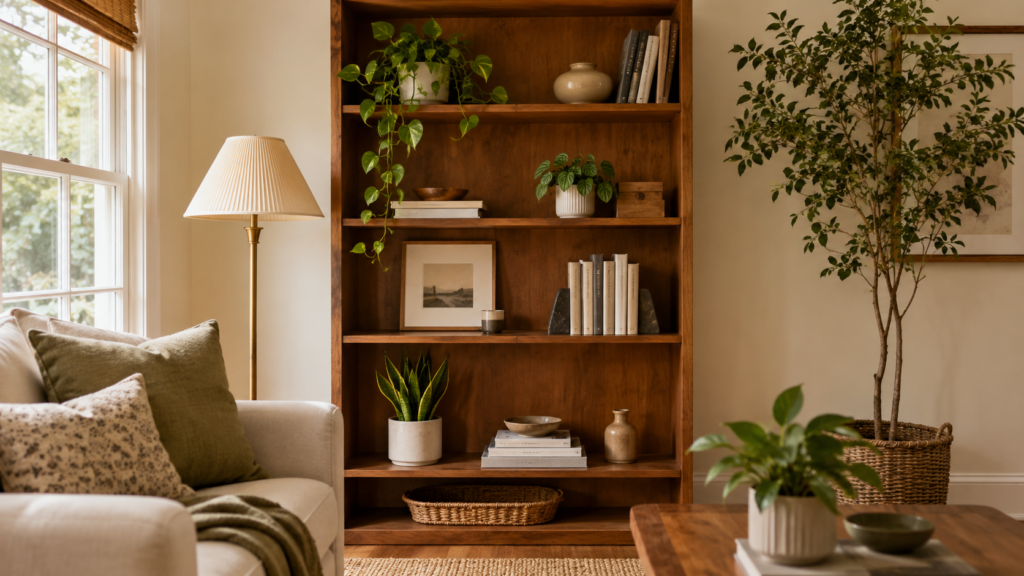
A bookcase can be one of the best places to style indoor plants.
Books add structure. Plants add softness. Small decor pieces add personality. Together, they can make a living room, bedroom, office, or reading corner feel warmer and more finished.
But bookcases can also become messy very quickly.
Too many tiny pots, plants on every shelf, long vines covering books, and unrelated pot colors can make a bookshelf feel crowded instead of styled. The goal is not to turn every shelf into a plant shelf. The goal is to let books, plants, and decor share the space.
Quick Answer
To style plants on a bookcase without making the shelves look messy, use a few small to medium plants, not a plant on every shelf. Start with one main shelf zone, add one trailing plant, one upright or compact plant, keep books visible, repeat 2 or 3 pot finishes, and leave some shelves partly empty.
A styled bookcase usually looks better when plants support the shelf design instead of taking over the whole bookcase.
Start With the Bookcase, Not the Plants
Before adding plants, look at the bookcase itself.
A tall open bookcase can handle more visual weight than a narrow shelf. A dark wood bookcase may need lighter pots. A white bookcase may need warm texture. A bookcase near a window can support more plant options than one in a darker corner.
Ask yourself:
- how much natural light reaches the shelves;
- which shelves are easiest to water safely;
- which shelves already look full;
- where books should stay visible;
- whether the shelves are deep enough for stable pots;
- whether vines will block book spines or nearby furniture;
- whether the bookcase is decorative, practical, or both.
A bookcase should still work as a bookcase. Plants should make it feel softer and more alive, not harder to use.
Choose One Main Shelf Zone First
Do not start by placing a plant on every shelf.
Instead, choose one main shelf zone.
This can be:
- the top left shelf;
- the top right shelf;
- one middle shelf;
- a shelf beside stacked books;
- a shelf near a framed print;
- one lower shelf with a larger pot.
Starting with one zone keeps the styling controlled. Once that area looks balanced, you can repeat the idea elsewhere in a smaller way.
A good rule is simple: style one focal shelf first, then edit the rest.
The Easy Bookcase Plant Formula
A balanced bookcase usually works best with this formula:
- one trailing plant;
- one upright or compact plant;
- books grouped vertically or horizontally;
- one simple decor object;
- visible empty space.
You do not need to use this formula on every shelf. In fact, you should not.
Use it as a guide for the main zones, then leave quieter shelves for books, baskets, frames, or open space.
Use a Trailing Plant Carefully
Trailing plants can look beautiful on a bookcase.
They soften straight shelf lines and add movement. They are especially useful on higher shelves, where the vines can fall naturally.
Good trailing options include:
- Pothos;
- Heartleaf Philodendron;
- String of Hearts;
- Hoya;
- Silver Satin Pothos;
- Peperomia Hope.
The mistake is letting the vines take over everything.
A few trailing stems can look relaxed. Long vines covering book spines, drawers, framed art, or other shelves can make the bookcase look untidy.
If the plant grows quickly, trim or guide the vines so they frame the shelf instead of hiding it.
For more trailing plant ideas, you can also read Best Hanging Plants for Small Rooms.
Add One Upright or Compact Plant
A bookcase needs structure, not only trailing leaves.
An upright or compact plant helps balance the softer shapes.
Good choices include:
- Snake Plant;
- ZZ Plant;
- Peperomia;
- Prayer Plant;
- Cast Iron Plant;
- small Rubber Plant;
- compact Philodendron;
- African Violet;
- small fern.
A narrow upright plant works especially well when the shelf has books beside it. A compact rounded plant works well on a shelf with stacked books, a framed print, or a small bowl.
Avoid plants that are too wide for the shelf. If leaves push against books, walls, or neighboring objects, the shelf will feel cramped.
Keep Books Visible
This sounds obvious, but it is one of the biggest bookcase styling mistakes.
If the plants hide most of the book spines, the bookcase loses its purpose. It starts to look like crowded storage rather than intentional decor.
Use plants to frame books, not bury them.
Good placements include:
- a small plant beside a vertical book group;
- a trailing plant at the shelf edge;
- a compact plant on top of a short book stack;
- one plant beside a framed object;
- a low plant in front of books only if the books are still partly visible.
Books should remain part of the design.
Group Books and Decor Together
A shelf looks more intentional when small objects are grouped.
Instead of spreading everything evenly across the shelf, create little zones.
You can group:
- three to five upright books;
- a horizontal stack of books;
- one small framed print;
- one ceramic bowl;
- one plant;
- one candle;
- one vase;
- one natural object such as a small wooden bowl or stoneware piece.
Try not to use all of these on the same shelf.
A bookcase looks better when each shelf has a slightly different rhythm.
Repeat 2 or 3 Pot Finishes
Pot colors matter a lot on a bookcase because everything is seen together.
If each plant has a completely different pot, the shelves can look random.
Good pot finishes for a warm, natural bookcase include:
- cream ceramic;
- terracotta;
- taupe;
- matte beige;
- soft green;
- woven basket texture;
- warm stoneware.
Choose 2 or 3 finishes and repeat them.
For example:
- cream ceramic + terracotta + woven texture;
- taupe ceramic + soft green + warm wood;
- beige stoneware + cream ceramic + natural basket.
This makes the bookcase feel connected without making every pot identical.
For more help choosing pot materials, read Terracotta vs Ceramic Pots: Which Is Better for Your Plants?.
Leave Empty Space on Purpose
Empty space is what makes a styled bookcase feel calm.
If every shelf is filled edge to edge, the eye has nowhere to rest. Even beautiful plants can become visual clutter when there are too many of them.
Leave some:
- open shelf space;
- visible wall or shelf backing;
- space between books and plants;
- space around framed art;
- room for vines to fall without touching everything.
A good test is to step back and look at the full bookcase. If the entire bookcase feels equally busy from top to bottom, remove one item.
Best Plants for a Bookcase
The best bookcase plants are usually compact, stable, easy to rotate, and not too heavy.
Pothos
Pothos is one of the easiest plants to style on a bookcase.
It trails beautifully, softens hard shelf lines, and works well in many rooms. Keep the vines trimmed so they do not cover too many books.
Snake Plant
Snake Plant is useful when you want an upright shape.
It works well on a lower or middle shelf if the shelf is tall enough. Its vertical leaves add structure without taking much width.
ZZ Plant
ZZ Plant has a tidy, sculptural look.
It is a good choice for shelves that need greenery but not a messy trailing shape. A small ZZ Plant can look especially clean in a neutral ceramic pot.
Peperomia
Peperomia is a strong choice for bookcases because it stays compact.
It works well beside stacked books, small frames, or a ceramic bowl. Watermelon Peperomia is especially decorative because of its round striped leaves. You can read more in Watermelon Peperomia: The Indoor Plant With Round Striped Leaves.
Prayer Plant
Prayer Plant adds pattern and softness without needing to become a large statement plant.
It works well with simple ceramic pots, wooden shelves, neutral walls, and warm natural light. See the full Prayer Plant care guide if you want more detail.
Silver Satin Pothos
Silver Satin Pothos can look beautiful on a shelf because the silver-splashed leaves feel decorative without being too loud.
It works best when the vines have room to trail lightly. You can read more in Silver Satin Pothos: The Trailing Plant With Silver-Splashed Leaves.
Small Ferns
A small fern can soften a bookcase, especially if the room has enough light and humidity.
Use it as a texture plant, not as the main focus on every shelf.
How Many Plants Should You Put on a Bookcase?
There is no perfect number, but less usually looks better.
For most bookcases, try:
- 1 to 2 plants per main styling zone;
- 3 to 5 plants total on a larger bookcase;
- fewer plants if the shelves are narrow;
- more books and decor than plants.
A plant on every shelf can look repetitive. It can also make watering harder and increase the chance of spills.
Plants should be accents, not the only thing happening on the bookcase.
Where to Place Plants on a Bookcase
Some spots work better than others.
Good spots
Good plant placements include:
- shelf corners;
- beside a vertical row of books;
- on top of a horizontal book stack;
- near a framed print;
- on an upper shelf where a trailing plant can fall;
- on a lower shelf if the pot is stable and easy to reach.
Spots to avoid
Avoid placing plants:
- directly in front of every book spine;
- where vines block the whole shelf;
- on a shelf that is too shallow;
- above delicate electronics;
- in a very dark shelf interior;
- where watering could damage books;
- on an unstable stack.
A bookcase plant should feel secure and easy to care for.
Match the Plants to the Light
A bookcase near a window can support more plant choices than a bookcase in a dim corner.
But shelves can be tricky. Even if the room feels bright, the inside of the bookcase may be shaded.
Bright indirect light
Good options include:
- Pothos;
- Philodendron;
- Peperomia;
- Prayer Plant;
- Silver Satin Pothos;
- Hoya;
- small Rubber Plant;
- African Violet;
- Rex Begonia.
Medium light
Good options include:
- Pothos;
- ZZ Plant;
- Snake Plant;
- Cast Iron Plant;
- Peperomia;
- Heartleaf Philodendron.
Lower light
Better options include:
- ZZ Plant;
- Snake Plant;
- Cast Iron Plant;
- Pothos.
Low light does not mean no light. If a shelf is dark all day, consider using fewer plants or rotating them to a brighter spot.
You can also read Best Low Light Plants for Small Apartments for more options.
Think About Watering Safety
Bookcases hold books, paper, wood, and decor, so watering matters.
To avoid problems:
- use pots with saucers or cachepots;
- remove the plant from the shelf before watering if needed;
- check that water does not collect under the pot;
- avoid overwatering on the shelf;
- keep heavy wet pots on stronger shelves;
- do not place plants above books that could be damaged easily.
A beautiful shelf is not worth ruining with water rings or spills.
Style Different Shelves Differently
A bookcase looks better when the shelves are balanced, not identical.
For example:
- one shelf can have books and one trailing plant;
- another shelf can have a framed print and one compact plant;
- another shelf can be mostly books;
- another shelf can have a basket or bowl;
- one shelf can be left mostly open.
This variation keeps the bookcase from looking stiff.
If every shelf has the same formula, the bookcase may start to look too planned.
Common Bookcase Plant Mistakes
Putting plants on every shelf
This makes the bookcase feel overplanted.
Leave some shelves open or book-focused.
Using too many tiny pots
Many tiny pots create visual noise.
Use fewer plants with stronger shapes.
Hiding the books
Plants should support the books, not cover them.
Keep book spines visible.
Letting vines grow too long
Long vines can look beautiful, but they can also cover books, frames, and other shelves.
Trim or guide them.
Mixing too many pot colors
Too many pot colors make the shelves feel disconnected.
Repeat 2 or 3 finishes.
Ignoring shelf depth
A pot that is too deep or wide can look awkward and unsafe.
Choose stable pots that fit the shelf.
Forgetting light
Plants inside shelves may receive less light than plants near a window.
Match each plant to the real light it receives.
A Simple Bookcase Formula You Can Copy
Use this formula for one main shelf zone:
- Choose one shelf area as the focus.
- Add one trailing plant or one compact plant.
- Place books vertically or horizontally beside it.
- Add one simple decor object.
- Repeat one pot color from another shelf.
- Leave visible empty space.
- Step back and remove one item if the shelf feels full.
This keeps the bookcase useful, styled, and calm.
Useful Products:
Neutral Ceramic Shelf Pot
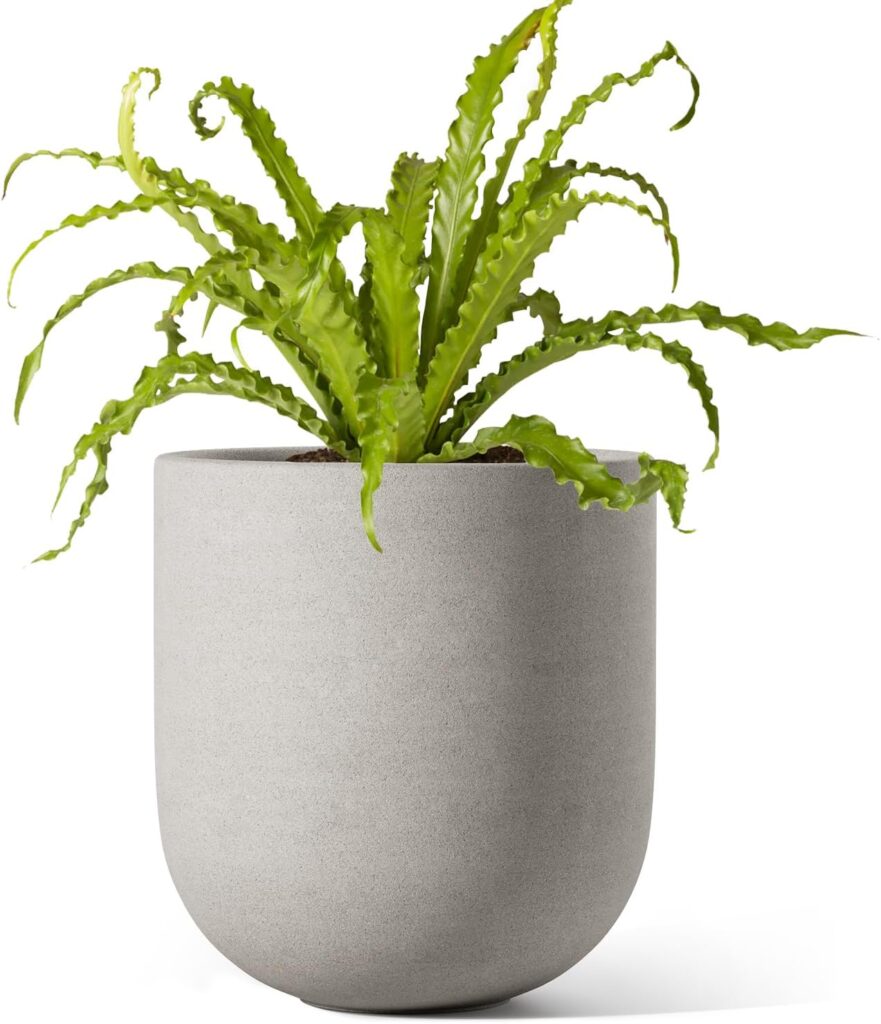
Best for: small bookcase plants that need a clean, stable, decorative container.
Why it works: a neutral ceramic pot helps the plant blend with books, wood shelves, framed art, and natural home decor without making the shelf look busy.
Use it for: pothos, peperomia, prayer plant, small ZZ plant, or African violet.
Small Woven Storage Basket
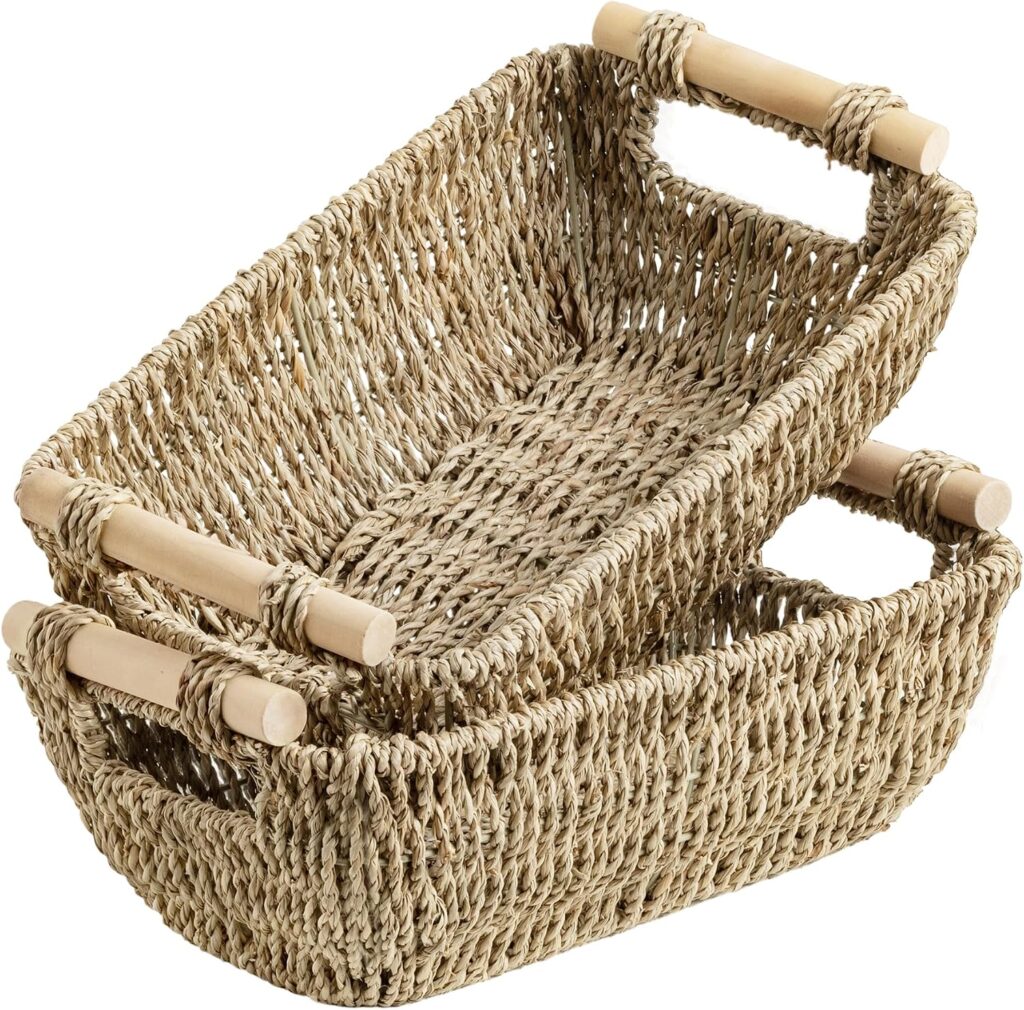
Best for: grounding the lower part of a bookcase and hiding small items that would otherwise make the shelves look cluttered.
Why it works: a woven basket adds warm texture while keeping the bookcase practical, especially when paired with plants, books, and neutral ceramic pots.
Use it for: plant tools, extra candles, small decor pieces, notebooks, or everyday living room clutter.
Final Thoughts
A bookcase does not need a plant on every shelf to feel green.
In most rooms, a few well-placed plants look better than many small pots. Choose compact or trailing plants, repeat pot colors, keep books visible, and leave some space open.
The best bookcase styling feels collected, not crowded.
If the shelves feel messy, remove one plant. If they feel flat, add one upright shape. If they feel random, repeat pot finishes. If they feel too full, let one shelf breathe.
Plants should support the bookcase, not take it over.
Read Next
- Plant Shelf Makeover: How to Style Indoor Plants Without Clutter
- Best Hanging Plants for Small Rooms
- Silver Satin Pothos: The Trailing Plant With Silver-Splashed Leaves
- Watermelon Peperomia: The Indoor Plant With Round Striped Leaves
- Terracotta vs Ceramic Pots: Which Is Better for Your Plants?

Cosmin Stefanoiu is the founder and editor of The Leafy Room, a practical guide focused on indoor plants, plant care, pots and planters, small-space gardening, and thoughtful plant styling.
He creates clear, beginner-friendly editorial guides designed to help readers choose plants, understand everyday care, and make practical decisions for real homes.