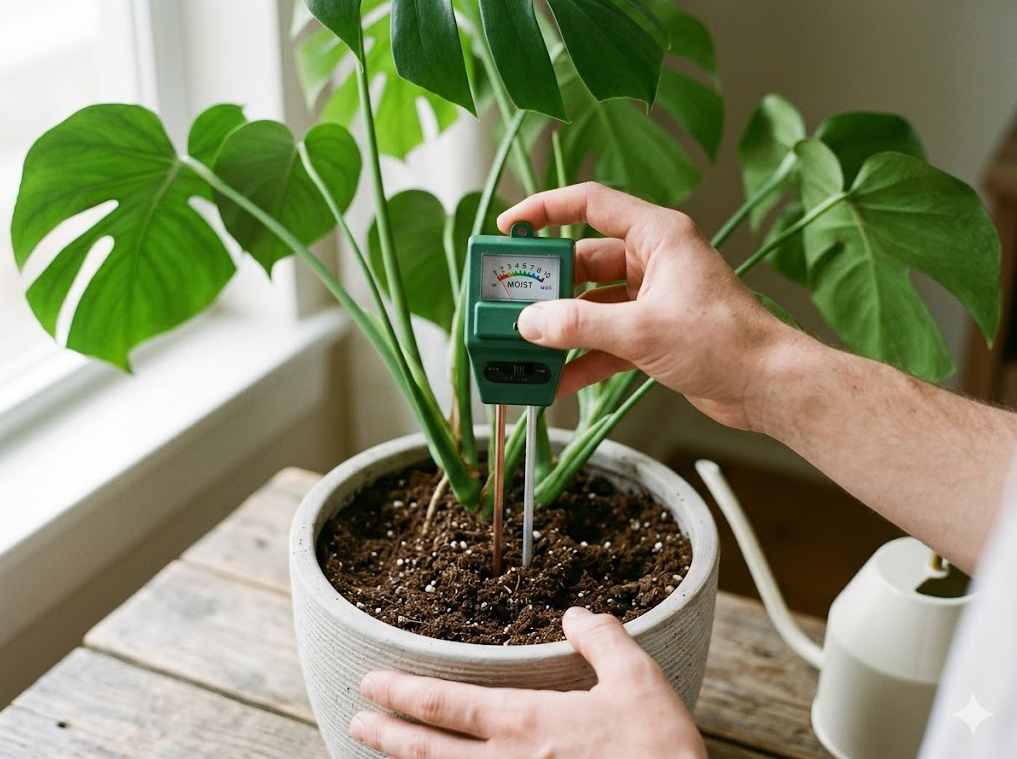
Overwatering is the #1 killer of houseplants. Most plant parents love their green friends to death—literally! Finding the perfect balance between “desert dry” and “swampy” is the secret to a thriving indoor jungle.
Here are the most reliable ways to check if your plant is actually thirsty:
1. The Finger Test (The Old School Way)
Don’t just look at the surface. Stick your finger about 2 inches into the soil. If it feels dry and dusty, it’s time to water. If it feels damp or cool, wait a few more days. This is the most basic yet effective method.
2. The Weight Method
This works best for smaller pots. Pick up your pot after you’ve watered it, then again when it’s dry. You’ll notice a huge difference in weight. This is the easiest way to check hanging plants without a ladder!
3. The Pro Secret: Use a Moisture Meter
If you want to stop guessing, [this Soil Moisture Meter] is a game-changer. It tells you exactly how wet the soil is at the root level on a simple 1-10 scale. No batteries, no mess—just instant results. It’s the best investment for any beginner to prevent root rot.
4. Know Your Plant’s Language
- Wilting leaves: Can mean either too dry OR too wet (check the soil!).
- Yellow leaves: Often a sign of overwatering and root rot.
- Crispy brown edges: Your plant is thirsty and needs more humidity.
Remember, it’s always better to underwater slightly than to overwater. Your plants will thank you!

Cosmin Stefanoiu is the founder and editor of The Leafy Room, a practical guide focused on indoor plants, plant care, pots and planters, small-space gardening, and thoughtful plant styling.
He creates clear, beginner-friendly editorial guides designed to help readers choose plants, understand everyday care, and make practical decisions for real homes.
Pingback: How to Water Houseplants While Away: 7- and 14-Day Plan