The Anatomy of Luxury
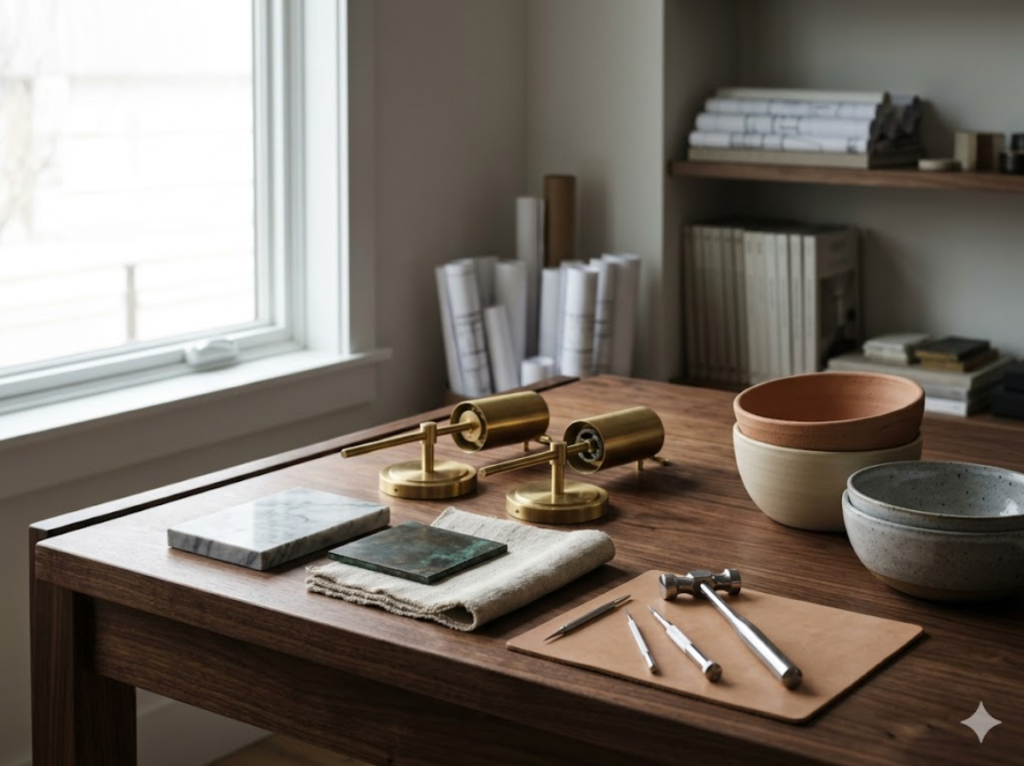
In a world of mass production, true luxury is found in the “honesty” of materials. At The Leafy Room, we believe that a space feels expensive not because of a brand name, but because of the tactile story told by the surfaces within it. When we look at an Architectural Digest-level home, we see a mastery of three specific elements.
1. The Vein of the Stone Not all marble is created equal. High-end design favors stone with “movement”—natural veins that act as abstract art. Whether it’s a travertine console or a Calacatta backsplash, the stone should feel heavy, cold, and ancient.
2. Living Finishes: The Beauty of Patina Quiet luxury avoids “perfect” shiny metals. Instead, look for unlacquered brass or bronze. These are “living finishes” that change over time, developing a rich patina that shows the history of the home. This imperfection is the ultimate mark of sophistication.
3. Sensory Fabrics A luxury room is a tactile experience. Designers pair the hardness of stone with the extreme softness of heavy-weight linen, bouclé, or raw silk. It is this contrast—the tension between the rugged and the refined—that creates a “museum-quality” atmosphere.
Conclusion: Next time you bring an object into your home, ask yourself: How does it feel? How will it age? Luxury is an investment in materials that grow more beautiful with every passing year.

Cosmin Stefanoiu is the founder and editor of The Leafy Room, a practical guide focused on indoor plants, plant care, pots and planters, small-space gardening, and thoughtful plant styling.
He creates clear, beginner-friendly editorial guides designed to help readers choose plants, understand everyday care, and make practical decisions for real homes.