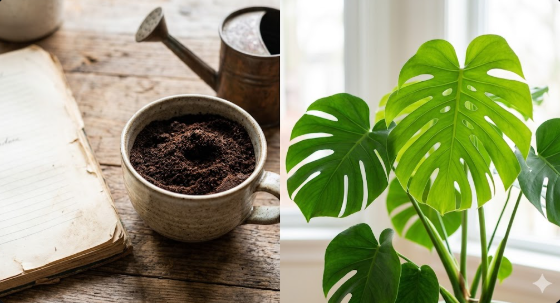
Coffee Grounds Myth: Miracle Fertilizer
or Plant Killer?
Line spacing: 1.25
Every plant parent has heard the advice: “Don’t throw away your coffee grounds, they’re gold for
your garden!” But is this common kitchen hack actually safe for your indoor jungle? Let’s debunk
the myths and look at the science.
The Truth About Acidity
Many people believe coffee grounds will make their soil highly acidic. While fresh grounds are
acidic, used grounds (the ones you actually have after brewing) are usually close to pH neutral.
This means they won’t automatically turn your soil into an acid-lover’s paradise.
The “Dos” and “Don’ts” of Using Coffee Grounds
Do… Don’t…
Use them in compost to add nitrogen. Pour wet grounds directly onto houseplant
soil (it causes mold).
Dry them out completely before using as a
mulch.
Use them on succulents or cacti.
Use on acid-loving plants like Azaleas or
African Violets.
Overdose! A thin layer is plenty.
Why Direct Application Can Be Dangerous
The biggest mistake is dumping wet grounds straight into a pot. This creates a thick mat that
blocks water and air from reaching the roots. Even worse, it’s a breeding ground for fungus and
mold, which can kill your plant faster than any fertilizer can save it.
The Better Way: Coffee Ground Tea
● Soak 2 cups of used grounds in 5 gallons of water overnight.
● Strain the liquid.
● Use this “tea” to water your plants once a month for a gentle nutrient boost.
Always observe your after trying a new fertilizer.If the leaves turn yellow or the soil smells musty, stop immediately!

Cosmin Stefanoiu is the founder and editor of The Leafy Room, a practical guide focused on indoor plants, plant care, pots and planters, small-space gardening, and thoughtful plant styling.
He creates clear, beginner-friendly editorial guides designed to help readers choose plants, understand everyday care, and make practical decisions for real homes.