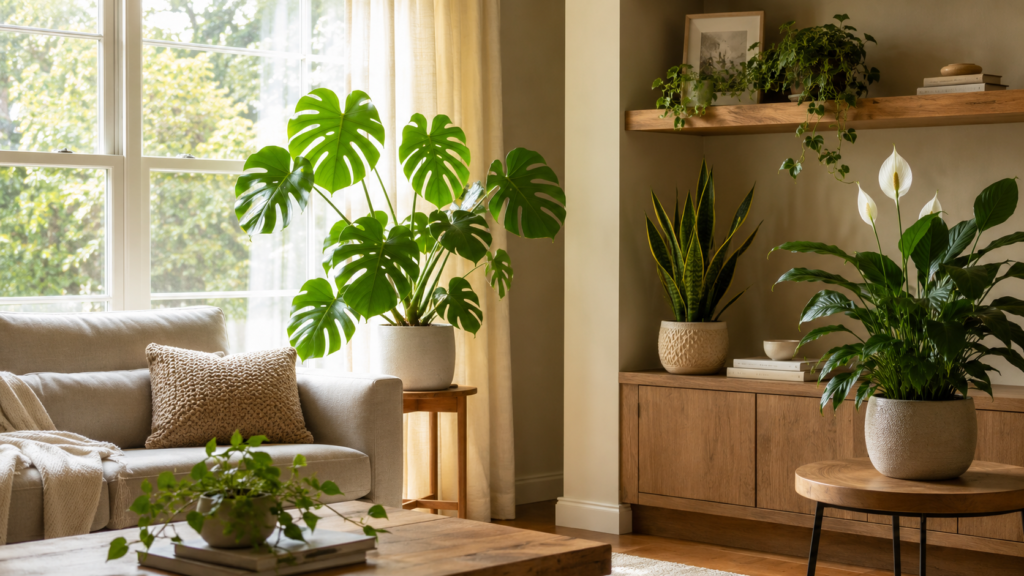
Choosing the best spot for an indoor plant is not only about where the plant looks good.
A beautiful plant can struggle in the wrong place. It may get too much direct sun, too little light, dry heat from a radiator, cold drafts from a window, strong airflow from an AC vent, or constant bumps in a busy walkway.
The right spot makes plant care easier.
When a plant is placed well, watering becomes more predictable, leaves look healthier, growth is steadier, and the plant becomes easier to monitor. When a plant is placed poorly, you may keep adjusting watering, humidity, or fertilizer without realizing the real problem is location.
A good indoor plant spot should balance four things: light, heat, airflow, and room placement.
Quick Answer
To choose the best spot for indoor plants, start by checking the light. Most common houseplants prefer bright indirect light, which means the room is bright but the sun does not hit the leaves for long periods.
Then check the surrounding conditions. Avoid placing plants beside radiators, heaters, strong AC vents, cold winter glass, very dark corners, or busy walkways. Choose a stable spot with enough light, gentle airflow, comfortable room temperature, and enough space for the plant to grow.
The best plant placement is not always the brightest window. It is the spot that matches the plant’s needs.
Start With Light
Light is the first thing to check because it affects almost everything else.
A plant in the right light will usually be easier to water, easier to maintain, and more likely to grow steadily. A plant in the wrong light may look weak even if you water it correctly.
Before placing a plant, look at the room at different times of day.
Ask yourself:
- Does direct sun hit this spot?
- Is the room bright but filtered?
- Is the plant far from the window?
- Is the corner bright in the morning but dark later?
- Does a curtain soften the light?
- Does a building, tree, porch, or balcony block the window?
- Does the light change strongly between seasons?
Indoor light can look brighter to people than it feels to plants. A corner may seem pleasant and cozy, but if it is far from natural light, many plants will grow slowly there.
Understand the Main Indoor Light Levels
You do not need complicated measurements to place most houseplants. Start with simple light categories.
Direct Sun
Direct sun means strong rays hit the leaves for part of the day.
This often happens near south-facing or west-facing windows, especially in the afternoon. Some plants enjoy this, but many tropical houseplants can scorch if the sun is too intense.
Direct sun can work for:
- many succulents;
- many cacti;
- some herbs;
- some sun-tolerant plants;
- plants placed behind sheer curtains if the light is softened.
Be careful with thin-leaved tropical plants in direct afternoon sun. Leaves may fade, crisp, or develop scorched patches.
Bright Indirect Light
Bright indirect light is one of the best placements for many indoor plants.
The room is bright, but strong sun does not sit directly on the leaves for long. This may be a few feet from a bright window, beside a sheer curtain, or near an east-facing window with gentle morning light.
Bright indirect light works well for many popular houseplants, including:
- Monstera;
- Pothos;
- Philodendron;
- Peace Lily;
- Prayer Plant;
- Rubber Plant;
- Anthurium;
- many Peperomia varieties.
This is often the safest starting point if you are not sure where a plant should go.
Medium Light
Medium light means the room has natural light, but the plant is farther from the window or the light is less intense.
This can work for tougher plants, especially if the room is still naturally bright during the day.
Medium light may work for:
- Snake Plant;
- ZZ Plant;
- Pothos;
- Cast Iron Plant;
- some Philodendron;
- Chinese Evergreen.
Medium light is not the same as darkness. The plant should still receive visible natural light during the day.
Low Light
Low light means very little natural light reaches the spot.
Some plants can tolerate lower light, but few truly thrive in dark corners. Growth may become slower, leaves may become smaller, and watering needs may change because the soil dries more slowly.
Better options for lower-light rooms include:
- Snake Plant;
- ZZ Plant;
- Cast Iron Plant;
- Pothos;
- some Chinese Evergreen varieties.
If your home has limited natural light, our guide to Best Low Light Plants for Small Apartments can help you choose more forgiving plants.
Avoid Placing Plants Beside Heat Sources
Heat can stress indoor plants quickly.
A plant may look fine for a few days beside a radiator, heater, fireplace, or hot sunny glass, then start showing dry brown edges, curled leaves, or soil that dries too quickly.
Avoid placing sensitive plants close to:
- radiators;
- space heaters;
- fireplaces;
- heating vents;
- hot window glass;
- very warm electronics;
- direct blasts of warm air.
Dry heat is especially hard on plants with thin or delicate leaves, such as Calathea, Ferns, Prayer Plant, Fittonia, and some Begonias.
If a plant keeps getting crispy edges even when watering seems correct, check whether it is too close to heat.
Watch for Cold Windows and Drafts
Cold can also damage indoor plants.
In winter, a plant pressed against cold glass may develop cold damage, especially if the leaves touch the window at night. Drafty windows and exterior doors can also create sudden temperature changes.
Avoid placing tender plants where:
- leaves press against cold glass;
- cold air enters from a drafty window;
- the plant sits beside an exterior door;
- the pot is on a very cold floor;
- the room temperature drops sharply at night.
This matters most for tropical plants that prefer stable indoor conditions.
If you keep plants near windows, leave a little space between the leaves and the glass.
Airflow Should Be Gentle, Not Harsh
Plants need fresh air, but they usually do not like strong direct blasts.
Harsh airflow can dry leaves, cool the plant too quickly, or make watering harder to manage.
Avoid placing plants directly under or beside:
- AC vents;
- heating vents;
- strong fans;
- drafty doors;
- open windows with harsh wind.
Gentle airflow is good. Constant blasting air is not.
A good spot feels fresh and breathable without pushing the leaves around all day.
Choose a Stable Spot With Enough Space
Room placement matters too.
A plant may have good light but still be in a bad location if it gets bumped every day. This is common in entryways, narrow hallways, beside doors, next to dining chairs, or near busy walkways.
Before placing a plant, check the daily movement in the room.
Ask:
- Will people brush against the leaves?
- Can pets knock it over?
- Will children bump it?
- Can you water it easily?
- Is it too close to a door?
- Does it block a drawer, cabinet, or walkway?
- Does the plant have room to grow wider or taller?
A plant should not make the room harder to use.
Good placement is practical as well as attractive.
Best Spot by Plant Type
Different plants prefer different placements. The best spot depends on the plant’s natural growth habit and care needs.
Succulents and Cacti
Succulents and cacti usually need the brightest indoor spots.
Place them near a bright window where they can receive strong light. Some can handle direct sun, especially if they are gradually adjusted to it.
Good spots include:
- sunny windowsills;
- bright south-facing windows;
- bright west-facing windows;
- very bright shelves close to a window.
Avoid dark shelves and low-light corners. These plants may stretch, weaken, or lose their compact shape without enough light.
Monstera and Philodendron
Monstera and many Philodendron varieties usually prefer bright indirect light.
They do well near a bright window where they have room to spread, climb, or trail. Avoid harsh direct sun on delicate leaves for long periods.
Good spots include:
- a few feet from a bright window;
- beside a sheer curtain;
- a bright living room corner;
- a plant stand near indirect light;
- a space with room for leaves to expand.
Monstera especially needs enough space. If the leaves are pressed against walls, furniture, or walkways, the plant may look cramped and become harder to maintain.
Pothos
Pothos is flexible and works in many rooms.
It can grow in bright indirect light and often tolerates medium light. It is useful on shelves, bookcases, side tables, hanging spots, or plant stands.
Good spots include:
- bright shelves;
- side tables near a window;
- bookcases with natural light;
- hanging planters;
- office corners with decent daylight.
Avoid very dark corners if you want fuller growth. Pothos may survive in lower light, but it usually looks better with more natural brightness.
Peace Lily
Peace Lily often works well in bright indirect light or medium light.
It does not usually need harsh direct sun. In fact, strong sun can make leaves look faded or stressed. It prefers a spot where the light is bright enough but not intense.
Good spots include:
- beside a bright window with filtered light;
- a few feet from an east-facing window;
- a living room side table;
- a bright bedroom corner;
- a bathroom with a window.
You can read more in Peace Lily: The Elegant White Indoor Flower for Calm Rooms.
Snake Plant
Snake Plant is one of the most forgiving houseplants for placement.
It can tolerate medium and lower-light rooms better than many plants, but it still grows best with some natural light. It also works well in narrow spaces because of its upright shape.
Good spots include:
- bedroom corners with natural light;
- living room corners;
- office spaces;
- entryways with some daylight;
- beside furniture where leaves will not be bumped.
Avoid overwatering zones, very cold windows, and spots where the plant is constantly knocked.
For a more specific guide, read Where to Place Snake Plant in Your Home Best Spots.
ZZ Plant
ZZ Plant is also tolerant and works well where many fussier plants struggle.
It is a good choice for medium light or lower-light rooms, but it still needs some natural brightness to stay healthy long term.
Good spots include:
- offices;
- bedrooms;
- living room corners;
- shelves or plant stands with indirect light;
- rooms where watering is easy to monitor.
Avoid placing ZZ Plant in a constantly wet pot or a spot where you forget to check the soil.
Rubber Plant
Rubber Plant usually looks best in bright indirect light.
It can become a strong focal plant in a living room, bedroom, or office, but it needs enough space for its glossy leaves.
Good spots include:
- a bright living room corner;
- near a window with filtered light;
- beside a cabinet or sofa;
- a calm spot where leaves are not brushed constantly.
Our Rubber Plant guide includes simple placement habits like light checks, leaf checks, water checks, pot stability, and space checks.
Prayer Plant and Calathea
Prayer Plant and Calathea often need more careful placement.
They usually prefer bright indirect light, steady warmth, and less harsh dry air. Direct sun, dry heat, and strong AC can make them look stressed.
Good spots include:
- near an east-facing window;
- beside a sheer curtain;
- a bright shelf away from vents;
- a desk near soft natural light;
- a calm bedroom or living room spot.
For Prayer Plant, bright indirect light is usually best, while harsh direct sun can make the leaves look faded or stressed. The full guide is here: Prayer Plant Care: How to Grow Maranta Indoors.
Signs Your Plant Is in the Wrong Spot
A plant will often show clues when the placement is not right.
Watch for:
- leaning strongly toward the window;
- pale or stretched growth;
- leaves becoming smaller than usual;
- scorched or faded leaves;
- crispy edges near dry heat or AC;
- cold damage near windows;
- soil staying wet for too long;
- soil drying too fast;
- leaves getting bumped or torn;
- plant becoming unstable;
- pests appearing in stressed plants.
These signs do not always mean placement is the only problem, but location is one of the first things to check.
If the Plant Is Leaning Toward the Window
A plant that leans strongly toward light may not be getting enough light overall.
Try moving it closer to the window or rotating the pot slightly each week. Avoid sudden harsh direct sun if the plant is not used to it.
A small lean is normal. A dramatic lean usually means the plant is reaching.
If Leaves Are Pale or Stretched
Pale, stretched, weak-looking growth often points to low light.
The plant may be alive, but it may not be getting enough energy to grow strongly.
Move it to a brighter spot gradually and watch how new growth responds.
If Leaves Are Scorched or Faded
Scorched, faded, or crispy patches can happen when a plant gets too much direct sun.
Move the plant slightly back from the window, use a sheer curtain, or place it where the light is bright but less harsh.
If Soil Stays Wet Too Long
Placement affects watering.
A plant in low light, a cool room, or a large pot may dry much more slowly than expected. If the soil stays wet for many days, check the light, pot size, drainage, and airflow.
You can also read How to Choose the Right Pot Size for Indoor Plants Without Hurting Their Growth if the container may be part of the problem.
If Soil Dries Too Fast
Soil may dry very fast if the plant is in strong sun, near heat, in a small pot, or in terracotta.
Fast drying is not always bad, but it can make care harder if the plant wilts often.
Move the plant slightly away from heat sources and check whether the pot size is still suitable.
A Simple Placement Checklist
Before deciding on a plant spot, check these points:
- Is there enough natural light for the plant type?
- Is the light direct, bright indirect, medium, or low?
- Is the plant away from radiators and heaters?
- Is it away from strong AC or heating vents?
- Are leaves away from cold winter glass?
- Is the pot stable?
- Can you water the plant easily?
- Can you check the leaves weekly?
- Is it safe from pets, doors, and traffic?
- Does the plant have room to grow?
- Does the spot still work in a different season?
This checklist can prevent many placement mistakes before they happen.
Recheck Placement When Seasons Change
Plant placement is not a one-time decision.
Light changes during the year. A spot that was perfect in spring may become too hot in summer or too dark in winter. A plant near a window may get cold at night in winter. A room with AC may become too dry in summer.
Recheck placement when:
- the season changes;
- you start using heating;
- you start using air conditioning;
- sunlight becomes stronger;
- sunlight becomes weaker;
- trees outside block or reveal light;
- you move furniture;
- you notice repeated leaf problems.
Small placement changes can make care much easier.
How to Move a Plant Without Stressing It
If a plant needs a better spot, move it gradually when possible.
Avoid moving a plant from a dark corner directly into harsh direct sun. Sudden changes can stress leaves.
A safer approach is:
- Move the plant to a slightly brighter spot.
- Watch it for one to two weeks.
- Check leaves and soil drying speed.
- Move again if needed.
- Avoid changing watering too aggressively at the same time.
The goal is to improve conditions without shocking the plant.
Common Placement Mistakes
Choosing the prettiest spot instead of the right spot
A plant may look beautiful on a dark shelf, but it still needs enough light.
Design matters, but plant needs come first.
Placing tropical plants in harsh direct sun
Many tropical houseplants prefer bright indirect light, not hot direct afternoon rays.
If leaves fade or scorch, soften the light.
Putting plants beside heaters
Dry heat can crisp leaves and dry soil very quickly.
Move sensitive plants away from radiators, fireplaces, and heat vents.
Keeping plants in dark corners
A dark corner may look cozy, but few plants grow well there.
Choose low-light tolerant plants or move the display closer to a window.
Ignoring room traffic
Plants near doors, chairs, pets, or walkways may get damaged.
Choose stable, safe spots where leaves and pots are protected.
Forgetting to recheck in winter
Winter changes light, temperature, drafts, and heating.
A plant that was fine near a window in summer may need a little more protection in winter.
Final Thoughts
The best spot for an indoor plant is not just the prettiest corner.
It is the place where light, temperature, airflow, and daily room use all work together.
Start with light. Most common houseplants do best in bright indirect light, while succulents and cacti often need stronger sun, and Snake Plant or ZZ Plant can tolerate lower-light rooms better than many plants.
Then look at the surrounding conditions. Avoid radiators, heaters, strong AC vents, cold glass, dark corners, and busy walkways.
A good spot should feel bright enough, calm, stable, easy to check, and safe for the plant’s growth.
When plant care feels confusing, look at placement first. Sometimes the plant does not need more water, more products, or more attention. It simply needs a better spot.
Read Next
- Where to Place Snake Plant in Your Home Best Spots
- Best Low Light Plants for Small Apartments
- Don’t Water Yet: How to Check Indoor Plants Before Watering
- How to Choose the Right Pot Size for Indoor Plants Without Hurting Their Growth
- Prayer Plant Care: How to Grow Maranta Indoors

Cosmin Stefanoiu is the founder and editor of The Leafy Room, a practical guide focused on indoor plants, plant care, pots and planters, small-space gardening, and thoughtful plant styling.
He creates clear, beginner-friendly editorial guides designed to help readers choose plants, understand everyday care, and make practical decisions for real homes.
Pingback: Fall Garden Prep Checklist: 9 Steps for a Healthier Garden
Pingback: How to Build a Terrarium: Step-by-Step Guide