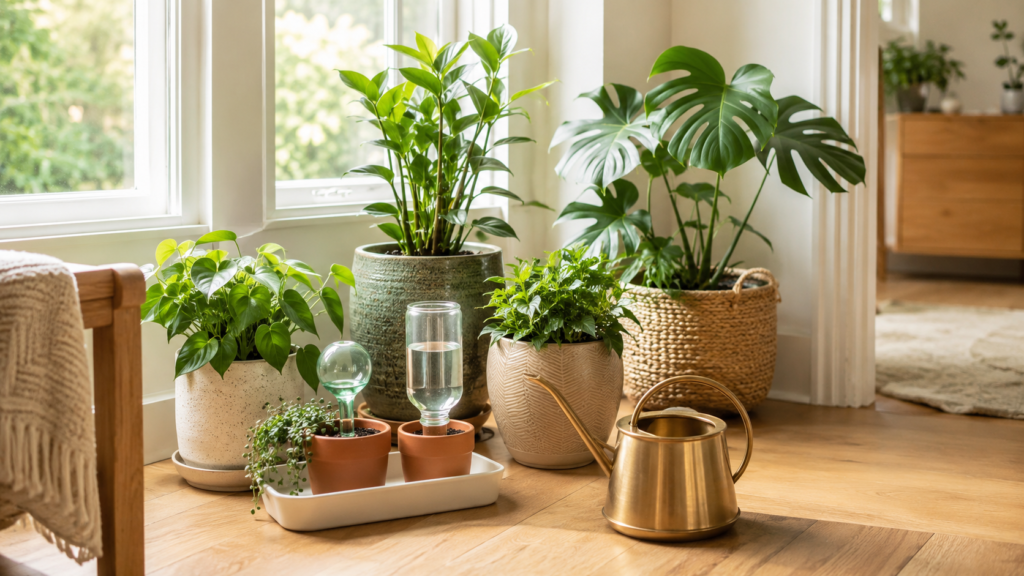
Leaving home for a few days does not mean every houseplant needs an automatic watering system.
For many common indoor plants, a well-planned watering session before departure is enough for a seven-day trip. A two-week absence requires more preparation, especially for moisture-loving plants, small pots, and plants growing in warm, bright rooms.
The safest approach is not to water everything heavily. Check each plant individually, reduce conditions that make soil dry quickly, and add backup watering only where it is genuinely needed.
Quick Answer
For a trip of about seven days, most established houseplants can usually manage after being watered thoroughly and allowed to drain before you leave.
For approximately 14 days, drought-tolerant plants may still need little intervention, but thirsty plants may benefit from a tested wick system, a self-watering reservoir, or help from a trusted person.
Never flood every pot before leaving. Excess water can create more problems than a short period of slightly dry soil.
Why One Vacation Watering Plan Does Not Fit Every Plant
Two plants placed in the same room can use water at very different rates.
A mature snake plant in a large pot may remain comfortable for much longer than a fern in a small nursery pot. The length of your trip matters, but it is only one part of the decision.
Before choosing a plan, consider:
- the type of plant;
- the size of the pot;
- whether the pot has drainage holes;
- how much light the plant receives;
- the room temperature;
- the amount of soil around the roots;
- how quickly the pot normally dries;
- whether the plant prefers dry or consistently moist soil.
The most useful preparation is to observe how each pot behaves during a normal week.
What to Do Three to Five Days Before You Leave
Do not wait until the final hour to make major changes.
Use the days before your trip to identify which plants actually need support.
Check the soil in every pot
Insert a finger into the upper layer of soil or lift smaller pots to compare their weight.
If the soil is still comfortably moist, the plant may not need water yet. Watering it again simply because you are leaving can keep the roots wet for too long.
Our guide to checking whether a plant really needs water explains several practical ways to assess moisture without relying on a fixed calendar.
Separate plants by watering needs
Create three simple groups:
- Drought-tolerant plants: snake plants, ZZ plants, many succulents and other plants that prefer drying between waterings.
- Average houseplants: mature pothos, philodendrons, dracaenas and similar plants in moderate indoor conditions.
- Moisture-loving plants: ferns, prayer plants, peace lilies, calatheas and small tropical plants that dry quickly.
This prevents you from using an unnecessarily aggressive watering method for every plant.
Test any automatic watering method
A wick, watering globe, bottle reservoir, or self-watering insert should be tested before the trip.
Run the setup for several days and watch the soil. A reservoir that releases water too quickly can saturate the pot, while a poorly positioned wick may provide almost no water.
A new watering gadget should never be installed for the first time as you walk out the door.
The 7-Day Houseplant Watering Plan
For a one-week absence, simple preparation is usually better than building a complicated system.
One or two days before departure
Check each pot rather than watering the entire collection automatically.
Plants with dry soil can be watered thoroughly until excess water flows through the drainage holes. Allow them to drain, then empty their saucers and decorative cachepots.
Plants that are still moist should be left alone or checked again on departure day.
Move vulnerable plants away from intense sun
A sunny window can make a pot dry much faster than usual.
Temporarily move moisture-loving plants a little farther from harsh afternoon sunlight. Keep them in bright indirect light rather than placing them in a dark room.
The goal is to slow water loss without removing the light plants need.
Group compatible plants together
Grouping tropical plants can create a slightly more sheltered environment around their leaves.
Place plants with similar light and moisture needs together, but do not crowd leaves so tightly that air circulation disappears.
Do not group a succulent that prefers dry conditions with plants that require consistently moist soil.
Use humidity support selectively
A pebble tray may help create a more comfortable local environment for certain tropical plants, especially in a dry room.
The bottom of the plant pot should remain above the water rather than sitting directly in it. A pebble tray is not a substitute for watering the soil, and it should not leave the root zone saturated.
Leave drought-tolerant plants alone
Snake plants, ZZ plants, many succulents and established cast iron plants are more likely to suffer from unnecessary watering than from a seven-day pause.
If their soil is still moist, do not water them “just in case.”
The plants in our guide to forgiving indoor plants for beginners are generally easier to manage during short trips, although every pot should still be checked individually.
The 14-Day Houseplant Watering Plan
A two-week trip requires more careful decisions because small pots and moisture-loving plants may not hold enough water for the entire period.
Start with the same preparation used for seven days, then add backup watering only for plants that need it.
Option 1: A simple wick-watering system
A wick system moves water from a separate reservoir into the potting mix.
Place one end of a suitable absorbent cord in a water container and the other end several inches into the soil. The reservoir should be positioned so the wick can remain in contact with the water.
Test the system before departure to see how much moisture reaches the pot.
Wick watering is more appropriate for plants that prefer relatively even moisture than for succulents or other plants that need to dry thoroughly.
Option 2: A bottle or slow-release reservoir
A bottle reservoir or watering spike can gradually release water into the soil.
The release rate depends on the container, soil texture, opening size and moisture already present in the pot. Some setups empty rapidly, which is why advance testing is essential.
Use this method only after confirming that it does not leave the soil permanently soggy.
Option 3: A self-watering pot
A properly used self-watering pot can help plants that prefer regular moisture.
However, moving a plant into a new pot immediately before traveling is not a good solution. Repotting can disturb roots and changes the amount of water held around them.
Self-watering containers work best when the plant is already established in the system and you understand how quickly it uses the reservoir.
Option 4: Ask a trusted person to help
A plant sitter is often the safest choice for a valuable collection or for plants that dry very quickly.
Leave simple, plant-specific instructions. Avoid vague directions such as “water everything every three days.”
A better instruction would be:
Check the soil first. Water the fern if the upper layer feels dry, but do not water the snake plant.
Group the plants that may need attention in one place and leave an appropriate measuring cup nearby. This reduces the risk of accidental overwatering.
Plants That Usually Handle a Short Absence More Easily
Some plants generally tolerate a period of dry soil better than others.
Examples include:
- snake plant;
- ZZ plant;
- cast iron plant;
- hoya;
- aloe and many other succulents;
- mature pothos growing in average indoor light.
These plants should not receive a constant water supply simply because you will be away.
For example, frequent watering can be a major problem for a snake plant. Review why snake plants decline and how watering contributes before adding any reservoir to one.
Plants That May Need Extra Support
Pay closer attention to:
- ferns;
- prayer plants;
- calatheas;
- peace lilies;
- indoor herbs;
- newly established plants;
- plants in very small nursery pots;
- plants growing close to warm, sunny windows;
- root-bound plants that dry unusually quickly.
Prayer plants often prefer a more consistent level of moisture than drought-tolerant plants. Our complete Prayer Plant care guide provides more detail about their light, moisture and humidity needs.
A peace lily can also droop for several reasons, so do not assume that every drooping leaf automatically requires more water. See why a Peace Lily may droop before changing its routine.
Should You Top-Water or Bottom-Water Before Leaving?
Either method can work when it is used correctly.
Top watering is convenient and helps rinse some accumulated material through the potting mix. Apply water evenly and stop once excess begins flowing through the drainage holes.
Bottom watering can help rehydrate potting mix that has become so dry that water runs down the sides. Place the pot in a shallow container of water, allow the mix to absorb moisture, and remove the pot once it is evenly hydrated.
Do not leave a pot standing in water throughout your trip.
Read our full comparison of bottom watering versus top watering to choose the appropriate method for each container.
Vacation Watering Mistakes to Avoid
Watering every plant heavily
Plants do not all need water on the same day. Saturating already-moist soil can deprive roots of air and keep the pot wet for too long.
Leaving pots in full saucers
Drainage water should be emptied before departure. A drainage hole is not useful if the bottom of the pot remains submerged.
Moving every plant into darkness
Reducing harsh direct sunlight can slow drying, but plants still require light. Use bright indirect light rather than a dark closet, hallway, or closed bathroom without a window.
Fertilizing immediately before the trip
This is not the time to encourage a flush of growth or leave concentrated fertilizer in drying soil. Resume normal feeding after you return and assess the plant.
Repotting at the last minute
A recently repotted plant may use water differently and can be more difficult to assess. Complete major repotting well before traveling or wait until you return.
Using an untested device
Automatic watering products vary in flow rate and suitability. Test them under the same conditions the plant will experience while you are away.
Asking someone to water without instructions
A helpful friend may water too often unless the instructions are specific. Identify exactly which plants should be checked and which should be left alone.
A Practical Departure-Day Checklist
Before leaving, complete this final check:
- Touch or test the soil in each pot.
- Water only plants that currently need it.
- Let all watered pots drain completely.
- Empty saucers and decorative outer pots.
- Move thirsty plants away from hot direct sun.
- Keep plants in usable indirect light.
- Group plants with similar needs.
- Fill only tested reservoirs.
- Check that wick systems remain secure.
- Adjust heating and cooling carefully.
- Leave clear instructions for a plant sitter.
- Remove fallen or damaged leaves.
- Delay fertilizing and repotting.
What to Do When You Return
Do not immediately water every plant.
Inspect the leaves and check the soil first. Some pots may still contain plenty of moisture, particularly large containers, self-watering pots, and plants that were moved into lower light.
For each plant:
- Check the soil below the surface.
- Look for standing water in saucers or reservoirs.
- Return it gradually to its normal position if it was moved.
- Water only when its usual moisture threshold has been reached.
- Remove damaged leaves after identifying the likely cause.
- Resume feeding only after the plant has returned to its normal routine.
A plant that looks slightly wilted may need water, but wet soil combined with drooping foliage points to a different problem. Make decisions from both the plant and the soil, not from leaf appearance alone.
Final Thoughts
A seven-day trip usually requires preparation rather than automation. Check the soil, water the plants that need it, allow them to drain, and protect moisture-loving plants from intense heat and direct sun.
For a 14-day absence, add a tested backup method only to plants that cannot comfortably remain dry for that long. Wick systems, slow-release reservoirs, established self-watering pots, and a carefully instructed plant sitter can all work when matched to the right plant.
The best vacation watering plan is not the one that supplies the most water. It is the one that gives each plant only the support it actually needs.
Read Next
- The Ultimate Watering Guide: How to Tell if Your Plant Needs Water
- Bottom Watering vs. Top Watering: Which Is Actually Better?
- Prayer Plant Care: How to Grow Maranta Indoors
- 7 Unkillable Indoor Plants for Absolute Beginners

Cosmin Stefanoiu is the founder and editor of The Leafy Room, a practical guide focused on indoor plants, plant care, pots and planters, small-space gardening, and thoughtful plant styling.
He creates clear, beginner-friendly editorial guides designed to help readers choose plants, understand everyday care, and make practical decisions for real homes.
Pingback: Best Watering Cans for Indoor Plants
Pingback: Best Self-Watering Pots for Indoor Plants