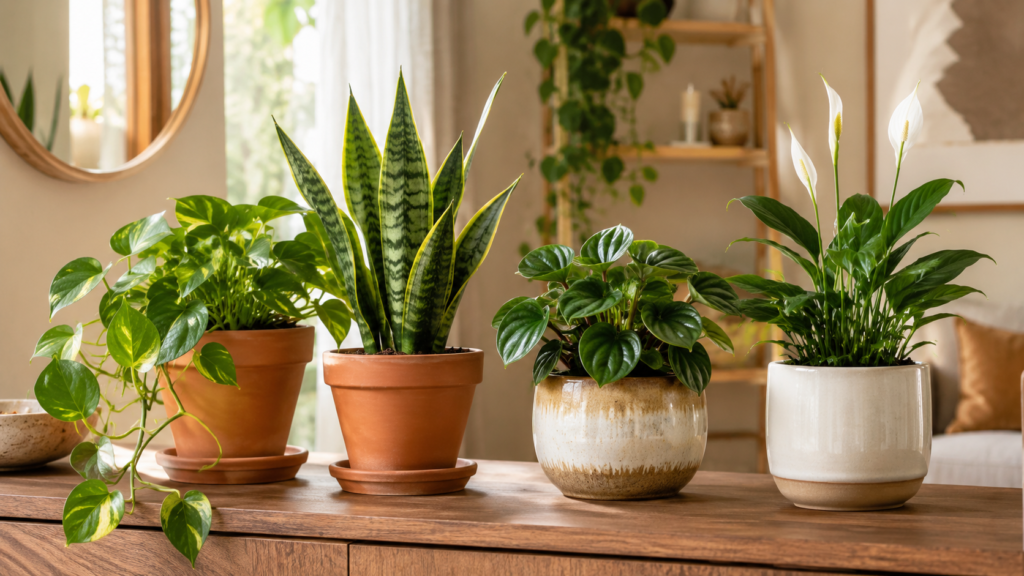
Choosing a plant pot is not only about color or style.
The material can change how quickly the soil dries, how heavy the container feels, how easy the plant is to move, and how often you need to check moisture.
Terracotta and ceramic pots can both work beautifully indoors, but they behave differently.
Terracotta is porous and usually allows moisture to evaporate faster. Glazed ceramic is less porous, often holds moisture longer, and usually feels heavier and more decorative.
The better choice depends on the plant, your room, and your watering habits.
Quick Answer: Terracotta or Ceramic?
Choose terracotta if:
- you tend to overwater
- your plant prefers drier soil
- the room is humid
- you want a natural, classic look
- you need a lighter pot
- you grow succulents, cacti, herbs, or other dry-loving plants
Choose glazed ceramic if:
- your home is dry
- your plant prefers more even moisture
- you want a heavier, more stable container
- you like polished or decorative finishes
- you grow tropical foliage plants
- you can check that the pot has proper drainage
Neither material is automatically better.
The best pot is the one that matches the plant and your care routine.
Terracotta vs Ceramic Pots at a Glance
| Feature | Terracotta | Glazed ceramic |
|---|---|---|
| Porosity | Porous | Usually less porous |
| Soil drying | Faster | Slower |
| Weight | Usually lighter | Usually heavier |
| Appearance | Natural and earthy | Polished and decorative |
| Moisture retention | Lower | Higher |
| Stability | Moderate | Often very stable |
| Price | Often affordable | Frequently more expensive |
| Best for | Dry-loving plants and overwaterers | Moisture-loving plants and dry homes |
| Main risk | Soil may dry too quickly | Soil may stay wet too long |
| Drainage | Often includes a drainage hole | Varies, always check |
What Is Terracotta?
Terracotta is an unglazed clay material with a warm orange or reddish-brown color.
Because it is porous, air and moisture can move through the walls of the pot.
This usually means:
- the potting mix dries faster
- roots receive more airflow
- mineral marks may appear on the outside
- the pot feels cooler as moisture evaporates
- watering may be needed more often
Terracotta has a natural, timeless look that works well with earthy, rustic, Mediterranean, bohemian, and simple botanical interiors.
What Is a Ceramic Pot?
Ceramic pots are made from fired clay, but many indoor ceramic containers are glazed.
The glazed surface reduces how much moisture passes through the pot walls.
This usually means:
- soil stays moist longer
- the pot feels heavier
- the finish can be glossy, matte, patterned, or colored
- the container may be more stable
- watering frequency may be lower than with terracotta
Ceramic pots are popular because they can look polished and decorative while still functioning as practical plant containers.
However, not every ceramic pot has drainage holes.
Always check before planting directly inside one.
How Terracotta Changes Soil Moisture
Terracotta pulls some moisture through its porous walls.
That moisture then evaporates into the surrounding air.
As a result, the potting mix may dry faster than it would in glazed ceramic or plastic.
This can be helpful for:
- plants that dislike wet roots
- people who tend to overwater
- humid rooms
- warm sunny windows
- plants in fast-draining soil
- herbs grown indoors or on patios
It can also create problems if:
- your home is very dry
- the pot is small
- the plant is thirsty
- the room is warm
- the plant sits near a heater
- you forget to check moisture
Terracotta is forgiving for overwatering, but less forgiving for neglect.
How Ceramic Changes Soil Moisture
Glazed ceramic usually slows evaporation through the sides of the pot.
The soil may stay moist longer, especially if:
- the pot is large
- the room is cool
- the light is low
- the potting mix is dense
- the plant uses water slowly
- there is no drainage hole
This can be helpful for tropical plants that prefer steadier moisture.
It can be risky for plants that need the soil to dry quickly.
The pot material, soil type, drainage, plant size, temperature, light, and watering habits all work together.
The pot alone does not control moisture.
Which Pot Is Better if You Overwater?
Terracotta is often the safer choice for people who overwater.
Its porous walls can help the soil dry faster between waterings.
This does not mean you can water carelessly.
Even terracotta can stay wet too long if:
- the pot has no drainage
- the soil is heavy
- the room is dark
- the plant is small
- the pot is oversized
- water remains in the saucer
If overwatering is your main problem, combine terracotta with:
- a drainage hole
- a matching saucer
- light potting mix
- careful soil checks
- a pot that is not too large
For watering help, read Don’t Water Yet: How to Check Indoor Plants Before Watering.
Which Pot Is Better in a Dry Home?
Glazed ceramic may work better in a dry home because it usually holds moisture longer.
This can be useful in:
- heated apartments
- homes with low humidity
- bright rooms where plants dry quickly
- rooms with strong airflow
- warm climates
- spaces where frequent watering is difficult
Plants that prefer more even moisture may benefit from a glazed ceramic container, as long as drainage is still available.
Which Pot Is Better for Beginners?
Both can work for beginners.
Terracotta may be easier for beginners who:
- overwater
- grow succulents
- want clear visual drying clues
- prefer a simple container
- do not mind watering more often
Ceramic may be easier for beginners who:
- forget to water
- live in a dry home
- grow tropical foliage plants
- need a heavier pot
- want a decorative finish
The best beginner pot is not based only on the material.
It should also have:
- a drainage hole
- the right size
- a stable base
- a saucer
- suitable potting mix
- enough room for the roots
Best Plants for Terracotta Pots
Terracotta often works well for plants that prefer drier soil or strong airflow around the roots.
Good examples include:
- succulents
- cacti
- aloe
- Snake Plant
- rosemary
- thyme
- lavender
- Jade Plant
- String of Pearls
- many Mediterranean herbs
These plants can still be overwatered in terracotta, so always check the soil first.
Best Plants for Ceramic Pots
Glazed ceramic can work well for plants that prefer more even moisture.
Good examples include:
- Pothos
- Peace Lily
- ferns
- Calathea
- African Violet
- Philodendron
- Chinese Evergreen
- tropical foliage plants
- some flowering indoor plants
Use a drainage hole or keep the plant in a nursery pot inside the ceramic cachepot.
Terracotta for Succulents and Cacti
Terracotta is a popular choice for succulents and cacti because it allows the potting mix to dry faster.
A good setup includes:
- a drainage hole
- cactus or succulent mix
- a saucer
- strong light
- a pot close to the root-ball size
- watering only after the mix has dried sufficiently
Avoid moving a small succulent into a very large terracotta pot.
Even porous pots can hold too much wet soil when oversized.
Ceramic for Tropical Plants
Many tropical indoor plants appreciate more consistent moisture than succulents.
Glazed ceramic can help reduce rapid drying.
It works well when paired with:
- light indoor potting mix
- a drainage hole
- bright indirect light
- careful watering
- a stable room temperature
- a properly sized container
Do not assume every tropical plant wants constantly wet soil.
Moisture-loving does not mean waterlogged.
Drainage Matters More Than Material
A drainage hole is usually more important than whether the pot is terracotta or ceramic.
A terracotta pot without proper drainage can still cause problems.
A glazed ceramic pot with a good drainage hole can work very well.
Always check:
- whether water can leave the pot
- whether the saucer is emptied
- whether the nursery pot can be removed
- whether the soil is suitable
- whether the pot is too large
- whether water collects at the base
For more container guidance, read Best Pots for Indoor Plants.
Direct Planting vs Cachepot Setup
You can use both terracotta and ceramic pots in two ways.
Direct planting
The plant is placed directly into the potting mix inside the decorative pot.
This works best when the pot has a drainage hole.
Cachepot setup
The plant remains inside a plastic nursery pot, which sits inside the decorative container.
This setup is useful because:
- watering is easier to control
- the nursery pot can be removed
- excess water can drain separately
- decorative pots without holes can still be used
- changing the outer pot is simple
For ceramic containers with no drainage, the cachepot method is usually safer than planting directly inside.
Weight and Stability
Terracotta is usually lighter than thick ceramic.
This makes it easier to:
- move
- rotate
- carry to the sink
- place on shelves
- rearrange
- repot
Ceramic is often heavier and more stable.
This makes it useful for:
- tall plants
- top-heavy plants
- large leaves
- homes with pets
- busy walkways
- plants that tip over easily
A heavy pot can improve stability, but it may also be harder to move for watering or cleaning.
Appearance and Styling
Terracotta creates a natural, warm, earthy look.
It works beautifully with:
- warm wood
- beige textiles
- woven baskets
- botanical prints
- rustic shelves
- Mediterranean decor
- natural plant corners
Ceramic offers more variety.
It can be:
- glossy
- matte
- patterned
- speckled
- neutral
- colorful
- modern
- handmade-looking
Choose the material that supports the room, but do not ignore the plant’s needs.
Mineral Marks on Terracotta
White marks may appear on terracotta over time.
These are often mineral deposits left behind as water evaporates through the pot walls.
They are common and usually not harmful.
Some people like the aged appearance.
Others prefer to clean the pot.
To reduce buildup:
- use filtered water when practical
- wipe the outside occasionally
- avoid excessive fertilizer
- clean empty pots before reuse
- do not use harsh chemicals around plant roots
The marks are part of the natural behavior of porous clay.
Can Ceramic Pots Crack?
Ceramic pots can crack if they are:
- dropped
- knocked over
- moved roughly
- exposed to freezing temperatures
- filled with expanding frozen soil
- poorly manufactured
Terracotta can also crack.
Both materials should be handled carefully.
Outdoor pots need extra attention in cold climates.
Pot Temperature
Terracotta can feel cooler as moisture evaporates through the walls.
Ceramic may hold temperature and moisture differently depending on the glaze, thickness, and room conditions.
Avoid placing either pot:
- directly against a hot radiator
- in freezing drafts
- on a very cold outdoor surface
- in harsh afternoon sun without checking the plant
- beside strong heating vents
The plant’s roots prefer stable conditions.
How Pot Size Changes the Result
Pot size can matter as much as pot material.
A very large pot holds more soil, which usually means more moisture.
A small pot dries faster.
Choose a pot that is only slightly larger than the root ball when repotting.
For many indoor plants, one size up is enough.
Read When to Repot Indoor Plants before moving a plant into a larger container.
Terracotta Pros and Cons
Pros
- porous and breathable
- soil dries faster
- useful for overwaterers
- classic natural appearance
- often affordable
- usually lighter than thick ceramic
- easy to pair with many decor styles
Cons
- requires more frequent moisture checks
- can dry too quickly in warm rooms
- can crack
- may show mineral deposits
- usually offers fewer colors
- can stain surfaces without a saucer
- may become fragile with age
Ceramic Pros and Cons
Pros
- holds moisture longer
- heavier and more stable
- many colors and finishes
- polished decorative look
- works well for tropical plants
- can support top-heavy growth
- available in many shapes
Cons
- often more expensive
- heavier to move
- drainage holes are not guaranteed
- soil may stay wet longer
- can crack if dropped
- glossy finishes may hide moisture clues
- large ceramic pots can be difficult to carry
Terracotta vs Ceramic for Different Rooms
| Room | Pot idea |
|---|---|
| Bright sunny room | Terracotta may help prevent slow drying |
| Dry heated bedroom | Ceramic may retain moisture longer |
| Humid bathroom with a window | Terracotta may balance moisture |
| Home office shelf | Lightweight terracotta or small ceramic |
| Living room floor plant | Heavy ceramic for stability |
| Kitchen herbs | Terracotta often works well |
| Low-light corner | Avoid oversized moisture-retentive pots |
| Balcony or patio | Match material to climate and watering frequency |
Terracotta vs Ceramic for Different Watering Habits
| Your habit | Better starting option |
|---|---|
| You water too often | Terracotta |
| You forget to water | Glazed ceramic |
| You check soil carefully | Either |
| You travel frequently | Ceramic may dry more slowly |
| You prefer lifting plants to water | Terracotta is usually lighter |
| You use nursery pots inside decorative containers | Either |
| You grow mostly succulents | Terracotta |
| You grow mostly tropical foliage plants | Ceramic |
Common Pot-Choosing Mistakes
Choosing Only by Appearance
A beautiful pot can still be wrong for the plant.
Check moisture behavior and drainage first.
Ignoring Drainage
A decorative pot without a drainage plan can create standing water.
Moving Into a Pot That Is Too Large
Too much extra soil can stay wet for too long.
Using Terracotta for a Thirsty Plant in a Dry Room
The soil may dry faster than you expect.
Using Ceramic for a Dry-Loving Plant in Low Light
The soil may stay wet too long.
Forgetting the Saucer
Both terracotta and ceramic pots can damage furniture if water leaks or condensation collects.
Assuming Every Ceramic Pot Behaves the Same
Unglazed ceramic and glazed ceramic can behave differently.
Check the finish, thickness, and drainage.
Which One Should You Choose?
Choose terracotta when:
- the plant prefers drier conditions
- you overwater
- the room is humid
- you want a natural look
- you need a lighter container
- you do not mind checking soil more frequently
Choose ceramic when:
- the plant prefers steadier moisture
- the room is dry
- you want a decorative finish
- the plant needs more stability
- you tend to forget watering
- the pot has a safe drainage setup
Helpful Product Ideas
Useful products for terracotta and ceramic pot setups include:
- terracotta pots with drainage holes
- terracotta saucers
- glazed ceramic planters
- ceramic cachepots
- nursery pots
- plant saucers
- cork plant mats
- indoor potting mix
- cactus and succulent mix
- perlite
- pot feet
- small plant stands
- narrow-spout watering can
- moisture meter
Choose products based on drainage, size, moisture needs, and where the plant will sit.
Best For / Avoid If
| Pot type | Best for | Avoid if |
|---|---|---|
| Terracotta | Dry-loving plants, overwaterers, humid rooms | Your plant dries very quickly |
| Ceramic | Tropical plants, dry homes, tall plants | You overwater and the pot has poor drainage |
| Terracotta | Natural decor and easy moving | You need a very heavy stable container |
| Ceramic | Decorative displays and large plants | You need to move the plant frequently |
| Terracotta | Succulents, cacti, herbs | You forget watering for long periods |
| Ceramic | Pothos, Peace Lily, ferns | The room is dark and soil already dries slowly |
Final Thoughts
Terracotta and ceramic pots can both support healthy indoor plants.
Terracotta is porous, breathable, lighter, and faster-drying. It often works well for succulents, cacti, herbs, Snake Plants, and people who tend to overwater.
Glazed ceramic is heavier, more decorative, and more moisture-retentive. It can be a good choice for tropical foliage plants, dry homes, and plants that need extra stability.
Do not choose only by appearance.
Check the drainage hole, pot size, soil type, room conditions, and watering habits.
The best pot is the one that helps you care for the plant consistently.
Read Next
- Best Pots for Indoor Plants
- When to Repot Indoor Plants
- Don’t Water Yet: How to Check Indoor Plants Before Watering
- Best Indoor Plant Tools for Beginners
- Peace Lily: The Elegant White Indoor Flower for Calm Rooms

Cosmin Stefanoiu is the founder and editor of The Leafy Room, a practical guide focused on indoor plants, plant care, pots and planters, small-space gardening, and thoughtful plant styling.
He creates clear, beginner-friendly editorial guides designed to help readers choose plants, understand everyday care, and make practical decisions for real homes.