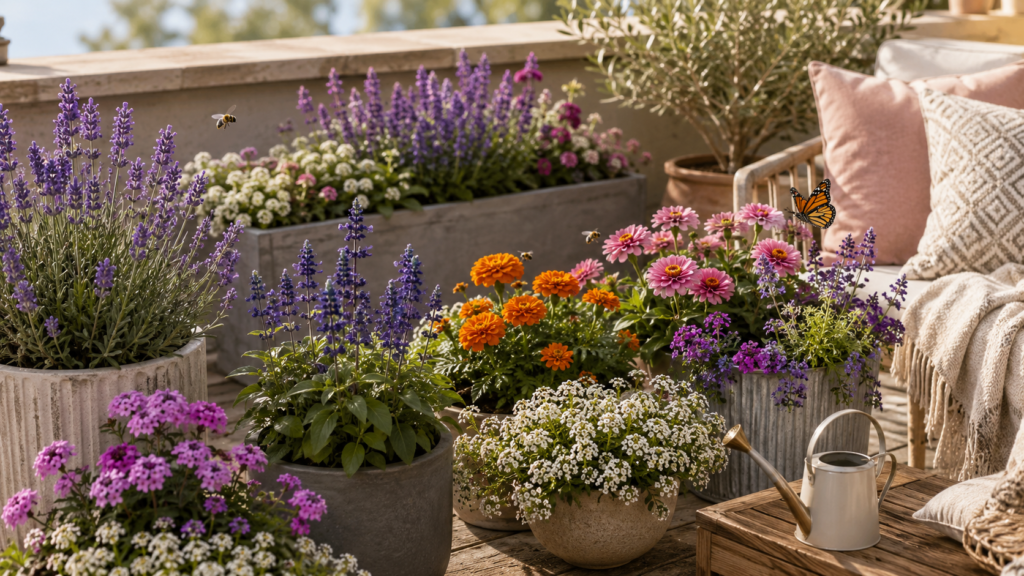
You do not need a large backyard to help pollinators.
A sunny balcony, patio, terrace, porch, or small outdoor corner can become a useful feeding stop for bees, butterflies, and other beneficial insects when you fill containers with the right flowers.
A pollinator-friendly container garden combines nectar-rich blooms, different flower shapes, staggered bloom times, good sunlight, and simple care. It can add color to your home while also creating a small but meaningful habitat.
The goal is not to fill every inch with flowers.
The goal is to choose a few useful plants that bloom well, work together, and make your outdoor space easier for pollinators to find.
Quick Answer: How Do You Make a Pollinator-Friendly Container Garden?
To create a pollinator-friendly container garden, choose a sunny location, use containers with drainage, plant several nectar-rich flowers, combine different bloom times, water consistently, and avoid harsh chemical sprays.
A simple beginner container can include:
- lavender for fragrance and vertical shape
- verbena for long-lasting color
- sweet alyssum for small clustered blooms
- salvia for tall flower spikes
- zinnias for bright summer color
- marigolds for easy seasonal flowers
For the best result, group several containers together instead of spreading single pots far apart.
Quick Checklist Before You Start
| Question | Best answer |
|---|---|
| Does the space receive strong sunlight? | Aim for at least six hours when possible |
| Do the containers have drainage? | Yes, drainage holes are essential |
| Are you using several flower shapes? | Mix spikes, clusters, and open blooms |
| Will something bloom throughout the season? | Combine early, mid, and late bloomers |
| Are the flowers easy for insects to reach? | Choose simple, accessible blooms |
| Can you water containers regularly? | Pots may dry quickly in warm weather |
| Will you avoid unnecessary pesticide use? | Yes, protect visiting pollinators |
A few healthy containers in the right location are more useful than many struggling pots.
Why Pollinator-Friendly Containers Matter
Pollinators help many flowering plants reproduce by moving pollen between flowers.
Container gardens cannot replace large natural habitats, but they can still provide useful nectar, pollen, resting places, and water in developed areas.
A balcony or patio garden may help by offering:
- seasonal food sources
- visible flowers in urban spaces
- resting points between larger green areas
- variety in flower shapes and colors
- a pesticide-conscious growing space
- fresh water in a shallow dish
Even one well-planted container can become part of a larger network of small urban habitats.
Best Locations for a Pollinator Container Garden
Pollinator flowers usually perform best in sunny outdoor spaces.
Good locations include:
- sunny balconies
- patios
- front porches
- apartment terraces
- deck corners
- outdoor stairs
- railing planters
- window boxes
- sunny entryways
- rooftop gardens
The location should be bright, easy to reach for watering, and protected from extreme wind when possible.
If your balcony receives limited sun, choose plants that tolerate partial shade instead of forcing full-sun flowers into a dark location.
How Much Sun Do Pollinator Flowers Need?
Many popular pollinator flowers perform best with at least six hours of direct sunlight.
Sun supports:
- stronger flowering
- richer nectar production
- compact growth
- more active pollinator visits
- longer bloom periods
Very shady containers may grow leaves but produce fewer flowers.
Observe your outdoor space for a full day before choosing plants. Note when direct sunlight begins, when it ends, and whether nearby walls or buildings block the light.
Best Flowers for Bees and Butterflies in Containers
1. Lavender
Lavender offers fragrant flower spikes and a strong vertical shape.
It works best in:
- sunny containers
- dry, well-draining soil
- warm balconies
- terracotta or breathable pots
- combinations with lower-growing flowers
Lavender should not sit in constantly wet soil.
Its purple flowers look especially attractive beside white alyssum, pink verbena, or orange marigolds.
2. Salvia
Salvia produces upright flower spikes that can add height and color to a container garden.
Depending on the variety, the blooms may be:
- purple
- blue
- red
- pink
- white
Salvia works well as the taller plant in the center or back of a mixed container.
Choose a size that matches your pot, because some varieties grow much larger than others.
3. Verbena
Verbena produces colorful flower clusters and often blooms for a long period.
It is useful for:
- container edges
- railing planters
- hanging baskets
- mixed pots
- sunny balcony displays
Trailing verbena can soften the edge of a container while adding continuous color.
4. Zinnia
Zinnias are cheerful, colorful annual flowers that work well in sunny containers.
They come in many shades, including:
- pink
- orange
- red
- yellow
- white
- purple
Compact varieties are usually easier to manage in pots than very tall garden types.
Single or semi-double blooms may be easier for pollinators to access than extremely dense double flowers.
5. Sweet Alyssum
Sweet alyssum produces many tiny flowers in low, spreading clusters.
It works well as:
- a filler plant
- an edge plant
- a companion for taller flowers
- a soft white or purple accent
- a trailing element in containers
Its small flowers can support smaller visiting insects while helping the pot look full and finished.
6. Marigold
Marigolds are bright, easy-to-grow seasonal flowers.
They offer:
- strong orange or yellow color
- compact growth
- easy container use
- long seasonal interest
- good contrast with purple flowers
Choose open, accessible flower forms when pollinator value is your main goal.
7. Lantana
Lantana produces clusters of small colorful flowers and can attract butterflies in warm sunny locations.
It is useful for:
- hot balconies
- sunny patios
- large containers
- long-season color
- warm climates
Check whether lantana is appropriate for your location, because it can spread aggressively in some warm regions.
8. Coneflower
Compact coneflower varieties can work in larger containers.
They provide:
- open daisy-like blooms
- strong summer color
- a natural garden look
- a clear landing area for pollinators
Use a deep, stable container and choose a compact variety suitable for pots.
Easy Pollinator Container Combinations
Lavender, Verbena, and Sweet Alyssum
This combination offers:
- vertical lavender spikes
- colorful verbena clusters
- low white alyssum
- fragrance
- mixed flower shapes
- layered height
Use a wide container with excellent drainage and place it in strong sunlight.
Salvia, Zinnia, and Alyssum
This combination creates a bright summer display.
Salvia adds height, zinnias add bold color, and alyssum fills the lower edge.
Choose plants with similar sunlight and watering needs.
Marigold, Verbena, and Compact Salvia
This is a cheerful combination with orange, purple, and green.
It works well in:
- balcony corners
- medium-to-large pots
- sunny entryways
- patio planters
Repeat the same colors in nearby containers to make the whole area feel more intentional.
Choosing the Right Container
A pollinator container needs enough room for roots, good drainage, and stability.
Useful container types include:
- ceramic planters
- terracotta pots
- lightweight resin planters
- railing planters
- window boxes
- hanging baskets
- large bowls
- galvanized-style outdoor containers with drainage
Avoid using a very small pot for several mature plants.
Crowded roots can make flowers dry out quickly, compete for water, and bloom less effectively.
How Large Should the Pot Be?
For a mixed flower container, choose a pot large enough to support the mature plants.
A wide container of at least 12 inches can work for a small combination, but larger plants may need more space.
Consider:
- mature plant width
- mature plant height
- root depth
- wind exposure
- watering frequency
- number of plants
- container material
Larger containers usually dry more slowly and stay more stable than tiny pots.
Drainage Is Essential
Every pollinator container should have a clear drainage plan.
Drainage holes help prevent water from collecting around the roots.
Use:
- containers with drainage holes
- outdoor potting mix
- plant feet if the base needs airflow
- a saucer only when it will not remain full of water
- a breathable setup suitable for outdoor conditions
Do not place rocks in the bottom as a replacement for drainage holes.
The water still needs a way to leave the container.
Best Soil for Pollinator Containers
Use a quality outdoor container potting mix.
Garden soil can become too heavy and compact in pots.
A good container mix should:
- drain well
- hold enough moisture
- support root growth
- stay lighter than garden soil
- suit the flowers you choose
For plants such as lavender, increase drainage and avoid mixes that stay constantly wet.
For thirsty annual flowers, choose a mix that holds some moisture without becoming waterlogged.
How to Arrange Flowers in One Pot
A simple mixed-container formula is:
- one taller plant
- one or two medium flowering plants
- one low or trailing plant
For example:
| Position | Plant |
|---|---|
| Center or back | Salvia |
| Middle | Zinnia or marigold |
| Edge | Verbena or sweet alyssum |
Do not place plants so closely that they immediately cover one another.
Leave room for mature growth and airflow.
Group Containers Together
Pollinators may notice grouped flowers more easily than isolated single pots.
Create a visible cluster using:
- one tall pot
- one medium pot
- one low bowl
- one railing planter
- one hanging basket
Repeat one or two flower colors across the group.
This creates a stronger visual display for you and a more noticeable flower area for visiting insects.
Use Different Bloom Times
A useful pollinator garden should not bloom for only one short period.
Choose flowers that bloom at different times.
Aim for:
- early-season flowers
- summer flowers
- late-season flowers
- varieties that rebloom after trimming
- long-flowering annuals
Staggered bloom times help provide a more consistent food source.
Choose Different Flower Shapes
Different pollinators use flowers in different ways.
Include a mix of:
- tall flower spikes
- flat open blooms
- small clustered flowers
- tubular flowers
- daisy-like flowers
- low filler flowers
This also makes the container display look more interesting.
A mixture of flower forms is usually more useful than filling every pot with one identical bloom.
Watering a Pollinator Container Garden
Container flowers may dry quickly, especially during hot or windy weather.
Check the soil regularly.
Good watering habits include:
- water deeply instead of giving tiny daily splashes
- check soil moisture before watering
- water near the base of the plants
- water early in the day when possible
- avoid leaving roots in standing water
- check hanging baskets more often
- increase monitoring during heat waves
Do not allow the flowers to remain wilted for long periods.
Consistent care supports stronger flowering.
Should You Add a Water Dish?
A shallow water dish can provide a drinking spot for visiting insects.
Use:
- a shallow saucer
- clean water
- stones or pebbles that rise above the surface
- a stable location near the flowers
The stones give insects a safer place to land.
Refresh the water regularly and keep the dish clean.
Avoid deep open containers that may be unsafe for small insects.
Avoid Harsh Chemical Sprays
Pollinator gardens should be managed carefully.
Avoid spraying open flowers with broad insect-control products.
Before treating any issue:
- identify the actual problem
- remove damaged leaves by hand when practical
- use physical controls first
- read product labels carefully
- avoid spraying when pollinators are active
- avoid unnecessary preventive treatments
- choose the least disruptive option
A flower garden cannot support pollinators well if the blooms are regularly covered with harmful sprays.
Deadheading and Flower Maintenance
Removing spent flowers can encourage some plants to produce more blooms.
Deadheading may help:
- keep containers tidy
- extend flowering
- reduce seed production
- encourage fresh buds
- improve the overall appearance
Not every plant needs the same treatment.
Research the specific flowers you are growing before removing all faded blooms.
Some seed heads can also provide interest or food later in the season.
Common Pollinator Container Mistakes
Too Much Shade
Full-sun flowers may produce fewer blooms in a dark location.
Choose plants that match your real light conditions.
Using Only One Flower Type
One flower may bloom for only part of the season.
Mix several plants with different bloom times and flower forms.
Choosing Pots That Are Too Small
Tiny crowded pots dry quickly and restrict root growth.
Use fewer plants in larger containers.
Forgetting to Water
Outdoor containers can dry much faster than garden beds.
Check them frequently during warm weather.
Using Heavy Garden Soil
Garden soil can compact in containers and reduce drainage.
Use a potting mix designed for containers.
Applying Harsh Sprays to Open Flowers
Sprays can affect visiting insects.
Use careful, targeted methods only when necessary.
Planting Without Drainage
Containers without drainage can hold too much water.
Choose pots with functional holes.
Buying Flowers Based Only on Color
A flower can look beautiful but offer limited access to nectar or pollen.
Choose simple, open flower shapes and a variety of species.
Small Balcony Pollinator Garden Layout
A small balcony can still support a useful mix of flowers.
Try this arrangement:
Railing planter
Use trailing verbena and sweet alyssum.
Sunny corner
Use a larger pot with salvia, compact zinnias, and alyssum.
Small table
Use one low bowl filled with marigolds or compact verbena.
Hanging basket
Use trailing pollinator-friendly flowers suited to your local climate.
Water station
Place a shallow dish with clean water and stones in a protected spot.
Keep walking areas clear and make sure every container is secured against wind.
Pollinator Garden Ideas for a Patio
A patio gives you more room to cluster containers.
Create:
- one tall container with salvia
- one lavender pot
- one wide bowl of zinnias
- one trailing verbena planter
- one alyssum edge pot
- one shallow water dish
- one comfortable seating area nearby
Keep the flowers in a sunny group rather than scattering them across the entire patio.
Pollinator-Friendly Design Tips
A useful garden can also look beautiful.
Try these styling ideas:
- repeat purple flowers across several pots
- add one orange or pink accent
- mix terracotta and warm neutral containers
- use different container heights
- group pots in odd numbers
- keep the seating area simple
- allow flowers to be the main decoration
- use a small outdoor table to create height
- add one lantern or watering can as decor
Choose a limited color palette so the garden feels connected rather than random.
Seasonal Care
Pollinator container gardens change throughout the season.
Spring
Prepare containers, refresh potting mix, and plant suitable early flowers.
Summer
Water consistently, deadhead when appropriate, and watch for heat stress.
Late summer
Replace tired annuals if needed and maintain long-flowering plants.
Fall
Allow suitable seed heads to remain, clean damaged growth, and prepare perennials for local winter conditions.
Your seasonal routine will depend on your climate and the plants you choose.
Check Local Growing Conditions
Not every pollinator flower grows well in every region.
Before planting, check:
- local climate
- hardiness zone
- native plant recommendations
- invasive plant warnings
- sunlight
- rainfall
- wind exposure
- seasonal temperatures
Native and regionally appropriate plants can be especially valuable because they are adapted to local conditions and local wildlife.
Use the flower ideas in this guide as a starting point, then match them to your location.
Helpful Product Ideas
Useful items for a pollinator container garden include:
- outdoor planters with drainage
- railing planters
- hanging baskets
- quality outdoor potting mix
- narrow-spout watering can
- gardening gloves
- small hand trowel
- plant labels
- shallow water dish
- decorative stones
- plant saucers
- outdoor plant stand
- pruning scissors
- lightweight storage basket
Choose practical products that improve drainage, watering, container stability, and seasonal maintenance.
Best For / Avoid If
| Best for | Avoid if |
|---|---|
| Sunny balconies and patios | The location receives almost no sunlight |
| Small-space gardeners | You cannot water containers regularly |
| People who want colorful seasonal flowers | You only want maintenance-free evergreen plants |
| Urban outdoor spaces | Containers cannot be secured safely |
| Wildlife-friendly gardening | You plan to use harsh sprays regularly |
| Gardeners willing to check local plant guidance | You choose potentially invasive plants without checking |
A pollinator container garden works best when the flowers match the location and receive consistent care.
Simple Beginner Plan
Start with only three containers.
Container 1
Lavender in a sunny, well-draining pot.
Container 2
Salvia with sweet alyssum around the edge.
Container 3
Compact zinnias or marigolds with trailing verbena.
Group the containers together, add a shallow water dish, and observe which flowers receive the most visits.
You can expand the garden later based on what performs well.
Final Thoughts
A pollinator-friendly container garden can bring color, movement, and life to even a small outdoor space.
You do not need a large yard.
Choose a sunny spot, use containers with drainage, combine several nectar-rich flowers, stagger bloom times, water consistently, and avoid unnecessary chemical sprays.
Lavender, salvia, verbena, zinnias, marigolds, sweet alyssum, and other regionally appropriate flowers can create a beautiful starting point.
Small pots can have a meaningful impact when they are planted thoughtfully.
Create a space that feels beautiful to you and welcoming to the pollinators that find it.
Read Next
- Best Balcony Plants for a Small Outdoor Space
- Best Plants for Balcony Railing Planters
- Small Balcony Garden Ideas
- Best Pots for Indoor Plants
- Best Indoor Plant Tools for Beginners

Cosmin Stefanoiu is the founder and editor of The Leafy Room, a practical guide focused on indoor plants, plant care, pots and planters, small-space gardening, and thoughtful plant styling.
He creates clear, beginner-friendly editorial guides designed to help readers choose plants, understand everyday care, and make practical decisions for real homes.