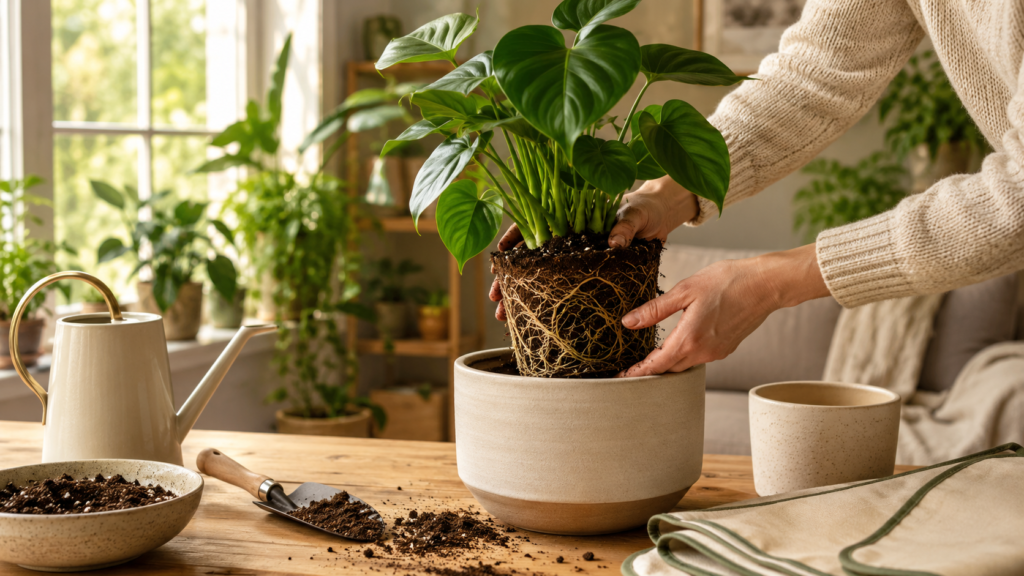
Indoor plants do not need a new pot every month.
But they also should not stay trapped in the same pot forever.
As roots grow, soil breaks down, water drains differently, and the plant may slowly outgrow the space it has. Sometimes the signs are obvious. Other times, your plant simply stops growing, dries out too quickly, or starts looking top-heavy.
Knowing when to repot indoor plants helps you avoid stress, root crowding, poor drainage, and messy last-minute plant problems.
The goal is not to repot constantly. The goal is to repot at the right time.
Quick Answer: When Should You Repot Indoor Plants?
Most indoor plants need repotting when they have outgrown their pot, the roots are crowded, the soil dries out too quickly, or roots are coming out of the drainage holes.
A good rule is to check your plants every spring or early summer. Many houseplants do not need a bigger pot every year, but they may need fresh soil, better drainage, or a slightly larger container.
When you do repot, choose a pot only 1–2 inches wider than the current one for most indoor plants.
Quick Checklist: Does Your Plant Need Repotting?
Use this quick checklist before moving a plant to a bigger pot.
| Sign | What it may mean |
|---|---|
| Roots circle tightly around the root ball | The plant may be root-bound |
| Roots grow out of drainage holes | The pot may be too small |
| Soil dries out very quickly | Roots may be taking up most of the pot |
| Water runs straight through | The soil may be too compacted or root-filled |
| Plant looks top-heavy | The pot may no longer support the plant well |
| Growth has slowed | Roots may need more space or fresher soil |
| Soil looks packed and tired | Fresh mix may help |
| Plant tips over easily | The pot may be too small or too light |
One sign alone does not always mean you must repot immediately. Look at the full plant, the roots, the pot, the soil, and the season.
Why Repotting Matters
Repotting gives a plant more than just a bigger container.
It can help with:
- crowded roots
- compacted soil
- poor drainage
- old potting mix
- unstable plants
- watering problems
- root inspection
- better long-term growth
As a plant grows, the roots fill the pot. Over time, the soil may become dense, tired, or unable to hold and release water properly.
A fresh potting mix and a slightly larger pot can give the roots more space and make watering easier.
Repotting Does Not Always Mean a Bigger Pot
This is one of the most important beginner lessons.
Sometimes a plant needs fresh soil, but not a much bigger pot.
A plant may need:
- the same pot with fresh mix
- a slightly larger pot
- better drainage
- lighter soil
- root cleanup
- a heavier pot for stability
- a new saucer
- a better container setup
Do not automatically move every plant into a much larger pot. A pot that is too big can hold too much moisture around the roots.
For most indoor plants, one size up is enough.
7 Signs Your Plant Needs Repotting
1. Roots Are Circling the Root Ball
If you gently slide the plant out of its pot and see roots wrapping tightly around the outside, the plant may be root-bound.
This means the roots have filled the available space and started circling the pot.
A few visible roots are normal. A tight mass of circling roots usually means the plant needs more room.
2. Roots Are Coming Out of Drainage Holes
Roots growing out of drainage holes can be a clear sign that the plant is searching for more space.
This does not always mean emergency repotting, but it is a strong reason to check the root ball.
If roots are coming through the bottom and the plant dries out quickly, it may be time to move up one pot size.
3. Soil Dries Out Too Fast
If you water the plant and the soil becomes dry again very quickly, the pot may be full of roots.
When roots take up most of the container, there is less soil left to hold moisture.
This is common in plants that have been in the same pot for a long time.
If you struggle with watering timing, read Don’t Water Yet: How to Check Indoor Plants Before Watering.
4. Water Runs Straight Through the Pot
Sometimes water seems to pour through the pot almost immediately.
This can happen when:
- the soil is compacted
- the pot is mostly roots
- the mix has become dry and hard
- water is not soaking evenly
- the plant needs fresh potting mix
If water rushes through without properly moistening the soil, repotting or refreshing the mix may help.
5. The Plant Looks Top-Heavy
A plant that keeps tipping over may have outgrown its pot.
This can happen when the top growth becomes much larger than the container. A bigger or heavier pot may help stabilize the plant.
This is common with larger indoor plants like Rubber Plant, Bird of Paradise, Monstera, and other plants with large leaves or tall growth.
6. Growth Has Slowed for No Clear Reason
Slower growth can happen for many reasons, including light, season, watering, temperature, or natural rest periods.
But if the plant has good light, decent care, and has been in the same pot for a long time, root crowding may be part of the problem.
Before repotting, check:
- light
- watering
- temperature
- pests
- season
- root condition
- soil condition
Repotting is helpful when the pot or soil is actually part of the issue.
7. The Soil Looks Packed, Old, or Tired
Potting mix changes over time.
It can become compacted, crusty, dense, or difficult to water evenly.
Signs of tired soil include:
- hard surface layer
- soil pulling away from the pot edge
- poor drainage
- water sitting on top
- water rushing straight through
- dull, dense texture
- roots exposed near the surface
Fresh potting mix can help improve airflow and drainage around the roots.
When Is the Best Time to Repot Indoor Plants?
The best time to repot most indoor plants is usually spring or early summer.
This is when many plants are entering a more active growth period, which can help them recover from repotting more easily.
Good times to repot include:
- spring
- early summer
- when new growth is starting
- when roots are active
- when the plant is healthy enough to handle change
Avoid repotting during severe stress if possible.
When You Should Wait Before Repotting
Sometimes it is better to wait.
Do not rush to repot if:
- the plant is severely stressed
- the plant is very dry and wilted
- the plant has just arrived from shipping
- the plant was recently moved
- the plant is blooming heavily
- the room is very cold
- you do not have the right pot or soil ready
- the plant only has one small issue that can be fixed another way
Repotting is useful, but it is still a change. A weak or stressed plant may need stable care first.
How Big Should the New Pot Be?
For most indoor plants, choose a pot only 1–2 inches wider than the current pot.
This gives the roots more space without creating too much extra wet soil.
A pot that is much too large can cause problems because the soil may stay damp for too long.
Simple pot-size guide:
| Current plant situation | Pot choice |
|---|---|
| Slightly root-bound | Go 1–2 inches wider |
| Very top-heavy | Choose a slightly larger and heavier pot |
| Soil is old but roots are fine | Refresh soil, same pot may work |
| Small plant in oversized pot | Consider downsizing or improving drainage |
| Fast-growing plant | Slightly larger pot may be useful |
| Slow-growing plant | Do not size up too much |
If you are unsure, choose the smaller upgrade rather than jumping to a huge pot.
What Kind of Pot Should You Use?
The best pot depends on the plant, but drainage is usually the most important feature.
Good beginner options include:
- ceramic pot with drainage holes
- nursery pot inside a decorative cachepot
- terracotta pot for plants that like faster drying soil
- heavier pot for tall plants
- plastic nursery pot for easy lifting
- pot with matching saucer
A beautiful pot is useful only if the plant can still drain properly.
For container ideas, read Best Pots for Indoor Plants.
What Soil Should You Use When Repotting?
Use a fresh, light, well-draining potting mix that matches the plant.
Many indoor plants do well with a general indoor potting mix, but some plants need special blends.
For example:
| Plant type | Soil idea |
|---|---|
| Most leafy houseplants | Light indoor potting mix |
| Succulents and cacti | Faster-draining succulent mix |
| Orchids | Orchid bark mix |
| Hoyas | Airy mix with bark or perlite |
| Large tropical plants | Indoor mix with good drainage |
| Moisture-loving plants | Mix that holds some moisture but still drains |
Avoid heavy garden soil indoors. It can compact too much and hold water poorly in pots.
Basic Tools for Repotting Indoor Plants
Repotting is easier when your tools are ready before you start.
Useful items include:
- fresh potting mix
- new pot with drainage
- plant saucer
- repotting mat
- small trowel
- pruning scissors
- gloves, optional
- soft cloth
- watering can
- trash bag or compost container
If you are building a simple setup, read Best Indoor Plant Tools for Beginners.
Simple Step-by-Step: How to Repot a Houseplant
1. Water Lightly Before Repotting if Needed
A slightly moist root ball can be easier to work with than a bone-dry one.
Do not soak the plant heavily right before repotting.
2. Prepare the New Pot
Choose a pot with drainage.
Add a small layer of fresh potting mix at the bottom if needed.
3. Remove the Plant Gently
Tip the plant sideways and slide it out carefully.
Avoid pulling hard on the stems.
4. Check the Roots
Look for circling roots, compacted roots, or old soil.
Loosen tight roots gently with your fingers.
5. Place the Plant at the Same Depth
Do not bury the plant much deeper than before.
Keep the base of the plant at a similar level in the new pot.
6. Fill Around the Root Ball
Add fresh potting mix around the sides.
Press gently, but do not pack the soil too hard.
7. Water Lightly
Water after repotting to settle the mix.
Let extra water drain fully.
8. Give the Plant Time to Adjust
Place the plant in bright indirect light and avoid heavy feeding right away.
Some plants may look a little tired after repotting. Give them time.
What to Do After Repotting
After repotting, keep care simple.
Good aftercare includes:
- bright indirect light
- stable temperature
- careful watering
- no harsh direct sun right away
- no heavy fertilizer immediately
- no constant moving
- checking for stress
- letting the plant settle
The plant needs time to adjust to its new pot and fresh soil.
Common Repotting Mistakes to Avoid
Choosing a Pot That Is Too Big
A huge pot can hold too much wet soil.
Go only 1–2 inches wider for most indoor plants.
Repotting Too Often
Not every plant needs a bigger pot every year.
Check the roots and soil first.
Using Heavy Compact Soil
Dense soil can make watering harder and reduce airflow around the roots.
Use a light potting mix suited to indoor plants.
Forgetting Drainage
Drainage holes and saucers matter.
A decorative pot with no drainage plan can create problems.
Breaking Healthy Roots Unnecessarily
Loosen tight roots gently, but do not destroy the root ball without reason.
Repotting a Severely Stressed Plant
If the plant is already struggling badly, repotting can sometimes add more stress.
Stabilize care first unless the soil or roots are the urgent problem.
Watering Too Much After Repotting
Fresh soil may hold water differently.
Check the soil before watering again.
Repotting vs Refreshing Soil
Sometimes a plant does not need a bigger pot.
It may only need fresh soil on top or a soil refresh.
| Situation | Better choice |
|---|---|
| Roots are crowded | Repot into a slightly larger pot |
| Soil surface looks tired | Refresh top layer |
| Pot is still the right size | Refresh soil, same pot may work |
| Plant is top-heavy | Slightly larger/heavier pot |
| Water drains badly | Check soil and pot setup |
| Plant was recently purchased | Wait unless there is a serious issue |
Refreshing soil can be a gentler option than full repotting.
Which Plants Need Repotting More Often?
Some plants grow faster than others.
Fast-growing or root-active plants may need checking more often.
| Plant type | Repotting tendency |
|---|---|
| Fast-growing vines | May need checking more often |
| Large leafy plants | May outgrow pots as they mature |
| Small slow-growing plants | Usually need less frequent repotting |
| Succulents | Often prefer not to be overpotted |
| Flowering indoor plants | Repot timing depends on bloom cycle |
| Trailing plants | May need fresh mix or support as they grow |
A Silver Satin Pothos or Hoya may need different timing from a large Rubber Plant or Peace Lily.
Best For / Avoid If
Repotting is useful when the plant truly needs it.
| Best for | Avoid if |
|---|---|
| Root-bound plants | The plant is already severely stressed |
| Plants drying out too fast | You only want a decorative pot change |
| Plants with compacted soil | You do not have proper soil ready |
| Top-heavy plants | The new pot is much too large |
| Plants in poor drainage setups | You plan to use a pot with no drainage |
| Spring and early summer care | The plant is blooming heavily and healthy |
Repotting should solve a real problem, not create a new one.
Helpful Products to Consider
When repotting indoor plants, useful product types may include:
- pot with drainage holes
- ceramic planter
- plant saucer
- fresh indoor potting mix
- perlite
- orchid bark
- repotting mat
- small trowel
- soil scoop
- pruning scissors
- gloves
- watering can
- plant labels
These products help with cleaner repotting, better drainage, easier watering, and less mess.
Small Apartment Repotting Tip
If you live in a small apartment, repotting can feel messy.
Use a simple setup:
- foldable repotting mat
- small bag of potting mix
- small trowel
- one trash bag or compost bag
- cloth for cleaning surfaces
- pot and saucer ready before starting
Repot near a bright table, kitchen counter, balcony, or washable floor.
Do not start repotting until everything is ready. That one habit makes the process much cleaner.
Final Thoughts
Repotting indoor plants is not something you need to do constantly, but it is important when a plant has truly outgrown its pot.
Look for signs like crowded roots, soil drying too fast, roots coming from drainage holes, water running straight through, slow growth, top-heavy stems, or tired compacted soil.
When it is time, choose a pot only 1–2 inches bigger, use fresh well-draining mix, handle the roots gently, and give the plant time to adjust.
The best repotting routine is simple: check the roots, choose the right pot, use fresh soil, and avoid going too big too fast.
A bigger home should help your plant grow better, not make care harder.
Read Next
- Best Indoor Plant Tools for Beginners
- Best Pots for Indoor Plants
- Don’t Water Yet: How to Check Indoor Plants Before Watering
- Rubber Plant: The Indoor Tree That Makes Any Room Look Better
- Peace Lily: The Elegant White Indoor Flower for Calm Rooms

Cosmin Stefanoiu is the founder and editor of The Leafy Room, a practical guide focused on indoor plants, plant care, pots and planters, small-space gardening, and thoughtful plant styling.
He creates clear, beginner-friendly editorial guides designed to help readers choose plants, understand everyday care, and make practical decisions for real homes.
Pingback: Terracotta vs Ceramic Pots: Which Is Better for Your Plants?
Pingback: weekly-indoor-plant-care-routine