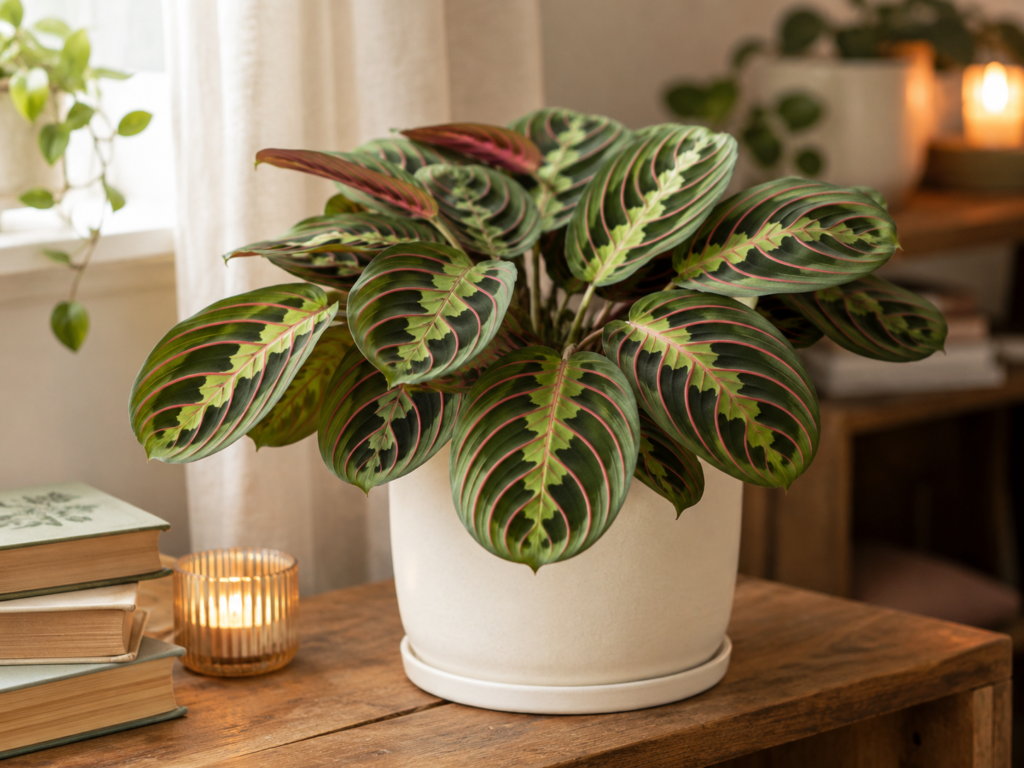
Some indoor plants are beautiful because of their size.
Some stand out because of their color.
Prayer Plant stands out because it moves.
This beautiful indoor plant is known for its patterned leaves and the way those leaves can lift upward in the evening, almost like praying hands. That movement, combined with its colorful leaf markings, makes Prayer Plant one of the most interesting houseplants to grow indoors.
If you want an indoor plant that feels alive, decorative, and a little unusual, Prayer Plant is a beautiful choice for bright rooms, shelves, desks, and cozy plant corners.
Quick Answer: Is Prayer Plant Easy to Grow Indoors?
Prayer Plant can grow well indoors if it has bright indirect light, steady warmth, and a comfortable indoor environment.
It is not the hardest houseplant, but it does prefer more attention than very simple plants like pothos or snake plant. The key is to keep it away from harsh direct sun, cold drafts, and very dry air.
Prayer Plant is a good choice if you want a decorative indoor plant with patterned leaves and you are willing to give it a stable, cozy spot.
What Is a Prayer Plant?
Prayer Plant usually refers to Maranta, especially Maranta leuconeura.
It is a tropical indoor plant known for its oval leaves, colorful patterns, and evening leaf movement. Many varieties have green leaves with red, pink, cream, or dark markings.
The name “Prayer Plant” comes from the way the leaves can rise upward at night. During the day, the leaves often sit more open and flat. In the evening, they may lift and fold slightly.
This movement makes the plant feel more animated than many other houseplants.
Why Prayer Plant Is So Popular
Prayer Plant is popular because it offers both pattern and movement.
The leaves can look almost painted, with lines, spots, and contrasting colors. Even a small Prayer Plant can become a beautiful detail on a shelf, desk, or plant stand.
It also works well in cozy interiors because the plant has a soft, relaxed shape rather than a stiff or dramatic look.
Prayer Plant is especially loved by people who like:
- patterned foliage
- small to medium indoor plants
- tropical plant decor
- plants that look interesting up close
- soft, cozy room styling
- unusual houseplants
Prayer Plant: Main Features
Here is the simple version:
| Feature | Prayer Plant |
|---|---|
| Plant type | Tropical indoor plant |
| Also known as | Maranta |
| Main look | Patterned oval leaves |
| Best use | Shelves, desks, plant stands, cozy corners |
| Decor style | Cozy, colorful, tropical, soft |
| Space needs | Small to medium space |
| Best placement | Bright indirect light |
| Visual impact | Patterned, moving, decorative |
Best Light for Prayer Plant
Prayer Plant usually does best in bright indirect light.
It likes a bright room, but it does not usually enjoy harsh direct sun. Strong sun can make the leaves look faded, stressed, or less attractive.
Good placement ideas include:
- near an east-facing window
- a few feet from a bright window
- beside a sheer curtain
- on a shelf in a bright room
- on a desk near soft natural light
- in a bright bedroom or living room
Avoid placing Prayer Plant directly in a hot sunny window for long periods.
If the plant does not get enough light, it may look less full and the leaf patterns may not appear as strong.
Best Temperature for Prayer Plant
Prayer Plant prefers a warm indoor environment.
It usually looks best in normal comfortable room temperatures. Avoid placing it near cold windows in winter, air conditioners, exterior doors, or drafty areas.
Good spots include:
- a warm bedroom
- a cozy living room
- a bright home office
- a shelf away from cold drafts
- a stable indoor corner
Prayer Plant does not like sudden changes. A steady spot is better than moving it around constantly.
Humidity and Prayer Plant
Prayer Plant is a tropical plant, so it often appreciates more humidity than very dry indoor air provides.
This does not mean your home needs to feel like a greenhouse, but the plant may look better in a room that is not extremely dry.
Helpful placement ideas include:
- a bright bathroom with a window
- a kitchen with natural light
- a room with other plants nearby
- a plant shelf with several tropical plants
- a spot away from heating vents
If your home is very dry, Prayer Plant may not look as fresh. The leaf edges can sometimes look less attractive in dry conditions.
How to Water Prayer Plant
Prayer Plant usually prefers consistent moisture, but it should not sit in soggy soil.
The goal is to keep the plant comfortable, not soaked.
A simple way to think about it:
- check the soil before watering
- water when the top part of the soil feels slightly dry
- avoid letting the plant sit in standing water
- use a pot with drainage
- adjust watering depending on light, season, and room temperature
Prayer Plant may need more attention than a succulent or cactus because it does not like being forgotten for too long.
However, it also does not want heavy watering every day.
Best Soil for Prayer Plant
Prayer Plant usually does well in a light, well-draining indoor potting mix.
The soil should hold some moisture but still allow extra water to drain away. A heavy compact mix can stay wet too long and make the plant unhappy.
A good indoor mix for Prayer Plant should feel:
- light
- airy
- moisture-retentive but not soggy
- suitable for tropical houseplants
- able to drain through the pot
Using a pot with drainage holes is important.
A pretty decorative pot can still work if the plant is kept in a nursery pot inside it, so excess water can be removed after watering.
Best Pot for Prayer Plant
Prayer Plant does not need an oversized pot.
A pot that is too large can hold too much moisture around the roots. A simple pot that matches the plant size is usually better.
Good pot options include:
- small ceramic pots
- simple nursery pots inside decorative covers
- terracotta-style pots, if watering is monitored
- neutral decorative pots
- pots with drainage holes
For decor, Prayer Plant looks beautiful in cream, white, terracotta, soft green, or natural-toned pots.
Because the leaves already have a strong pattern, a simple pot often looks best.
Where to Place Prayer Plant Indoors
Prayer Plant looks best where people can see the leaf patterns clearly.
Good placement ideas include:
- on a bedroom shelf
- on a desk
- on a plant stand
- near a bright window with filtered light
- in a cozy reading corner
- on a small side table
- in a bright bathroom with a window
- on a plant shelf with other tropical plants
Avoid placing it in a dark forgotten corner. Prayer Plant is most beautiful when the leaves can be seen up close.
How to Style Prayer Plant in Home Decor
Prayer Plant is easy to style because its leaves already feel decorative.
For a cozy look, place it near books, candles, soft fabrics, and warm wood tones.
For a clean modern look, use a simple ceramic pot and keep the shelf around it uncluttered.
For a tropical plant shelf, pair it with other patterned or soft-leaf plants like Calathea, Nerve Plant, or Peperomia.
Prayer Plant looks especially good with:
- simple ceramic pots
- wooden shelves
- neutral walls
- soft curtains
- plant stands
- small decorative trays
- warm natural light
- cozy bedroom decor
- other tropical foliage plants
Helpful Items for Styling Prayer Plant
Prayer Plant looks best when the setup supports its tropical leaf shape and patterned foliage.
Useful items may include:
- a simple ceramic pot
- a small plant stand
- a humidity tray
- a plant mister
- a narrow watering can
- a soft leaf cleaning cloth
- a moisture meter
- a small plant shelf
- neutral decorative pots
You do not need all of these. Start with a good bright spot, a simple pot, and a setup that keeps the plant easy to check.
Common Prayer Plant Problems
Prayer Plant can be beautiful indoors, but it may show stress when conditions are not right.
Here are common issues to watch for.
Leaves Curling
Leaves may curl when the plant is stressed by dryness, inconsistent watering, cold, or too much direct sun.
Check the soil, light, and room conditions before changing too many things at once.
Brown Leaf Edges
Brown edges can happen when the air is dry, the plant is stressed, or watering is inconsistent.
A more stable environment can help the plant look better over time.
Faded Leaf Pattern
If the leaf pattern looks faded, the plant may be getting too much harsh sun or not enough balanced light.
Bright indirect light is usually the safest choice.
Drooping Leaves
Prayer Plant leaves can move naturally during the day and night, so some movement is normal.
But if the whole plant looks weak or limp, check the soil moisture, temperature, and placement.
Slow Growth
Prayer Plant may grow slower if the light is too low, the room is too cold, or the plant is adjusting to a new spot.
A steady bright location usually helps.
Does Prayer Plant Really Move?
Yes, Prayer Plant leaves can move.
The leaves may sit more open during the day and lift upward in the evening. This movement is one of the reasons the plant is so loved.
It may not happen dramatically every night, and the movement can depend on light, health, and environment.
Still, it is one of the most interesting features of the plant.
Is Prayer Plant Good for Small Spaces?
Yes, Prayer Plant can work very well in small spaces.
It does not need to be a large floor plant to make an impact. Its patterned leaves are attractive even in a small pot.
Prayer Plant works well in:
- bedrooms
- home offices
- apartments
- small living rooms
- shelves
- desks
- plant stands
- cozy corners
If you want a compact plant with strong visual interest, Prayer Plant is a good choice.
Best Rooms for Prayer Plant
Prayer Plant can look beautiful in:
- bedrooms
- home offices
- living rooms
- bright bathrooms
- kitchens
- reading corners
- plant shelves
- small apartments
It works especially well in rooms where you want a calm but decorative plant look.
In a bedroom, it can make a shelf feel softer. In a home office, it can add pattern to the desk area. In a bright bathroom, it can bring a fresh tropical feeling.
Prayer Plant vs Calathea
Prayer Plant and Calathea are often discussed together because both have patterned leaves and a tropical look.
However, they are not exactly the same.
Prayer Plant usually refers to Maranta. Calathea refers to a different group of plants with many patterned varieties.
Both can look beautiful indoors, and both usually prefer bright indirect light and stable conditions.
Prayer Plant often feels a little softer and more compact, while some Calathea varieties can become larger and more dramatic.
If you like patterned foliage, both are worth considering.
Prayer Plant vs Nerve Plant
Prayer Plant and Nerve Plant both have patterned leaves, but they look different.
Nerve Plant is usually smaller and has strong vein patterns that look drawn on.
Prayer Plant usually has larger oval leaves with more complex markings and the famous evening leaf movement.
Choose Nerve Plant if you want a tiny plant with colorful veins.
Choose Prayer Plant if you want a slightly fuller plant with patterned leaves that move.
A Small Safety Note for Pet Owners
If you have pets, always check plant safety before bringing any new houseplant indoors.
Prayer Plant is often considered one of the more pet-friendly houseplants compared with many popular indoor plants, but it is still best to keep plants out of reach if your pet likes to chew leaves or dig in pots.
Even safer plants can cause an upset stomach if eaten in large amounts, so careful placement is still a good idea.
Who Should Choose Prayer Plant?
Prayer Plant may be a good choice if:
- you like patterned leaves
- you want a plant that moves
- you have bright indirect light
- you want a small to medium indoor plant
- you like tropical plant decor
- you want a plant for shelves, desks, or cozy corners
- you enjoy plants with personality
- you want something more interesting than plain green foliage
It may not be the best choice if:
- your room is very dark
- your home is extremely dry
- you want a plant you can ignore for long periods
- you only have harsh direct sun
- you prefer large floor plants
- you do not want to monitor watering at all
Final Thoughts
Prayer Plant is one of the most interesting indoor plants you can grow.
Its patterned leaves, soft shape, and evening movement make it feel decorative and alive. It works beautifully on shelves, desks, plant stands, bright bathrooms, bedrooms, and cozy plant corners.
If you want a houseplant that adds pattern, personality, and a tropical feeling without needing a huge space, Prayer Plant is a beautiful choice.
Give it bright indirect light, steady warmth, and a comfortable indoor environment, and it can become one of the most charming plants in your home.
Helpful Plant Care Items to Consider
When growing Prayer Plant indoors, useful items may include:
- a simple ceramic pot
- a small plant stand
- a humidity tray
- a plant mister
- a narrow watering can
- a soft leaf cleaning cloth
- a moisture meter
- a small plant shelf
- neutral decorative pots
Start with a simple setup that keeps the plant easy to check and easy to enjoy. Prayer Plant already has beautiful patterned leaves, so the surrounding decor should support the plant instead of competing with it.
Read Next
- Nerve Plant: The Tiny Indoor Plant With Painted-Looking Leaves
- Calathea Orbifolia: The Indoor Plant With Giant Striped Leaves
- Watermelon Peperomia: The Indoor Plant With Leaves That Look Like Watermelon
- Best Plants for a Bedroom Shelf
- Best Indoor Plants for Bright Bathrooms

Cosmin Stefanoiu is the founder and editor of The Leafy Room, a practical guide focused on indoor plants, plant care, pots and planters, small-space gardening, and thoughtful plant styling.
He creates clear, beginner-friendly editorial guides designed to help readers choose plants, understand everyday care, and make practical decisions for real homes.
Pingback: Best Plants for a Bathroom With a Window
Pingback: Best Indoor Plants for Kitchen Counters
Pingback: How to Raise Humidity for Indoor Plants Without Making Your Home Damp